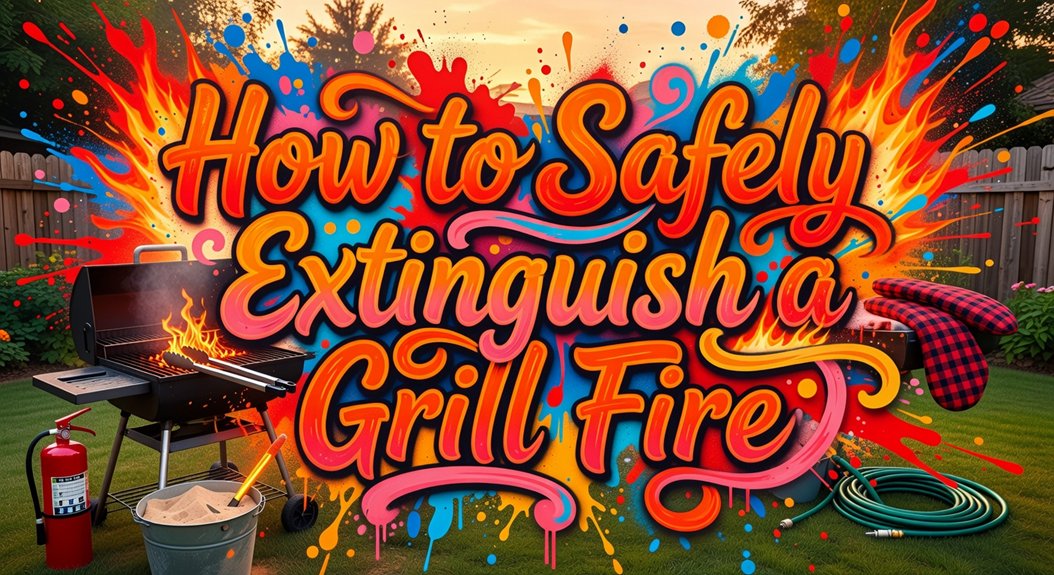
Close the grill’s lid and bottom vents to cut off oxygen, then shut the gas valve or stop adding charcoal. If the fire’s Class B (propane) or Class A (charcoal/wood), pull the safety pin on a B or ABC extinguisher, aim at the base from 6–8 ft, squeeze, and sweep side‑to‑side. For small grease flames, sprinkle a cup of baking soda or cover tightly with a metal lid. Keep the lid closed until the coals turn dark, then let the grill cool completely before disposal. Continue for more detailed fire‑type identification and prevention tips.
How to Quickly Put Out a Grill Fire
When a grill flame erupts, the fastest way to suppress it is to seal off its oxygen source. Close the bottom vents and lid damper fully, then remove the cooking rack to protect it from heat damage. This fuel source control starves the fire, allowing coals to extinguish naturally while you practice residual heat mitigation. Keep the lid closed until the coals are dark and no longer glowing; then open the vents to accelerate cooling. If you need faster quenching, pour water slowly while stirring, or use a spray bottle on partially burned coals to avoid steam buildup. For overnight safety, close all vents and let the grill cool undisturbed, ensuring complete ember elimination before disposal. This oxygen deprivation method is economical and also preserves unused charcoal for future use. Use a chimney starter to avoid the need for lighter fluid.

Simple, Fast Activation:Take control with an easy-to-use design—just press, aim, and spray. Each extinguisher Emergency Survival Kits includes two sturdy mounting brackets for quick access in kitchens, cars, and other essential spots.

HIGH-TEMPERATURE RESISTANT: The fire suppression blanket can isolate high temperatures up to 1076℉( 580℃), enabled by it's Composed of two layers of 100% flame retardant woven fiberglass fabric and an inner layer of fire retardant film, meets safety blanket standards set by UL and SGS, helping people extinguish the fire source promptly in case of a sudden fire.

Simple Activation for Quick Action:Our compact fire extinguishers are expertly designed for kitchens, homes, boats, and cars.To use, simply press the switch, aim at the fire source, and spray.Each set includes mounting brackets for easy placement and accessibility.
Identify Fire Type and Pick the Right Suppressor
If you can quickly tell whether a grill fire is Class A, B, or K, you’ll know exactly which extinguisher to grab. Class A fires arise from charcoal or wood; water‑based or ABC extinguishers smother them. Class B fires stem from propane leaks; foam, CO₂, or dry‑chemical ABC units are required, never water. Class K fires involve cooking oil; only wet‑chemical agents extinguish them safely. Identify the fuel source first, then match the extinguisher rating. Maintain the grill with proper maintenance procedures and a periodic cleaning schedule to prevent buildup that mimics Class A chimney fires. Regularly inspect hoses, valves, and electrical connections; replace worn parts promptly. This disciplined approach guarantees you select the right suppressor instantly, minimizing damage and injury. Class D fires involve combustible metals and require specialized dry powder agents.
Apply the PASS Technique With a Class B or ABC Extinguisher
Typically, you’ll start the PASS sequence by pulling the safety pin, breaking the lock tie with a firm twist so the extinguisher can discharge. Next, aim the nozzle at the fire’s base, keeping a 6‑8‑foot distance and holding the hose firmly. Squeeze the handle with steady pressure to release the agent; maintain the squeeze until the flames subside. Finally, sweep side‑to‑side across the base, ensuring full coverage and preventing hot spots. While you work, monitor for re‑ignition and be ready to re‑apply if needed. Understanding test extinguishing methods and the differences among grill extinguisher types—Class B for flammable liquids and ABC for mixed fires—helps you choose the right tool and execute PASS efficiently, minimizing damage and risk. Class A fires involve ordinary combustibles like wood and paper.

Reliable Fire Protection: Stop basic home fires involving trash, wood, paper, liquids, gases, and electrical equipment

IMMEDIATE RESPONSE FROM A SAFE DISTANCE WITH PATENTED HANDLE DESIGN:Act swiftly from a safe distance up to fifteen feet when alarm rings at night or smoke fills a room; patented handle lets anyone—whether grandparent or child—activate the fire extinguisher without training, avoiding panic in emergencies

Reliable Fire Protection: Stop basic home fires involving trash, wood, paper, liquids, gases, and electrical equipment
Smother Small Grease Flames With Baking Soda or a Metal Lid
Although a grease flare can erupt in seconds, you can extinguish a small one quickly by smothering it with either a generous amount of baking soda or a snug‑fitting metal lid. For baking soda, guarantee proper application: sprinkle an efficient quantity—about one cup or a laundry‑aisle sized box—directly onto the flame. The soda releases carbon dioxide and absorbs heat, cutting off oxygen without splashing oil. If you prefer a lid, place a non‑flammable metal cover tightly over the pan or grill, sealing the oxygen supply until the fire cools. Keep the lid in place; do not remove it prematurely. Avoid water, flour, sugar, or baking powder, as they exacerbate the blaze. This method contains the fire and prevents spread. Overheated oil is the main cause of grease fires, so monitor temperature closely. After extinguishing the fire, you can keep your grill ready for the next use by cleaning your grill with a simple chemical-free method.

Stainless Steel Charcoal Saver Bucket: You will receive 1 set of stainless steel charcoal saver buckets, including a bottom grate to prevent hot coals from touching the bottom of the container to keep the bottom cooler

Reliable Fire Protection: Stop tough grease fires

Visible Warning: The bright red color is perfect for identifying the location of your fire extinguisher.
Shut Off Fuel Supplies for Gas and Charcoal Grills
When a grill fire erupts, you must cut off the fuel supply instantly to prevent the blaze from feeding. For gas grills, turn the tank valve clockwise until it’s fully closed, using a wrench only if the valve sticks. Verify shutoff by listening for silence and performing a quick leak test with soapy water. If you have a natural‑gas line, locate the main shutoff valve upstream, rotate it perpendicular to the pipe, and engage any emergency shutoff controls such as a PGS ESTOP09 timer. Guarantee the valve is housed in a NEMA 3R enclosure for outdoor protection. Install gas sensor monitoring to detect residual flow and trigger automatic shutoff. Keep your grill positioned in a well-ventilated outdoor space to minimize fire hazards and ensure safe operation. Charcoal grills require you to stop adding fuel and smother the coals with a metal lid or sand, then let the grill cool. The ESTOP09 timer provides a secure, lockable timer function that automatically shuts off gas after a preset interval.
Ventilate and Cool the Grill After Extinguishing
If you keep the grill lid open or partially ajar, you’ll let heat and smoke escape quickly, which speeds cooling and prevents lingering fumes. Open the lid fully for at least five minutes, then keep it ajar. This allows ambient air circulation to draw heat away from the grill body and accelerates the cooling process. Use a handheld infrared thermometer or a built‑in gauge to monitor temperature decline; the surface should drop below 150 °F before you touch any component. Keep a safe distance from combustible materials and maintain clear airflow around the grill. Once the temperature stabilizes, inspect surrounding structures, ash, and debris for residual heat before proceeding to the next safety step. Regular maintenance and proper grill care will help prevent fires and extend the life of your equipment. Never leave an active grill unattended while cooling.
Prevent Future Fires With Proper Placement and Supervision
Most grill fires stem from poor placement and lack of supervision, so you must position the grill at least 10 feet from any siding, railings, or overhanging structures and keep it in clear view at all times. To guarantee safe clearances, locate the grill on a flat, non‑flammable surface away from eaves, tree branches, and balconies, which account for a large share of incidents. Avoid high risk locations such as patios near walls, exterior porches, and open balconies. Constantly monitor the grill while it’s hot; never leave it unattended, especially between 5 p.m. and 8 p.m., when most ignitions occur. Keep children and pets at least three feet away, and clean grease buildup after each use, as this maintenance practice can significantly extend your grill’s operational lifespan. Regularly inspect gas connections for leaks to eliminate preventable failures. This disciplined placement and supervision protocol dramatically lowers the chance of future fires. 58% of Americans lack knowledge on proper fire extinguisher use.