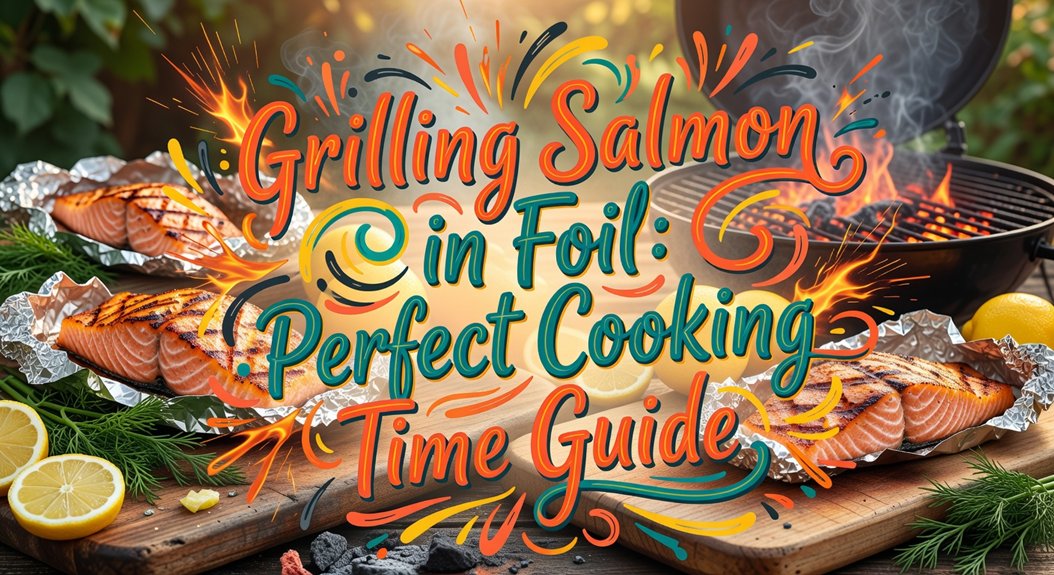
Seal your salmon skin‑side down in heavy‑duty foil, drizzle olive oil, sprinkle salt, herbs, garlic, and tuck lemon slices and butter on top, then crimp the packet. Preheat the grill to 375‑400 °F, place the packet over indirect heat, and close the lid. Cook 6‑8 min for a 1‑inch fillet, 10‑15 min for 1.25‑1.5 inches, and 14‑18 min plus 3 min exposed for thicker cuts, aiming for an internal 120‑125 °F before carry‑over. Check doneness with a fork flake test and a quick thermometer peek; if you keep going, you’ll uncover extra tricks for perfect results.
Prepare Salmon for a Grilled Foil Packet
When you’re ready to grill salmon, start by picking the right foil—heavy‑duty aluminum works best, but you can double up regular foil if needed. Cut a 14‑inch sheet, lay it on a rimmed baking sheet, and lightly spray it with oil. Position the fillet skin‑side down in the center, then drizzle olive oil, sprinkle salt, herbs, and garlic, and tuck lemon slices and butter on top. Fold the sides up first to contain the marinade, then bring the bottom edge over the fish. Pull the top edge down, crimp each side three times inward, and pinch the seams tightly. If you have a second sheet, place it over the first and repeat the crimping for extra durability. This foil packet assembly and proper foil shaping lock in flavor and prevent leaks. Before grilling, preheat your grill to a high temperature between 450°F and 550°F to ensure the salmon cooks evenly. One‑pot cooking makes cleanup a breeze.

EXTRA WIDE HEAVY DUTY REYNOLDS FOIL: This package contains one Reynolds Wrap heavy duty foil roll measuring 50 feet long by 18 inches wide (75 square feet total)

Includes one 125 square foot roll of heavy duty aluminum foil

Package Includes: One (1) Reynolds Wrap Heavy Duty Aluminum Foil Roll measuring 50 feet long by 12 inches wide (50 square feet total)
Set Grill Temperature for Perfect Foil Packets
Now that your salmon sits snugly in a well‑sealed foil packet, set the grill to a steady medium heat—around 375°F to 400°F. Aim for an Ideal grill zoning: place the packet over indirect heat, close the lid, and let the temperature stay consistent across gas, charcoal, or pellet grills. If you added oil or a parchment layer, you might lower the dial a few degrees; butter or veggies may call for a slight bump to medium‑high. Keep a meat thermometer handy, inserting it into the thickest section of the packet to verify that the internal environment stays within the 375‑400°F window. This balanced heat preserves moisture, prevents the foil from scorching, and read the salmon evenly throughout the Foil packet assembly process. Uniform thick fillet ensures even cooking across the packet. Using indirect heat or moderate coals prevents the salmon from burning while maintaining the moisture and tender texture that makes grilled salmon so delicious.
Calculate Cooking Time by Salmon Thickness
Set the grill to a steady medium heat and let the foil packet sit over indirect flame, then gauge the cooking time by the salmon’s thickness: you’ll want to prepare foil packet size that snugly wraps the fish without crushing it. For a one‑inch thick filet, aim for 6‑8 minutes total, checking a couple of minutes early. If the piece is 1.25‑1.5 inches, extend to 10‑15 minutes; anything 1.5 inches or more may need 14‑18 minutes in the packet plus a final 3‑minute exposed finish. Remember, thickness drives the internal temperature gradient, so thicker cuts need longer exposure while thinner ones risk overcooking. To ensure food safety, verify the internal temperature reaches 145°F before serving. Adjust timing by the rules, and you’ll achieve perfectly flaky salmon every time. Grill at least 400°F to ensure a good char and proper cooking.


LARGE-SIZED GRILL BAGS FOR FAMILY MEALS. Spacious 10.6" x 15.7" grilling bags hold full portions of meat, seafood, or vegetables. Perfect for outdoor grilling, BBQ gatherings, or meal preps. Fits more food than standard foil bags for grilling.
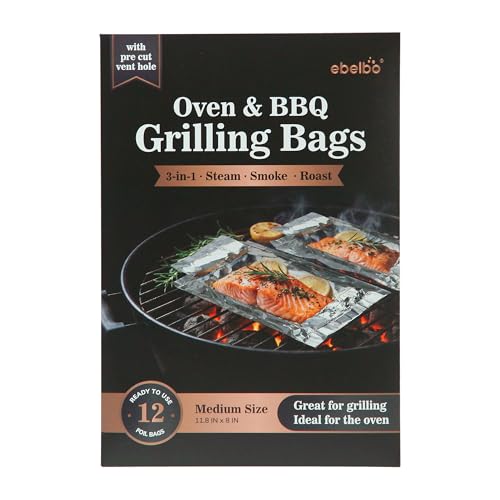
[Great for Grilling] This grill bag is perfect for use when you're grilling, no matter what kind of food you're grilling in it, such as some meats or vegetables. You can either use it on the grill or put the food in a grill bag and bake it in the oven
Monitor Internal Temperature of Your Grilled Salmon Foil Packet
Keep an eye on the thermometer as the foil packet sizzles, because the internal temperature tells you exactly when the salmon is safe and perfectly cooked. First, acquire an accurate thermometer—preferably a digital instant‑read model—so you get a quick, reliable reading. Then, implement proper insertion technique: pierce the foil at the thickest part of the fillet, pushing the probe straight into the center without bending the tip. Watch for 145°F (63°C) if you need USDA/FDA safety, but you can pull the packet at 120‑125°F for a moist, medium‑rare result, especially with premium fish. Remember the salmon over 3‑5 minutes after removal; carry‑over heat will finish cooking while preserving tenderness. Like grilling other firm fish, avoid overcooking your salmon to maintain its delicate texture and moisture content. Avoid opening the grill too often, as heat loss can skew the reading. Also, ensure the salmon stays below 40°F before cooking to maintain freshness and safety.

【Fast & Accurate】Our meat thermometer digital delivers accurate readings within ±1°F in just 1–2 seconds, with a wide temperature range of -58°F to 572°F (-50°C to 300°C). No more waiting over the heat - know your food's exact temperature instantly.

【8X Faster + 4X More Precise】: Upgraded with an industrial-leading professional thermocouple sensor, Themomonster meat thermometer digital with NIST certified ±0.5℉ precision provides you the accurate temperature of your food in just 0.5 Seconds.

Instant Read Meat Thermometer | Our instant read thermometer features a temperature probe and advanced, highly accurate technology with a 1-2 second response time. Our instant read food thermometer comes pre-calibrated with instructions and a meat temperature chart, plus a recalibration feature if needed.
Identify Doneness: Flaking, Steam, and Resting
A few key cues tell you when your grilled salmon has hit perfect doneness: the flake test, the steam‑knife method, and a brief rest. First, watch the color shifting: a glossy, slightly translucent center turns opaque pink as it reaches 130‑135°F. Then, apply the flake test—gently pull a fork apart; clean, defined flakes confirm doneness, while a mushy, resists‑flaking texture means medium‑rare and an instant‑fall‑apart sign means overcooked. Next, use the steam‑knife method: insert a butter knife for three seconds, then press the lower lip. A warm knife indicates the interior is hot enough; a cold or lukewarm blade calls for more time. Finally, let the fillet rest a few minutes; carry‑over heat finishes the color shift and texture indicators, leaving the salmon firm yet yielding. If the salmon shows a little albumin at the surface, it indicates the temperature is in the 130°F range. Using a meat thermometer ensures you reach the ideal internal temperature without guessing.
Adjust Cook Time for Thin vs. Thick Salmon
Now that you’ve mastered the flake and steam‑knife checks, you can fine‑tune the grill’s timing based on how thick your salmon is. For 3/4‑inch fillets, sear flesh side down 5‑6 minutes, flip, then finish 2‑3 minutes; total 7‑9 minutes. A 1‑inch piece needs 6‑8 minutes first side, 3‑4 minutes second side, totaling 9‑12 minutes. When you’re at 1.5‑inch, aim for 8‑10 minutes on the first side and 4‑6 minutes after flipping, reaching 12‑16 minutes. In foil packets, thin cuts hit perfect doneness at 14 minutes, while thicker ones linger until 18‑19 minutes. Keep a thermometer handy; remove at 125‑130 °F and let carryover finish the job. Consistently monitor doneness while respecting thickness variations for juicy, perfectly cooked salmon. Rinse the fillets under cold water before seasoning to remove any remaining scales or debris. If you have leftover salmon after grilling, store it properly by wrapping tightly in plastic wrap followed by aluminum foil to preserve freshness and prevent freezer burn.
What to Do When Your Grilled Salmon Foil Packet Misbehaves
When your salmon packet starts leaking, sticking, or burning, the solution is simple: reinforce the seal, lubricate the foil, and regulate the heat. First, use a large, heavy‑duty sheet and fold the bottom up, then the top down, making at least three inward folds on each side. Crimp edges and roll the long sides together for a tight seal. If the fish sticks, lightly oil the foil or spray it, and drizzle a little olive oil under the fillet; lemon slices or herbs create a natural barrier. To avoid smoky‑char‑protects‑contents, move the packet to an indirect‑heat zone, grill covered for four minutes, then reveal for four‑to‑six minutes. Ensure seasons include instantly by adding butter, lemon, and herbs before sealing, then let the packet rest so steam finishes the cook. Using a large sheet of aluminum foil helps prevent leaks and ensures even cooking. For those seeking more precise control over cooking conditions, a mesh density designed for even heat distribution can complement your foil-packet technique.