A 20‑lb propane tank typically fuels a medium‑size grill for about 18‑20 hours, consuming roughly 0.7 lb per hour at medium heat and up to 1.4 lb per hour on high. The runtime drops to ~10‑11 hours at high heat because BTU demand doubles. Cold weather can shorten it further by reducing vapor pressure, while extra burners cut time proportionally. If you keep the regulator well‑maintained, you’ll stretch the tank’s life even more.
How Long Does a 20‑lb Propane Tank Last on a Medium Grill?
When you fire up a medium‑sized grill, a full 20‑lb propane tank will typically keep you cooking for about 18‑20 hours. You’ll notice that a medium grill consumes roughly 2 lb per meal on high heat, which translates to about 1 lb per hour at average medium settings. This aligns with the 32,000 BTU burners on a Char‑Broil Classic 405, delivering 20.5 hours of runtime. Tank size considerations matter: a larger grill can halve that period to ~10 hours because higher BTU demand accelerates fuel draw. Selecting the right propane tank capacity ensures you have adequate fuel for your cooking sessions without frequent replacements. To preserve those estimates, perform regular regulator maintenance—inspect for leaks, clean the valve, and safeguard a tight seal. A well‑maintained regulator prevents pressure loss, keeping consumption rates consistent and extending usable runtime. You can also weigh the tank to verify the remaining propane.
How Do I Calculate Propane Tank Runtime From BTU Ratings?
Usually you determine a propane tank’s runtime by converting its weight into BTUs and then dividing by the appliance’s hourly BTU demand. First, locate the tank’s water capacity (WC) on the collar, multiply by 0.42 to get propane pounds, or subtract the tare weight from the current weight. Multiply those pounds by 21,500 BTU/lb to obtain total BTUs available. Next, find the grill’s BTU rating on its nameplate or manual. Divide the total BTUs by the appliance’s hourly BTU rating to get hours of operation. Remember that propane tank temperature influences vaporization; colder tanks deliver fewer BTUs per hour, so you may need to adjust the calculation before a propane tank refilling. Tanks are limited to 80 % fill for safety. Proper tank maintenance and storage practices ensure consistent performance and longevity of your propane supply throughout the grilling season.
How Does Heat Level (Medium vs. High) Change Propane Tank Runtime?
A medium‑heat setting typically slashes propane consumption by 30‑50 % compared with high heat, so a 20‑lb tank that lasts about 10 hours on a large grill at high heat can stretch to roughly 15‑20 hours when you dial the burners down to medium. At medium heat, BTU demand drops from 40,000 BTU/hr to about 20,000 BTU/hr, cutting the burn rate from ~1.4 lb/hr to ~0.7 lb/hr. This proportional reduction means a 20‑lb tank on a medium‑size grill can deliver 18‑20 hours, while the same tank on a large grill shrinks to 10‑11 hours at high heat. Fuel efficiency factors include burner size, grill insulation, and regular propane tank maintenance—cleaning or checking for leaks, and ensuring proper regulator function all preserve runtime and prevent premature depletion. The warm water method can also be used to quickly gauge remaining propane without removing the tank.
How Does Cold Weather Reduce Propane Tank Runtime?
If temperatures plunge below the normal operating range, the propane inside your tank contracts, lowering the internal pressure and slowing the liquid‑to‑gas conversion that fuels your grill. The contraction reduces vapor pressure, so the gauge reads a lower level even though the energy content stays the same. As pressure drops, the regulator throttles gas flow, and your burners receive less fuel, decreasing heat output and extending the perceived runtime. To counteract this, consider increased tank insulation or a small heater to keep the liquid near its boiling point. Also, schedule consistent tank refilling before the tank reaches a low gauge reading, ensuring you never run out of usable pressure during cold weather. Propane’s extremely low freezing point means it will not solidify even in the harshest Connecticut winters. Understanding the advantages and disadvantages of propane compared to other fuel options can help you make informed decisions about maintaining consistent performance year-round.
How Do Extra Burners Shorten Propane Tank Runtime?
When you fire up extra burners, the grill’s total BTU demand spikes, and the propane tank empties correspondingly faster. Each additional burner raises the BTU per hour figure linearly, so a six‑burner setup consumes roughly twice the fuel of a three‑burner at the same heat level. For example, three burners on a half‑20‑liter tank deliver about 7 hours on high heat, while six burners cut that to 3.5 hours. The BTU rating directly determines pounds of propane used per hour—20 000 BTU/hr uses 0.9 lb/hr, 30 000 BTU/hr uses 1.4 lb/hr. Selecting the appropriate pressure output ensures your burners receive consistent fuel delivery at their rated BTU specifications. This relationship forces you to examine burner configuration limitations when planning cooking sessions. Simultaneously, tank size optimization becomes critical: a larger tank offsets the higher draw, but the proportional runtime still shrinks as you add burners. Weighing the tank can give a quick estimate of remaining propane.
How Much Runtime Does a 30‑lb Propane Tank Provide?
Extra burners cut a 30‑lb tank’s runtime roughly in half, so understanding the baseline endurance of a single‑burner setup is key. A full 30‑lb tank holds 7.1 gal of liquid propane, delivering about 649,980 BTU total. At 10,000 BTU / hr you’ll burn roughly 0.5 lb / hr, giving you 60 hours of continuous grilling. Double the heat to 20,000 BTU / hr raises consumption to 0.9 lb / hr and drops runtime to 33 hours; 30,000 BTU / hr uses 1.4 lb / hr, yielding 21 hours. Use the formula T = (P × H) ÷ (B × k) where P = 30 lb, H ≈ 21,600 BTU / lb, B is your grill’s BTU rating, and k accounts for efficiency. These numbers illustrate tank capacity versus weight and help guide propane tank size considerations for your cooking needs. Proper maintenance and storage practices ensure your tank remains safe and functional throughout the grilling season. Propane tank gauge is often inaccurate, so relying on calculations provides a more reliable estimate.
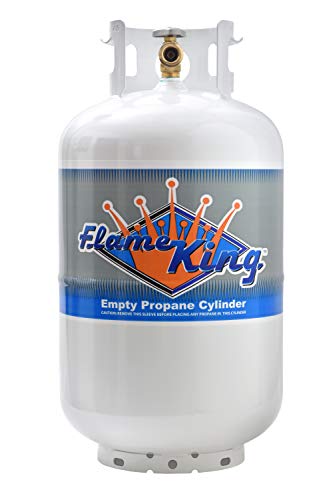
EMPTY TANK: Pre-purged vacuum ready for filling with propane; built from high-grade welded steel and powder coated for rust prevention

NEVER RUN OUT OF PROPANE: Our built-in gas meter gauge provides accurate gas level readings so you don’t have to worry about running out of propane!
EMPTY TANK: Pre-purged vacuum ready for filling with propane; built from high-grade welded steel and powder coated for rust prevention
How Much Runtime Does a 40‑lb Propane Tank Provide?
A 40‑lb propane tank holds about 9.5 gal of liquid propane, delivering roughly 820,000 BTU total. You calculate runtime by dividing tank capacity (40 lb) by the hourly consumption rate determined by burner BTU rating. A 10,000 BTU burner uses about 0.5 lb/hr, giving roughly 80 hours; a 20,000 BTU burner consumes 0.9 lb/hr for about 44 hours; a 30,000 BTU burner draws 1.4 lb/hr, limiting you to 28‑29 hours. Real‑world tank heating adds extra propane consumption variance, especially at high heat or with multiple burners. Adjust for efficiency factor and gauge accuracy to refine estimates. Understanding BTU output helps you match your grill’s power requirements to the appropriate tank size for your camping needs. Compared with a 20‑lb tank, the 40‑lb version roughly doubles runtime under identical conditions. Propane itself does not go bad when stored properly.

EMPTY TANK: Pre-purged vacuum ready for filling with propane; built from high-grade, welded steel and powder coated for rust prevention

Compatible with all appliances featuring a QCC1 / Type 1 connection, this gauge is suitable for propane tanks ranging from 5 lb to 40 lb. Note: This product is not suitable for propane tanks exceeding 40 lb

Set of 2. Compatible with all appliances with a QCC1 / type1 connection and up 5 lb to 40 lb propane tanks.
Which Propane Tank Gives the Longest Runtime for My Grill?
The 40‑lb tank you just examined offers roughly double the hours of a 20‑lb model, but if you’re hunting for the absolute longest grill time, the 100‑lb tank tops the list. At 23.6 gallons, it delivers 50‑100 hours of continuous cooking, dwarfing the 30‑lb’s 15‑30‑hour range and the 20‑lb’s 10‑20‑hour span. When you weigh tank capacity considerations, factor in usable volume—about 80 % for the 100‑lb—so you’ll actually get around 23 gallons before you need a refill. Larger capacity also means a less frequent propane tank refill schedule, reducing trips to the supplier. For backyard or residential grills that run high‑BTU burners, the 100‑lb model maximizes uptime while minimizing refill interruptions. When selecting between tank options, consider essential features like heat distribution and durability to ensure reliable performance throughout the grilling season. The standard grill uses approximately 20,000 BTUs per hour which directly influences how long each tank will last.

HIGH-GRADE STEEL welded construction; PREMIUM POL valve assembly

【Role and Function】The upgraded pol to qcc1 adapter converts your large propane tank's POL connection to QCC Type1 & POL connection, It offfers both types of connections for your propane tank. It is more convenient for daily use by using this pol propane tank gauge.
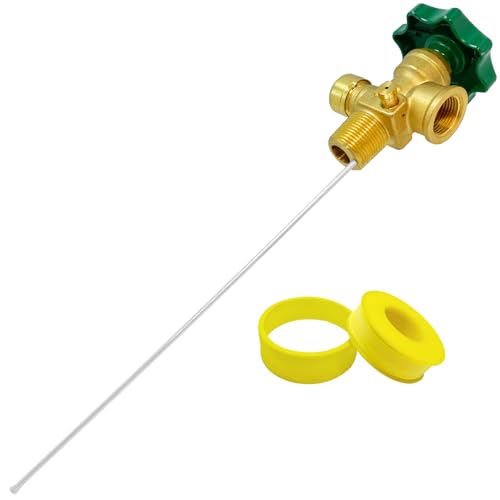
Propane Tank Valve Built to Last – Solid Brass With Automatic/Manual Pressure Relief Valves/Heavy-Duty Handle: 100LB propane tank service valve coupler is forged from a single piece of brass for superior strength and durability.Rust- and leak-resistant, it’s built for tough outdoor use.The automatic and manual pressure relief valves add extra safety,while the heavy-duty easy-grip handle ensures smooth operation.Delivers safe,steady performance for grill, fryer,and other propane appliance.
How Can Proper Regulator Settings Extend Propane Tank Runtime?
When you set the regulator to the manufacturer’s recommended pressure—typically 11 in H₂O for most residential grills—you keep the burner operating at its ideal fuel‑air mix, which prevents excess propane from being vented and maximizes the tank’s usable energy. Proper regulator settings keep the flow steady, so the grill draws only the gas needed for each flame level. To extend runtime, you should check the regulator for leaks, clean the diaphragm, and verify the pressure gauge monthly; these regulator maintenance procedures prevent drift that forces the system to over‑compensate. By fine‑tuning the pressure and ensuring the regulator responds accurately, you achieve optimizing fuel efficiency, reducing waste and getting more cooking time from each tank. Before connecting a new propane tank, ensure you conduct a leak test to confirm a secure, leak-free connection. Release remaining gas by turning all burner knobs to the highest setting for several minutes before shutting the grill off.