Smoke cheese for 30 minutes to 1 hour for a light flavor, 1–2 hours for medium, and 2–4 hours (up to 8 hours for an intense boldness) while keeping the internal temperature below 90 °F. Use a shaded smoker, ice‑water trays, and a partially closed vent to maintain that cool range. Rotate the cheese every 15–30 minutes and monitor with a probe or infrared gun. After smoking, wrap and refrigerate for 24–48 hours before a week‑long rest, and the next sections will show you how to fine‑tune each step.
How Long to Smoke Cheese for Light, Medium, or Bold Flavor
A typical cold‑smoke session lasts anywhere from 30 minutes to 8 hours, depending on whether you want a light, medium, or bold flavor. For light flavor, you’ll smoke cheese for 30 minutes to 1 hour, keeping temperature below 90°F and using a damper at 75% closed. Medium flavor requires 1–2 hours, turning every 30 minutes, with steady smoke from a pellet or tube smoker; maintain the same temperature ceiling. Bold flavor extends to 2–4 hours, possibly up to 8 hours for intense depth, again turning regularly and watching color development. Your cheese variety selection influences cut size and surface exposure, while smoke wood selection determines aromatic intensity; choose milder woods like apple or pecan for light results and stronger woods for bold outcomes. Maintain temperature below 90°F to prevent the cheese from melting during the smoking process.

Mesquite wood chips
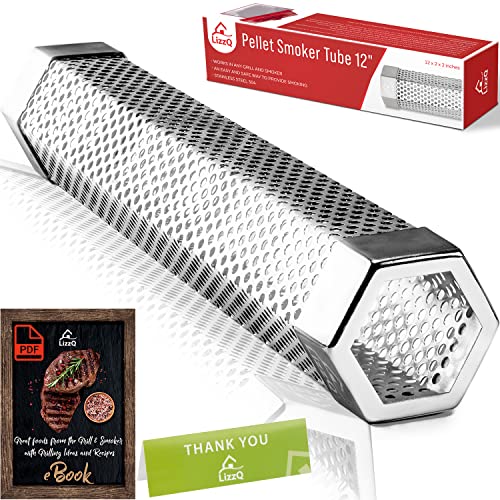
✅ This accessory is designed to WORK IN ANY GRILL (gas, electric or charcoal) and with any smokers. It ADDS GREAT FLAVOR for your meat or fish and exposes them to a tasteful smoke of smoldering wood. Perfect for smoke cheese.

304 Stainless Steel Material: LOVEERCT smoker tube is made of 100% high-quality 304 stainless steel, with excellent workmanship, anti-rust and heat-resistant, durable and sturdy, not be broken or bent easily after repeated use
Which Cheese Types Give the Best Smoke Results
Various cheeses excel in smoke absorption, but cheddar, gouda, Monterey Jack, Swiss, and brie consistently rank highest when you compare texture, melt resistance, and flavor synergy. You’ll find these five are the best smoking candidates because their cheese texture impacts dictate how smoke penetrates and holds flavor. Cheddar’s creamy, slightly crumbly texture absorbs hickory or oak without losing structure; cut it into 8‑oz blocks for even exposure. Gouda’s firm, low‑moisture body resists overheating, making it ideal for beginners and apple‑wood smoke. Monterey Jack stays solid under 90 °F, especially peppered varieties, while Swiss’s nutty matrix pairs with almond or maple smoke and melts only above 150 °F. Brie’s robust rind shields the interior, allowing higher temperatures and bolder woods without leakage. Like grill grates, cheese requires proper seasoning and preparation to achieve optimal flavor results. Hard cheeses such as cheddar and gouda are ideal because they do not easily become over‑smoked.
How to Set Up a Cold‑Smoking Environment for Cheese
If you keep the ambient temperature between 68 °F and 86 °F while the smoker itself stays below 60 °F, you’ll create a true cold‑smoke zone that prevents cheese from melting and lets smoke penetrate evenly. First, locate the smoker in a shaded garage or covered area to avoid solar gain. Set a tray of ice water beneath the cheese rack and a pan of ice above the pellet tube; this dual‑phase cooling stabilizes the internal environment. Ignite a pellet tube, let it burn for 30 seconds, then extinguish it, leaving only smoldering pellets. Turn the fan on without additional pellets to achieve proper air circulation within the smoking vessel, which in turn supports maintaining consistent smoke density. Position cheese on the top rack, rotate every 20–30 minutes, and monitor temperature with a calibrated probe. Before smoking, season your smoker by heating it to a high temperature to create a protective non-stick surface. The cheese should be dried overnight in the refrigerator before smoking.

Cleaner, Healthier Smoke — Dual-Tube Design Reduces 80% Tar & Moisture for Better Taste:Our advanced dual-tube system delivers cleaner smoke by filtering out up to 80% of tar and excess moisture, giving your food a purer, more natural smoky flavor. With fewer impurities attaching to your ingredients, you enjoy healthier, smoother-tasting cheese, fish, meats, and nuts, while reducing bitter notes and harsh residues. Get richer flavor and a cleaner smoking experience with every use.

This smoker accessory is perfect for cold and hot smoking. You can put it into any gas grill, pellet grill, electric grill, charcoal grill, or smoker

The Breville Smoking Gun is the simple-to-use indoor smoker that allows you to infuse a variety of foods with natural smoky flavors like applewood and hickory using gentle, cold smoke; Also acts as a cocktail smoker for smoking whiskey drinks and more
Step‑by‑Step Smoke Timeline: Light, Medium, and Bold
Since you’re aiming for consistent flavor across light, medium, and bold smoke levels, follow a precise timeline: Light smoke requires 30 minutes to 1 hour; set the smoker to 70‑80 °F, load mild wood chips selection (apple or cherry), and rotate the cheese every 15 minutes for even coverage. Medium smoke extends to 1‑2 hours; maintain the same temperature, switch to a balanced wood chips selection (hickory‑maple blend), and continue rotation at 30‑minute intervals. Bold smoke demands 2‑4 hours; increase wood chips selection density, keep temperature steady, and monitor surface color for a brownish tint. Each wood type imparts distinct characteristics, so selecting hickory for bold smoke will provide deeper, richer flavors compared to milder fruitwoods. After any smoke level, wrap the cheese and meet refrigeration requirements: 24‑48 hours in a refrigerator, then a minimum one‑week rest before consumption. Hard cheeses are preferred for smoking because they retain shape and absorb smoke evenly.

Kitchen Essential: Perfect set for cheese making includes: Cheese Mold with a press follower and a cheesecloth. Irreplaceable kit for cheesemaking at home.

🏆 FOOD NETWORK’S BEST OVERALL CHEESE MAKING KIT & BEST HARD AND SOFT CHEESE KIT — Food Network’s Test Kitchen put the world’s top cheese making kits head to head and gave Standing Stone Farms their two highest honors — Best Overall Cheese Making Kit AND Best Hard and Soft Cheese Kit. This is the kit that beat every competitor in the world’s most prestigious test kitchen. Four years running.

INCLUDES: Rennet tablets (5); citric acid (4 ounces); cheese salt (8 ounces); thermometer (1); butter muslin (1 yard); and detailed step-by-step instructions for making mozzarella and whole milk ricotta.
How to Keep Cheese Below 90°F While Smoking
When you smoke cheese, keeping the internal temperature under 90 °F is essential to prevent the milk fat from liquefying; the data shows that a stable 70–80 °F range preserves block integrity while still allowing smoke penetration. To stay in that window, schedule sessions in winter or spring evenings when ambient air is below 60 °F, and position the smoker in shade to avoid solar gain. Use foil pans filled with ice above and below the cheese, and add an ice‑water pan inside the chamber; this absorbs heat spikes from the fire. Minimize air flow by partially closing vents, then crack the lid to vent excess heat without creating smoke leaks. Monitor temperature with a leave‑in probe and infrared gun, checking every 30 minutes, and turn the cheese to guarantee even exposure. These steps keep the cheese below 90 °F while delivering consistent smoke. Use a 6‑inch pellet tube to maintain low, steady heat throughout the process. Pairing your smoking setup with quality wood chips that produce moderate, clean smoke will enhance the cheese’s flavor without overpowering its delicate profile.
How Long to Refrigerate and Wrap Smoked Cheese
Keeping the cheese under 90 °F during smoking sets the stage for a controlled post‑smoke process, where temperature and moisture management determine flavor development. After smoking, expose the cheese on racks for 1–2 days, then wipe excess moisture. Apply proper wrapping techniques immediately—use uncoated butcher paper or parchment, then seal in a zip‑lock bag or vacuum‑seal if possible. Maintain ideal refrigeration temperatures below 40 °F; store the sealed package away from the door to avoid fluctuations. Let the wrapped cheese rest 24–48 hours, then continue refrigeration for at least 2 weeks to mellow smoke intensity. For quick consumption, a 2‑3‑day period suffices, but a 1‑2‑week window yields favorable balance. Monitor for mold; vacuum‑sealed cheese can last months, while non‑sealed portions should be used sooner. Proper packaging and hygienic handling prevent the growth of harmful bacteria during storage. Hard cheeses like sharp cheddar can withstand 3 to 4 hours for full flavor development.
What to Do If Your Cheese Is Too Light or Too Smoky?
One or two minutes of observation can tell you whether the cheese is under‑smoked or over‑smoked, because the surface color, aroma intensity, and bite bitterness each map to specific smoking durations. If the cheese appears pale, smells faint, and lacks bite, you’re dealing with a light result; extend smoking time by 15‑30 minutes, rotate more frequently, and consider a longer cold‑smoke window up to 3 hours. If it’s brownish, aromatic, and bitter, you’ve over‑smoked it; apply the keywording smoking duration principle by stopping early next batch and use correcting over smoked cheese through a two‑week refrigeration phase, extending to a month for severe bitterness. Track wood type, temperature, and rotation intervals in a log to replicate desired intensity precisely. Similar to grilling proteins, monitoring the cooking time helps you avoid overcooking delicate foods and achieve optimal results. The method was refined over three years of experimenting, tweaking, and trial and error, and the author claims the final method produces exceptional smoked cheddar cheese, which you will have to judge if it is the best smoked cheddar in the world.