First, wipe the plates with a damp cloth, set the grill on a flat, stable counter away from water, plug it into a 120 V outlet, and close the lid. Let it preheat five minutes until the indicator steadies. Slide the drip tray in, use the grooved lower plate to channel fat, and clean the tray afterward. Choose the right temperature—medium‑high (~375 °F) for steak, medium‑low (~350 °F) for chicken or pork, and highest for fish—adjusting time by thickness. Let meat rest before serving, and you’ll uncover even more tips ahead.
Getting Started: Preheat and Position Your Contact Grill
Before you even turn the grill on, wipe the cooking plates with a damp cloth to clear dust, then set the unit on a flat, stable counter away from any water source. Plug the cord into a 120 V outlet and watch the power indicator light glow, confirming the heating elements are alive. Close the lid fully; this lid positioning traps heat and prevents moisture loss. As the grill preheats for five minutes, the power indicator light stays on while a red preheat indicator flashes. When the light steadies or the timer shows “5,” the grill’s ready. Keep the lid closed until you slide your food onto the bottom plate, then open it gently with a pot holder to avoid burning your hands. Ensure the grill reaches the proper temperature before adding food. Preheating the grill to around 425°F ensures consistent heat distribution for optimal cooking results.
Master the Fat‑Drainage Features for Cleaner Cooking on Your Contact Grill
Now that the grill’s hot and the lid’s sealed, focus on the built‑in fat‑drainage system that keeps your food lean and your kitchen clean. Slide the removable drip tray into place before you start; it catches the liquid fat that slides down the 10‑degree sloped surface. While the grill sears, keep an eye on monitoring fat drainage by checking the tray’s level—if it fills quickly, adjust the food’s placement to avoid pooling. Optimizing slope angle isn’t a user tweak, but you can guarantee the grill sits on a flat countertop so the patented angle works fully. The grooved lower plate guides excess grease into the tray, and the non‑stick coating lets it flow freely. After cooking, wipe the plates with a damp cloth, then clean the tray with warm, soapy water. This routine preserves the drainage efficiency and leaves your grill spotless. For removable plates, you can also place them in a dishwasher for convenient cleaning. The original intent was to create an indoor grill that cooked on both sides, which is why the dual‑side heating feature is essential.

Convenient Replacement: This 14.5" long drip tray pan serves as a handy replacement part for George Foreman grills

For George Foreman Grills: The VIOTIIN silicone replacement drip tray is specifically designed to fit George Foreman 2 or 4 serving grills, including models GRP1060B, GR10B, GR340FB, and GRS040B. (Grill is not included)

George Foreman Grill Rplacment drip trays part is 14.5" long
Set the Right Temperature on Your Contact Grill for Different Proteins
Three to five minutes of preheating gets your George Foreman grill to the sweet spot—around 375 °F (medium‑high)—so the surface sizzles without sticking. Once the thermostat light steadies, set the temperature according to the protein you’re tackling. For steak, aim for medium‑high; then adjust steak thickness because thicker cuts need a few extra minutes while thinner slices cook faster. Monitor cooking time closely: a 1‑inch steak reaches medium‑rare in 4‑7 minutes, while a ½‑inch piece hits the same doneness in about 3‑5 minutes. Switch to medium‑low (≈350 °F) for chicken breasts and pork chops; a ¾‑inch chicken fillet needs 4‑6 minutes, and a pork chop of similar thickness cooks 5‑7 minutes. For best results with chicken, let the meat rest a few minutes after grilling to help retain juiciness. Always check internal temperature and rest the meat before serving. The grill’s sloped design drains fat away, helping to keep the cooking surface at a consistent temperature.

BBQ / Grill pit thermometer, safe and environmentally friendly.

[FAST & ACCURATE READING] Respond just within 2-3 seconds. The diameter of the dial plate is 2-3/8”, which is big enough for easy reading. With a 4 color-coded temperature range, you can grasp the internal temperature of grills at a glance. Featuring high-temperature measurement sensitivity, the grill thermometer is capable to detect temperature changes with an accuracy of ±0.5% during the entire cooking process.
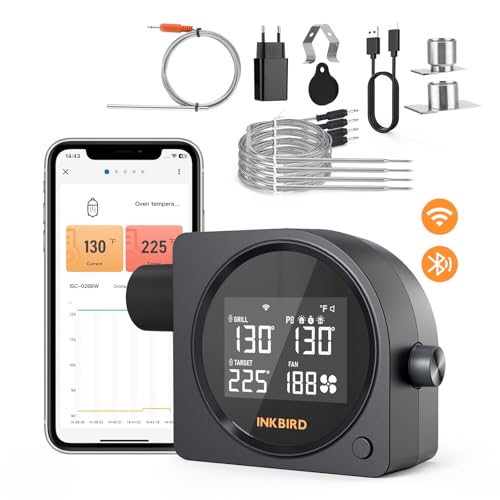
【5G Wi-Fi & Bluetooth5.0 Mode】Inkbird smoker controller fan supports two networking methods;can monitor the grill through smartphone; one smartphone can control multiple smoker controllers at the same time, or multiple people can monitor one smoker controller.
Grill Seafood and Fish to Achieve Perfect Flakiness on Your Contact Grill
After mastering the right temperature for meats, shift your focus to seafood, where the grill‘s rapid, even heat creates that coveted flaky texture. Pat your salmon, tilapia, or shrimp dry, then brush with melted butter or olive oil. Season with garlic powder, paprika, salt, and pepper. Preheat the contact grill on its highest setting for five minutes and spray lightly for non‑stick. Use quick sear methods: place skin‑side down salmon or the oily side of thin fish toward the cooler outer edge, close the lid, and cook 1‑2 minutes per side. For shrimp, grill for exactly one minute per side. The intense heat drives surface caramelization, sealing juices and delivering perfect flakiness. For additional moisture retention and flavor infusion, consider using foil packets with ventilation holes when grilling delicate fish fillets. Remove at 140°F, rest under foil, and enjoy tender, flaky results. Rich in Omega‑3 fatty acids, salmon also supports heart health.

【Portable & Convenient】 This fish grill basket features a foldable design with a detachable handle, making it easy to carry and store. Perfect for camping, picnics, or backyard BBQs—take your grill basket anywhere with ease!

Food-Grade 430 Stainless Steel for Long-Lasting Use: Made of premium 430 stainless steel, this grill basket is rust-proof, heat-resistant, and safe for direct food contact. It withstands high grilling temperatures without warping, ensuring your fish, veggies, and seafood stay intact and flavorful every time. Non-toxic and BPA-free, so you can grill with confidence for family and friends.

Keep Food Safe & Mess-Free: Prevents fish, shrimp, vegetables, wings, and other small items from falling through grill grates
Contact Grill Tips for Grilling Vegetables & Fruit: Times & Tips
When you preheat your George Foreman grill for at least five minutes with the lid closed, the surface reaches a steady, high temperature that cooks vegetables and fruit evenly and quickly. Slice zucchini, eggplant, peppers, mushrooms, and tomatoes to the suggested thickness, then toss each batch with olive oil and your favorite seasoning combinations—garlic powder, salt, pepper, or rosemary sprigs work well. Lay the pieces in a single layer, close the lid, and apply high heat techniques: asparagus and mushrooms need 3‑5 minutes, zucchini 3‑4, eggplant 4‑5, peppers 5‑8, and tomatoes just 1‑2 minutes. For fruit, grill pineapple 3‑4 minutes and tomato slices 1‑2 minutes. Check doneness at the minimum time, turn if needed, and enjoy crisp, caramelized results. The grill’s built‑in temperature gauge helps you maintain optimal heat for consistent cooking. The raised ridges on your contact grill create those desirable grill marks while allowing excess fat to drain away for healthier results.
How to Clean and Keep Your Removable Plates and Drip Tray in Top Shape
Even if you’re keen to fire up the grill again, taking a few minutes to clean the removable plates and drip tray right after cooking will keep the non‑stock surface in top shape and prevent buildup. First, let the grill cool, then place three layers of damp paper towels on the warm bottom plate and close the lid for a quick steam‑loosen. Wipe away most of the grease, push remaining droplets into the drip tray, and let both components air‑dry. Submerge the plates in warm soapy water, soak, then scrub gently with a soft sponge—avoid abrasives to protect the non-stick coating. Rinse thoroughly and dry before reinserting. For the drip tray, hand‑wash with soapy water or run it through the dishwasher, observing dishwasher safety considerations. Understanding signs of plate degradation helps you recognize when replacement plates may be needed to maintain optimal cooking performance. Follow this ideal cleaning schedule after each use to maintain performance. Use a soft sponge for gentle scrubbing.
Troubleshoot Common Issues and Fine‑Tune Your Contact Grill Technique
If you notice error codes, uneven heating, or strange smells while using your George Foreman grill, you can quickly diagnose and fix most problems without calling a technician. Start with a planned cleaning routine: unplug, cool for 30 minutes, then clear vents, drip tray, and hinge debris. For E1, let the sensor dry; for E4, check voltage and avoid thin extension cords. Troubleshooting hot spots means rotating food midway and inspecting the top plate and hinge wiring for loose connectors or broken wires. If the grill overheats, trim excess fat and guarantee the drip tray isn’t overflowing. Reset by unplugging, then recalibrate holding power and temperature buttons for five seconds. Keep the grill leveled, secure loose screws, and you’ll maintain consistent temperature and reliable performance. If you encounter an E2 error, verify sensor connection before considering replacement. For optimal grill longevity and cooking safety, establish a deep cleaning routine that goes beyond daily maintenance to remove stubborn grime and residue buildup.