
Grill the quarters at a steady 375 °F, searing them directly for a few minutes, then move them to indirect heat for 45‑50 minutes. Lightly brush once after the first five minutes and use a drip tray to avoid flare‑ups. Check the thickest thigh; when it hits 155‑160 °F you can start the final crisp, and pull it off at 180‑185 °F for pull‑apart dark meat. Keep the temperature consistent and you’ll get perfect flavor, while the next sections reveal deeper tips.
What Grill Temperature & Direct‑Heat Searing Do You Need for Chicken Quarters?
You’ll want a medium‑high grill of about 425 °F to start—this heat crisps the skin while rendering the fat. Set a two‑zone fire: a hot direct side for searing and a cooler indirect side for gradual cooking. Begin with the chicken skin‑side down on the indirect zone, letting it sit until the internal temperature reaches 155 °F; this renders fat evenly and prevents rubbery skin. Then move it to the direct side, searing 2‑4 minutes per side while you flip every minute to achieve a light, uniform crust. Maintain even heat distribution by rotating the quarters across the grates, and use an ideal marinade preparation—oil‑based, lightly salted—to promote moisture retention and a crisp finish. Letting the meat rest for 5 to 10 minutes after cooking helps retain juiciness and ensures optimal flavor. Dark meat, like the thigh in a chicken quarter, is harder to overcook because of its higher fat content.
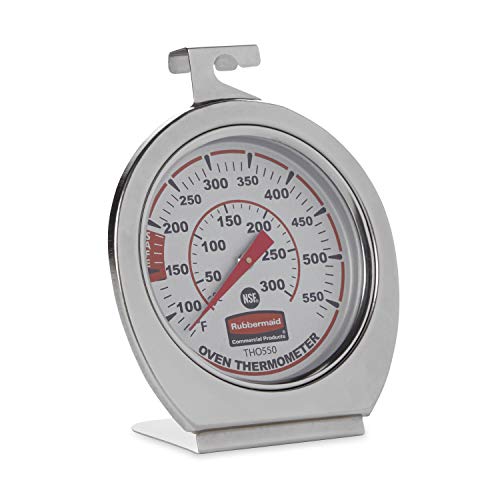
FOOD SAFETY: Thermometer displays true oven temperature instantly to ensure safe food preparation
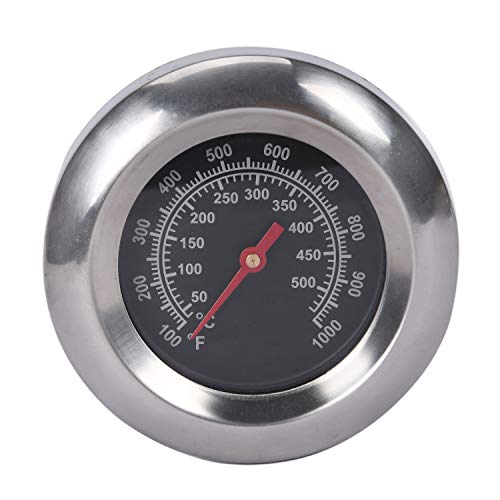
Wide temperature range: 100 F-1000 F/ 50 ℃- 500 ℃(Accurate Readings). Dimensions: 3" face, 2" stem, M10 nut (0.39" strew), Please check the dimensions of your grill before you order

✔ BLACK BBQ THERMOMETER - Choose from 3" face, 3" stem or 2" Face with 3" Stem; M8 Installation Nut Included
How Long to Cook Chicken Quarters on Indirect Heat?
After searing, move the quarters to the cooler side of the grill and keep the lid closed. Set the outer burners to 350 °F and maintain an internal grill temperature around 400 °F. Place the chicken skin‑side‑up, then cook indirectly for 20 minutes until the internal temperature hits about 120 °F. Flip skin‑side‑down and continue for another 20 minutes, checking every 10‑12 minutes and basting each turn. At the 33‑minute mark, you should be near 155 °F; if you need a higher final temperature, adjust overall cooking times accordingly. Keep the lid closed, monitor temperature closely, and finish with a final 10‑minute skin‑side‑up segment until the thickest part reaches 165‑170 °F. Using a meat thermometer to verify doneness ensures you achieve the perfect balance of crispy skin and juicy meat. This method yields evenly cooked, juicy quarters in roughly 45‑50 minutes. Chicken leg quarters take 40‑55 minutes to cook fully on the grill.
Basting, Sauce, and When to Rest Chicken Quarters for Maximum Flavor
Two‑minute intervals of basting create a glossy, flavor‑rich glaze while the chicken finishes cooking on indirect heat. Start with a thin coat of BBQ sauce after the first sear, then close the lid and repeat every 5‑10 minutes. Use a basting brush for even coverage; a light oil brush beforehand helps the sauce adhere and the glaze become tacky. As the internal temperature climbs to 160°F, apply a second coat, then a third at 170°F, and a final dusting of homemade rubs at 185°F. Simmer the sauce for ten minutes beforehand to achieve the right sauce consistency. Once the chicken hits 165‑170°F, remove it and let it rest for fifteen minutes; this lets juices redistribute and the glaze set, delivering maximum flavor. Dark meat stays juicier longer, allowing the glaze to caramelize without drying out. For optimal results, marinate the chicken for at least 30 minutes before grilling to enhance both flavor and tenderness.
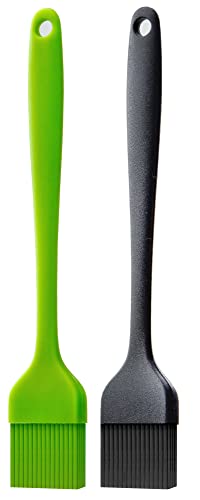
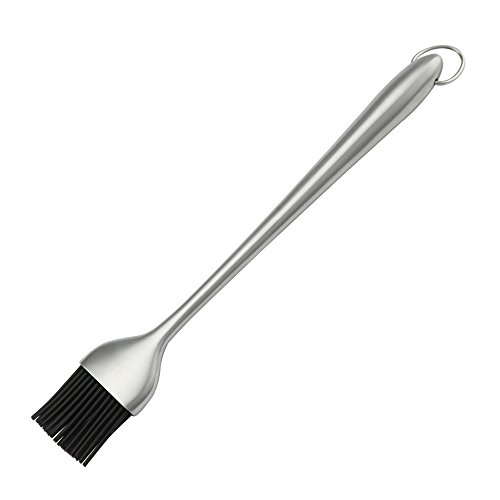
Heavy-duty BBQ Basting Brush by HQY - Silicone Bristles with 12 Inch Stainless Steel Handle - Make Grilling Easy - 5 Year Guarantee

BBIMPROVE YOUR BBQ GAME - These Mopping Brushes keep your meat moist and full of flavor by allowing you to easily add mop, sauce, marinate, or tenderizer to your BBQ ribs, brisket, chicken, and pork while cooking.
Adjust Cook Time: Bone‑In vs. Boneless Chicken Quarters
The glaze you just built sets the stage for timing the cook, and the biggest variable now is whether the quarters still have bone. With bone‑in quarters, the internal bone structure slows heat penetration, so you’ll need 45‑55 minutes total at 375 °F, starting with a 10‑minute direct sear per side then moving to indirect heat for the final 15 minutes. Expect an extra 8‑10 minutes compared to boneless. For boneless quarters, treat them like thick thighs: grill 7‑8 minutes per side at 350‑425 °F, or 5‑6 minutes per side with a lid on 400 °F, finishing in roughly 14‑16 minutes. Flip often to avoid burning and keep the surface even. Proper doneness monitoring—checking that the meat reaches the target internal temperature—ensures safety and juiciness without overcooking. Use a meat thermometer to verify the chicken reaches the safe internal temperature of 165 °F. For optimal results, consider using wood choices like oak or hickory to complement your chicken without overpowering the natural flavors.
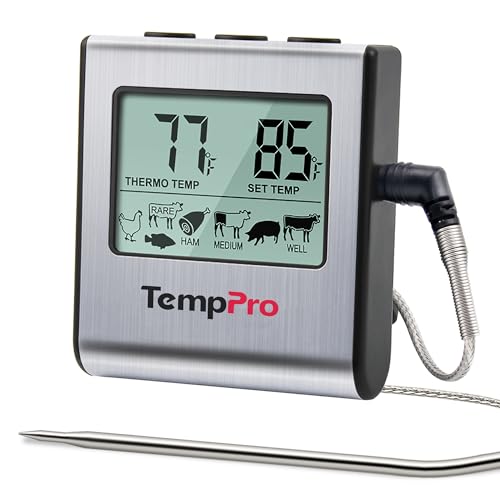
Cook mode with USDA preset temperature settings: TempPro cooking thermometer ideal for meat, oven, smoker or stove top; Programmable alert with preset temperatures for specific foods recommended by USDA; All of the preset temps can be reset to your desired tastes

【Dual Safe Probes for Multi-Use】Vuwwey meat thermometer probe is great for meat, liquids, oil frying, baking, candy making, kitchen & outdoors. The wired probe is ideal for monitoring air fryers, ovens, grills, BBQ, smokers. It's your hands-free assistant: set the alarm, stick it on, and step away from the heat
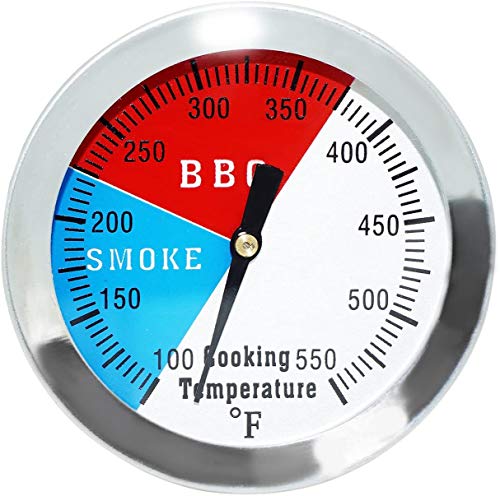
2" BBQ grill smoker pit thermometer stainless steel thermostat pit temp gauge
Check Internal Temperature and Follow Safety Checks for Chicken Quarters?
Checking the internal temperature of your chicken quarters is the only reliable way to guarantee safety and ideal texture. Insert a digital probe into the thickest part of the thigh, then repeat in the breast, ensuring proper thermometer placement and avoiding contact surfaces like bone or the grill grates. Aim for at least 165°F (74°C); this instantly destroys Salmonella and Campylobacter. If you prefer darker meat, let the thermometer read 170–175°F for extra tenderness, as the connective tissue near the bone benefits from higher heat. Remember that pink flesh can still be safe once the temperature target is met, so never rely on color alone. The low-and-slow method helps keep chicken moist by allowing fat and connective tissues to break down slowly, resulting in juicier meat. Consistently checking both sections confirms uniform doneness and eliminates bacterial risk. Always measure the thickest part of the chicken for the most accurate reading.
Rest Chicken Quarters Before Serving
Give 5‑10 minutes to let the cooked quarters rest before you cut or serve. This pause lets juices seep back into the meat as proteins relax, preventing dryness and preserving flavor. Apply the ideal resting technique by placing each quarter on a clean board or pan, loosely tented with foil, and avoid cutting until the timer expires. During this brief interval, post‑cook moisture retention improves, and the collagen breakdown achieved at high heat fully settles, enhancing tenderness. A five‑minute rest aligns with most recipes, while ten minutes guarantees the internal temperature stabilizes around 165°F. For dark meat like chicken quarters, aim for an internal temperature of 175°F to ensure optimal juiciness. By respecting this timing, you’ll serve succulent, juicy quarters that retain their full taste and texture. Chicken quarters are considered dark meat and highly regarded for their flavordark meat.
Common Timing Mistakes When Grilling Chicken Quarters
One common timing mistake is staying on direct heat too long, which quickly turns the skin rubbery or burns the seasoning before the meat reaches a safe internal temperature. You also often flip too soon or too often, preventing the fat under the skin from rendering and disrupting the meat texture. Keep the quarters on indirect heat for 10‑15 minutes at 375°F, then move to direct heat for a final 5‑7 minutes per side, flipping only once after the first 5 minutes. Avoid heavy oil or sauce layers, which cause flare‑ups; brush lightly and use a drip tray. Check the thickest thigh at 155‑160°F before the final crisp, then finish at 180‑185°F for pull‑apart dark meat. Using a thermometer for accuracy helps ensure your chicken reaches the proper temperature without overcooking. This schedule minimizes flare‑ups and guarantees consistent doneness. Maintain a grill temperature of 375°F throughout the process.


