
Pre‑heat your grill to about 600 °F and set up a two‑zone layout with a hot direct‑heat side and a cooler indirect side. Dry‑brine the strip steak with coarse kosher salt and fresh cracked pepper for at least 45 minutes on a wire rack in the fridge. Sear it diagonally, flipping every 30‑45 seconds for 2‑3 minutes per side to form a diamond crust, then move it to the indirect zone to finish to your target internal temperature. Rest the steak 5‑10 minutes, top with compound butter, and you’ll uncover even more tips ahead.
Pre‑Heat the Grill for a Perfect Strip Steak Sear
When you fire up the grill, aim for a grate temperature of about 600 °F—this high heat creates the rapid sear that locks in flavor and forms a perfect crust. Preheat on high for roughly seven minutes, watching for wisps of smoke and a loud sizzle as soon as the steak contacts the grate. Use a fast‑reading thermometer to confirm the surface hits 600 °F, then adjust burner controls to maintain proper grill temperature and avoid flare‑ups. Set up a two‑zone layout: a direct‑heat side for the initial sear and an indirect side for finishing. Keep the lid closed on gas grills to retain heat, and rotate the steak 90° on the second flip to create even diamond marks while you create ideal heat distribution across the cooking surface. Pat both sides of the steak completely dry with paper towels before seasoning. For optimal results, consider using reverse searing techniques to achieve a juicy interior while maintaining that perfect crust.
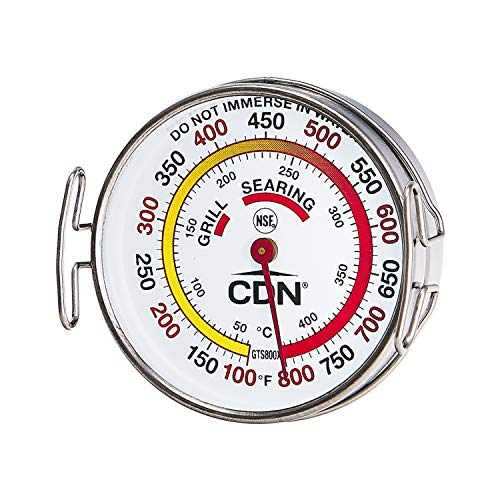
ACCURATE TEMPERATURE ZONES. The CDN GTS800X Grill Surface Thermometer features a color-coded scale that allows precise monitoring of temperature zones, providing optimal control over your grilling experience.

【500FT Remote Temperature Monitor & Smart Alerts】Equipped with Bluetooth 5.0, this bluetooth grill thermometer transmits real-time grill temperature data to the TempPro App within 500 feet; customize high/low temperature thresholds, and instant alerts will be pushed to your smart phone once the temperature deviates from your preset range, saving you from constantly hovering beside the grill

Material:This Grill Temperature Gauge is made of stainless steel to maximum durability and reliability.That is not only safe but also environmentally friendly
Dry‑Brine and Season Your Perfect Strip Steak
Start by sprinkling a generous layer of coarse kosher salt over every side of the steak, then give it a quick dusting of freshly ground black pepper and, if you like, a pinch of granulated garlic. Place the steak on a wire rack set over a foil‑lined tray, then refrigerate uncovered. For a ¾‑inch New York strip, apply about ¼ tsp salt per side; increase to ½ tsp per side for thicker cuts. Adjust dry brine timing to the steak’s thickness: 45 minutes to one hour for a quick lift, eight hours for ideal flavor, or 24‑72 hours for deep seasoning and maximum tenderness. Optimize salt application by using coarse kosher salt, ensuring even coverage on all surfaces. The dry‑brine process will denature proteins, draw out moisture, and then reabsorb it, creating a dry surface that accelerates Maillard browning when you grill. Before grilling, ensure your grill grates are clean to prevent sticking and allow proper heat transfer. Locks in moisture to enhance juiciness.
Multi‑Flip the Steak for 2‑3 min per Side to Create Diamond Crust
Three minutes of hot‑iron heat per side is all you need to forge a diamond‑pattern crust on a strip steak. Start by preheating the grill to 500‑550 °F, then place the steak diagonally at 10 and 4 o’clock. As juices surface, rotate clockwise to 2 and 8 o’clock—this is your optimized rotation timing, guaranteeing intersecting sear lines. After 1‑2 minutes, flip the steak, repeat the diagonal placement, and rotate again. Continue flipping and rotating every 30‑45 seconds until each side totals 2‑3 minutes. This multi‑flip method delivers consistent sear quality across the entire surface, producing a uniform, diamond‑shaped crust. To ensure perfect doneness, use an instant-read thermometer to verify the internal temperature. Finish by checking internal temperature, then rest the steak five minutes before slicing. Season steaks with salt and pepper before grilling.
Set Up a Two‑Zone Grill to Finish the Perfect Strip Steak
Usually you’ll create a hot zone for searing and a cool zone for finishing, because this dual‑area setup lets you control the steak’s exterior crust while gently bringing the interior to the target temperature without burning. On a charcoal grill, light a chimney of 12‑15 briquettes, bank the unlit coals to one side, and open all vents. Let the grates heat 10‑15 minutes, then place the strip steak directly over the hot coals to develop a deep Maillard crust. After a minute or two per side, slide the steak into the indirect cooking zone—where the charcoal bank remains unlit—to finish the interior to your desired doneness. On a gas grill, ignite half the burners to medium‑high, leave the others off, and preheat 15 minutes. Use the hot burner for searing, then move the steak to the off‑burner side, managing temperature zones until the interior reaches target temperature, finally returning it to the hot zone for a brief, final crisp. Once your steak reaches approximately 135°F for medium-rare doneness, remove it from the grill and let it rest for 5–10 minutes before slicing. Adding a Grill brush after each cooking session ensures the grates stay clean and ready for the next steak.


Celebrate charcoal grill, charcoal grilling, live fire cooking, charcoal griller, backyard grilling, two-zone crew, fire management, vents open, direct indirect, chimney loaded, coals ready, and heat control culture.

Celebrate charcoal grill, charcoal grilling, live fire cooking, charcoal griller, backyard grilling, two-zone crew, fire management, vents open, direct indirect, chimney loaded, coals ready, and heat control culture.
Probe the Perfect Strip Steak for Precise Internal Temperature
While the grill sizzles, you’ll need to probe the steak at the right moment to establish your desired doneness; insert an instant‑read thermometer into the thickest part, steering clear of bone and fat, and watch the display stabilize within a few seconds. For optimal probe placement, aim for the center of the meat, avoiding any fat caps that skew readings. Check every two to three minutes, noting when the temperature hits the pull‑temperature range for your target doneness—115°F for rare, 125°F for medium‑rare, 130‑135°F for medium, 145°F for medium‑well, or 5‑10°F below 160‑165°F for well‑done. Consistent internal temperature guarantees a reliable carryover rise of 5‑10°F during the five‑minute rest, delivering the exact finish you expect. Resting the steaks for at least 10 minutes allows the juices to redistribute throughout the meat. Begin by searing on high heat for 1–2 minutes per side before moving to indirect heat to achieve your target temperature.

【Fast & Accurate】Our meat thermometer digital delivers accurate readings within ±1°F in just 1–2 seconds, with a wide temperature range of -58°F to 572°F (-50°C to 300°C). No more waiting over the heat - know your food's exact temperature instantly.

UPGRADED PROBE FOR FASTER, MORE STABLE READINGS - This meat thermometer features a precision-upgraded probe with higher sensitivity and enhanced thermal conductivity, delivering more accurate and stable readings in just 0.5 seconds. Unlike standard probes, the upgraded design transfers heat faster from first contact, giving you a more reliable and consistent temperature measurement every time—no more guessing, only perfect meals!

More Accurate, More Professional: With a National Institute of Standards and Technology (NIST) certification for its ±0.5℉ accuracy, this meat thermometer is a game-changer cooking tool for BBQs, roasts, candy, and everyday meals, ensuring your food is cooked safely and deliciously every time.
Rest the Perfect Strip Steak With Compound Butter
After you’ve confirmed the steak’s internal temperature, slip a generous pat of compound butter onto the hot meat. The butter’s consistency should be soft enough to melt quickly but firm enough to hold herbs and spices without sliding off. Choose a butter flavor that complements the steak—garlic‑herb, chive‑lemon, or BBQ‑spice work well. Let the steak rest for ten minutes; during this pause the butter melts, forming a glossy, aromatic coating that penetrates the meat. If you’re pan‑searing, add the butter on the flip and spoon the melted butter over the top for even distribution. Keep the butter at room temperature if you’ll serve it immediately, or refrigerate the log for later use, ensuring it retains its shape and flavor. The harissa garlic‑herb butter adds a zesty North‑African kick that enhances the steak’s richness. A reliable meat thermometer ensures you monitor the internal temperature accurately before adding your compound butter.
Slice, Season, and Serve the Perfect Strip Steak
A perfect strip steak is sliced, seasoned, and served in three deliberate steps that preserve juiciness, enhance flavor, and present a tender bite. First, let the steak rest five to ten minutes, then locate the grain and cut across it at a 45° angle, aiming for uniform slice thickness of about ¼ inch. Use a long, sharp blade and keep the knife steady to avoid sawing. After slicing, address steak trimming considerations: remove excess connective tissue and tail fat, but leave a thin fat cap for flavor. Trim any gristle near the loin end, then season each piece with even strokes, avoiding a back‑and‑forth motion. For maximum tenderness, ensure your steak has been brought to room temperature before cooking. Finally, lay the steak flat, cut against the grain into ¾‑1‑inch portions, and plate with clean, minimal strokes for a professional presentation. Cutting on the bias further weakens the bonds that hold the fibers together.