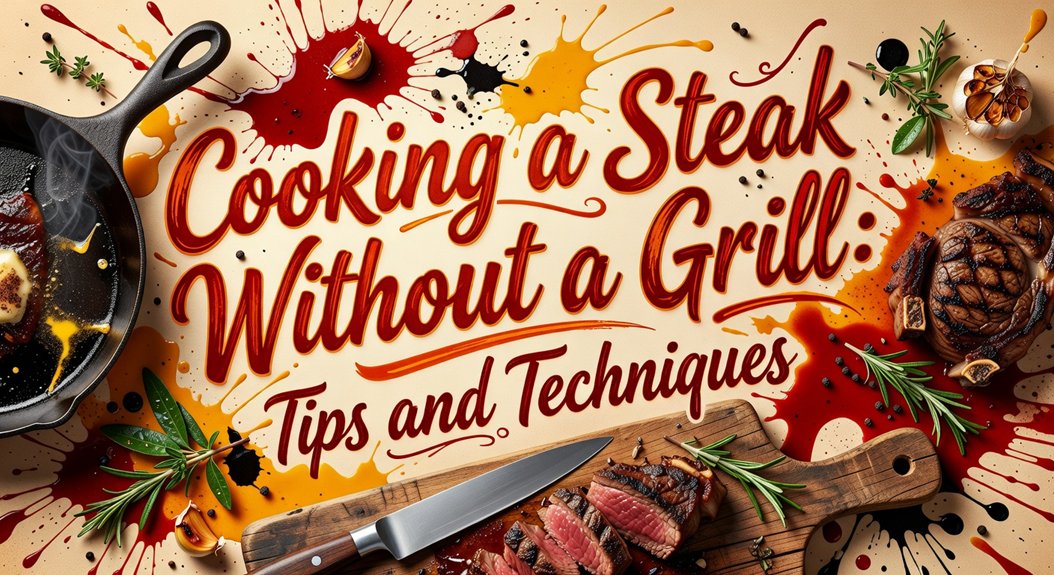
Bring your steak to room temperature, pat it dry, and season generously with kosher salt, pepper, and aromatics. Heat a cast‑iron skillet until it’s smoking, add a thin coat of high‑smoke‑point oil, and sear each side 1‑2 minutes for a caramelized crust. Finish in a preheated 375‑450°F oven until the internal temperature is about 5°F below your target, then tent with foil and rest 5‑10 minutes. Keep going for deeper cuts and troubleshooting tips.
Select the Ideal Indoor Steak‑Cooking Method
Which method suits your kitchen and steak thickness? If you have a 1‑inch cut and a hot stove, the 4‑3‑2‑Skillet‑Method delivers a perfect crust in ten minutes; sear timings are four minutes on the first side, three on the second, then a two‑minute rest. For thicker ribeye or strip, the Reverse‑Sear‑Method gives you control: preheat the oven to 250‑275°F, cook on a wire rack until the internal temperature reaches 105‑135°F (25‑40 minutes), then finish with a quick pan sear. When you prefer oven‑based heat, the Pan‑Sear‑Oven‑Finish balances sear and bake: sear two minutes per side, then finish 2‑5 minutes at 350°F. Bring your steak to room temperature before cooking to ensure even heat distribution throughout the meat. Explore broil variations only if your oven offers a broiler, but remember that precise sear timings remain the key to a uniform crust. Use a cast-iron skillet for indoor meat cooking to achieve optimal heat distribution.

Exceptional Heat Retention: Enjoy perfectly cooked meals with cast iron skillets that provide even heat distribution, ideal for searing, frying, and baking in a 12 inch frying pan.

Steady Heat Distribution - This cast iron skillet locks in even heat across every inch, delivering that perfect golden sear on steaks, crispy cornbread edges and beautifully caramelized vegetables that make every home-cooked meal taste restaurant-worthy.

Versatile Cooking Skillet: The Lodge Cast Iron Skillet is a multipurpose, everyday cooking pan that excels at searing, sautéing, baking, frying, and campfire meals
Prep Your Steak for Indoor Cooking: Max Flavor & Crust
Even before the skillet sizzles, bring the steak to room temperature—remove it from the fridge 30 minutes ahead so the interior heats evenly and the exterior isn’t shocked by the pan. Pat the surface dry with paper towels; any moisture blocks the Maillard reaction and prevents a crisp crust. Generously coat the meat with kosher salt, freshly ground pepper, and a pinch of garlic and onion powders, allowing the seasoning to penetrate for at least an hour or overnight for deeper flavor. Brush a thin layer of high‑smoke‑point oil—canola, peanut, or avocado—just before searing; this promotes browning without burning. Searing does not lock in juices. For even deeper flavor development, consider using hardwood pellet smoke infusion techniques before your indoor sear for a complementary smoky note. After cooking, apply rest time techniques: tent the steak loosely and let it sit for 5‑10 minutes, adhering to resting temperature recommendations of 55‑60 °F for medium‑rare, ensuring juices redistribute and the crust stays firm.
Pick the Ideal Cut and Thickness for Oven or Pan Cooking
Choosing the right cut and thickness is the foundation of a perfect oven‑ or pan‑cooked steak. You should consider marbling and inspect thickness before buying. For oven cooking, top sirloin, strip steak, and rib‑eye work well; rib‑eye’s high marbling yields juicier results, while strip offers a balance of flavor and tenderness. Aim for at least 1 inch, preferably 1.5 inches, to avoid overcooking and to allow even heat penetration. In the pan, top sirloin and rib‑eye excel, with bone‑in or boneless sirloin handling high heat gracefully. Thicker cuts (1.5 inches) give you precise doneness control via a thermometer, while 1‑inch steaks finish quickly—5‑7 minutes in the oven after searing for medium‑rare. To ensure optimal results, use an instant-read thermometer to verify your steak reaches the desired internal temperature. Choose a cut that matches your budget and desired texture, and always verify that the steak’s thickness meets these guidelines. The lean‑tender balance of filet mignon makes it a premium option for those seeking minimal fat while retaining softness.

One package of Boneless Beef Ribeye Steak weighing between 0.65 and 1.2 pounds.

Meets standards for animal welfare, feed, and more, so you can know about what you're buying (and eating)

STEAK-LOVER'S DREAM: Our French-cut Bone-in Ribeye Steaks, 4 count, 16 oz each, are cut in the French style from our aged Prime Rib Roasts. You can't find anything better than our juicy, well-marbled, Bone-in Beef Steaks with unsurpassed heartiness.
Sear‑First, Oven‑Finish: Classic Indoor Technique
When you bring the steak to room temperature, season it liberally and pat it dry, then sear each side in a smoking, oil‑coated cast‑iron pan for 1‑2 minutes to develop a deep golden crust that locks in juices. Preheat the skillet over medium‑high until it smokes, add a tablespoon of high‑smoke‑point oil, and press the steak down for full contact. The stovetop sear should be undisturbed, creating a caramelized barrier before you flip and repeat on the opposite side. Transfer the pan to a 375‑450°F oven; the ideal thickness determines whether you roast 5‑8 minutes for a one‑inch cut or 10‑12 minutes for thicker pieces. Remove the steak five degrees below your target doneness, tent with foil, and let it rest for five to ten minutes per inch before slicing. Use a quick-read meat thermometer to verify your steak has reached the desired internal temperature. Allow the steak to rest for 30‑60 minutes before cooking to reach room temperature.
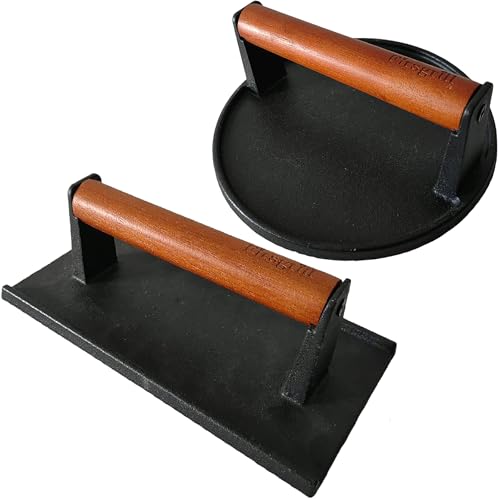
BURGERS – Perfect for smash burgers with beautiful grill marks BACON – Keeps strips flat and cooks evenly STEAKS – Helps sear and cook evenly THIN MEATS – Works great on any flat-top griddle or outdoor grill.

【HEAVY-DUTY CAST IRON GRILL PRESS】 :Our barbeque grill press is made of heavy duty food grade cast iron. Use the grill weight to press out unwanted grease and fat, safe to use in the oven, on the stove, on the grill, griddle, or campfire. The press can also be seasoned like cast-iron skillets to create a non-stick surface.
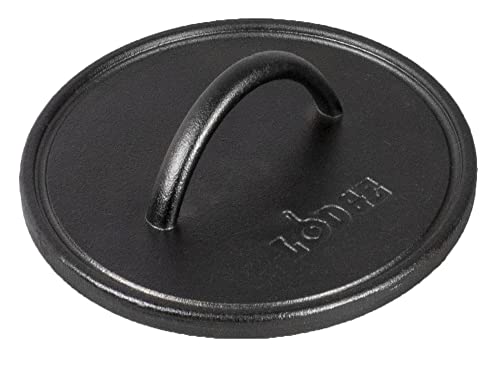
YOUR NEW GO-TO PRESS: The Lodge Cast Iron Grill Press is the perfect kitchen tool for beginners, home cooks and chefs. The sturdy piece is perfect for smash burgers or for grilling steaks or chicken. Put American cast iron to work in your home and keep authentically good food in the family.
Reverse Sear: Low‑and‑Slow Oven Followed by a Hot Pan
After mastering the quick sear‑then‑oven finish, you’ll find the reverse‑sear method yields an even more uniform doneness and a superior crust. Set the oven rack in the center, preheat to 250‑275°F, and line a rimmed sheet with foil. Place a wire rack for airflow, then pat your thick steak dry, season generously, and let it reach room temperature. Cook on the rack until the internal temperature is 30°F below target, typically 105‑115°F, using an instant‑read probe. Heat a cast‑iron skillet until it smokes, add high‑smoke‑point oil, and sear each side 1‑2 minutes at the ideal sear temperature, rendering fat and forming a deep brown crust. This carryover heat will continue to raise the internal temperature slightly during the resting period. Rest 5‑10 minutes before slicing to guarantee even internal cooking. Gentle and consistent oven heat prevents overcooking and gives you better control of the steak’s internal temperature.
Sous‑Vide + Sear: Precise Temp, Crispy Crust
A sous‑vide pre‑cook gives you exact doneness before the final sear, so you can lock in flavor and achieve a perfectly uniform interior. Set your circulator to the target temperature—129°F for medium‑rare, 135‑140°F for medium, 145°F for medium‑well, or 156°F for well‑done—and submerge a vacuum‑sealed steak. Maintain temperature control for at least one hour per centimeter thickness; a 1.5‑inch cut needs 1‑4 hours for medium‑rare, never exceeding 2.5 hours under 130°F for safety. After cooking, pat the steak dry to guarantee moisture removal, then heat a cast‑iron pan with high‑smoke‑point oil until smoking hot. Sear each side 30‑60 seconds for a caramelized crust, optionally finish with a torch for uniform Maillard. Unlike thawed steaks that risk overcooking the gray band of meat around the edges, this method maintains edge-to-edge doneness by controlling the interior temperature precisely before searing. Season after searing to preserve juices. For pork chops, a medium‑rare temperature of 129°F yields a rosy pink, juicy interior.
Broiling for Indoor Steak Cooking: Mimic Grill Heat
Two to three minutes of intense broiling can give a steak the same seared, caramelized crust you’d get on a grill, provided you position the oven rack correctly and preheat the broiler to its maximum 550 °F. Place the top rack 4‑6 inches from the element, maintaining at least a 2.5‑3‑inch gap to prevent flare‑ups. Pat the steak dry, season generously, and let it sit at room temperature for 30 minutes. The broiler’s radiant heat creates rapid thermodynamic heat transfer, while ambient air circulation removes excess moisture, sharpening the crust. Broil the first side for 4 minutes, flip, then broil the second side for 3 minutes. Remove the steak 5 °F below target, rest 5‑10 minutes, and enjoy a grill‑like finish without ever stepping outside. For best results, aim for an internal temperature between 130°F to 140°F for medium-rare doneness. Use a digital thermometer to check the internal temperature for precise doneness.
Troubleshoot Common Issues & Fine‑Tune Results
Ever notice how a perfect indoor steak can still fall short? If the pan isn’t screaming hot, the crust won’t form and the meat sticks—preheat cast iron for at least five minutes. Pat the steak dry, then season generously with kosher salt; a dry surface and proper seasoning prevent uneven browning. For thick cuts, reverse‑sear at 250 °F until the internal temperature is 10‑15 °F below target, then finish with a high‑heat sear. Avoid under‑proofing dough and improper kneading technique when you make a pan‑baked side; these errors mirror a steak’s under‑seasoned, soggy exterior. Finish by basting with butter, garlic, and herbs, and rest the meat no longer than five minutes to preserve juiciness without carry‑over overcooking. Using a meat thermometer ensures the steak reaches the desired doneness every time. For optimal results, select a thermometer with a fast response time to quickly verify internal temperatures and prevent overcooking.