Pick 80/20 ground chuck (or a prime blend of chuck, short rib, and brisket), season it with salt, pepper, and garlic powder, then form 5‑oz patties and press a thumb‑indent in the center. Preheat a two‑zone gas grill: set one side to 450‑500 °F for direct searing and keep the opposite side at 200‑250 °F for indirect heat. Smoke the patties over indirect heat at 225 °F for 45‑60 minutes until they hit 120‑140 °F, then sear each side 3‑4 minutes, add cheese at 160 °F, and rest under foil for five minutes. Continue for and you’ll uncover finer tweaks for perfect burgers.
Pick and Season Beef for Juicy Burgers
When you choose the beef for your burgers, start with ground chuck—its 15‑20 % fat gives the perfect 80/20 meat‑to‑fat ratio for juiciness and flavor. Measure the chuck, then decide if you want to enhance it with secondary cuts. For prime blend ratios, combine 50 % chuck with 25 % short rib and 25 % brisket; this yields a balanced, gourmet patty with deep umami and buttery notes. If you prefer a classic all‑American bite, a 75/25 chuck‑only blend works fine. Before mixing, trim excess hard fat and connective tissue; this prevents gritty texture while preserving moisture. Season the meat simply—salt, pepper, and a pinch of garlic powder—just before forming patties to keep the blend’s fat distribution intact. For food safety, always cook your burgers until the internal temperature reaches 160°F. A good burger cut should have a fat‑lean balance to ensure juiciness without falling apart.

One 16 ounce package of 100% Pure Ground Beef, 80% Lean/20% Fat

Three individually sealed 16 ounce packs of 100% Pure Ground Beef, 80% Lean/20% Fat

One 16 ounce package of 100% Pure Ground Beef, 90% Lean/10% Fat
Set Up a Two‑Zone Gas Grill for Perfect Grilled‑Burger Heat Control
A solid two‑zone setup gives you a scorching hot side for searing and a cooler side for finishing, letting you control each burger’s exterior and interior independently. Turn on one or two burners on one side to high or medium‑high, leave the opposite burners off, and close the lid to preheat. Aim for 450‑500 °F on the direct side; the indirect side will settle around 200‑250 °F from residual heat. Use an oven thermometer on the grate for accurate temperature monitoring practices, checking both zones before you place the meat. Adjust the grill configuration as needed—move burners or tweak valve settings—to maintain the differential. Once the first side sears, flip the burger and slide it to the cooler zone, keeping the lid closed for gentle finishing. To ensure food safety, monitor the internal temperature of each burger with a meat thermometer, aiming for at least 160 °F. Piling coals to one side creates a hot zone and a cool zone, offering versatile temperature control.
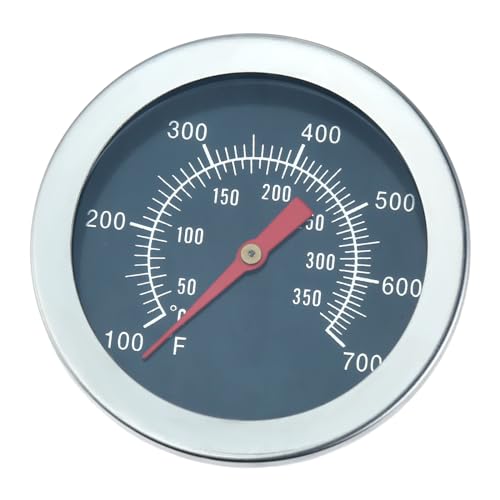
[𝐇𝐈𝐆𝐇 𝐐𝐔𝐀𝐋𝐈𝐓𝐘]: 2" Grill thermometer replacement for Charbroil 463251414, 463250212 is made of high-quality stainless steel material, featuring in ultra durability and safety, and well-tested by the manufacturer to meet the OEM standards and ensure to support a longer service life. The number in the dial is clear to read, and the needle in the dial helps you to measure the grill temperature.
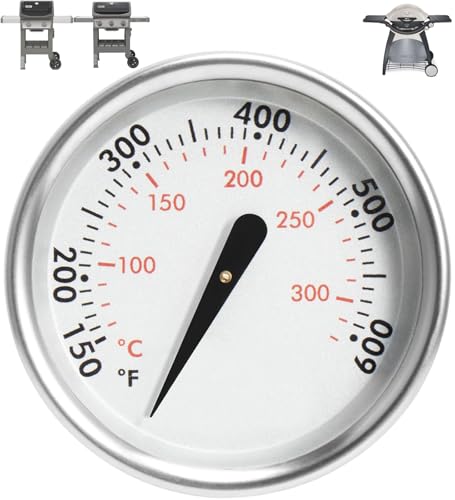
Compatible with weber original part number : For weber thermometer replacement 60540 60392 , 67031, 7581, & 74239. Parts for Weber Charcoal Grills. Fits most weber 22" kettles, and for Weber Q 120, 220, 300, 320 Grills (2007 - 2013). Fits Weber GS4 Spirit II/I 200 & 300 Gas Grills (2007 to present). Great for weber grill thermometer replacement spirit 2 parts. Note: if replacing a thermometer for a Q lid that has an oval thermometer, this will not fit.

Weber Part number 67088 (Replaces Weber Part 67731)
Form and Indent Patties to Prevent Puffing on the Grill
With the two‑zone grill set to sear on the hot side and finish on the cooler side, the next step is to shape your patties so they stay flat while the juices expand. Use a thumbprint technique: press your thumb into the center of each patty before it hits the 500‑degree grill, creating a shallow well that stops bulging. For finer control, apply dimpled patty indentation techniques—light finger dimples spread across the surface mimic a golf‑ball texture and distribute moisture evenly. Form patties slightly wider and thinner, targeting about 5.3 oz, and employ a burger press for consistent patty formation. This prevents the single large puff common in hand‑shaped burgers and keeps the burger flat, juicy, and uniformly cooked. You can also place an ice cube in the center of each patty to release moisture during cooking and further enhance juiciness. Symon’s thumb indentation trick is widely endorsed by chefs for maintaining patty shape.
Preheat the Grill and Create Zones for Optimal Grilled‑Burger Searing
If you close the lid and crank the burners to high for 10‑15 minutes, the grill will hit the 400‑450°F range needed for a perfect sear. While the lid is on, brush the grates clean; hot metal lets the brush scrape off residue efficiently. After preheating, oil the hot, clean grates with a paper towel dipped in high‑smoke‑point oil, using tongs to avoid burns. Now set up two zones: leave one burner on high for a direct‑heat searing zone, and turn another burner down or off for an indirect cooler zone. Space burgers at least an inch apart in the direct zone to prevent steaming. This layout lets you regulate cooking temperature precisely, achieving a crusty exterior while keeping the interior juicy. Use fresh, high‑quality ground chuck for the best flavor and juiciness. Flip your burgers once after 3‑5 minutes on each side to ensure even cooking without pressing them down, which would release valuable juices.

Graza Frizzle Oil Made from 100% Olives: A neutral-flavored, high heat cooking oil made from 100% peak harvest olives. With a smoke point of up to 450 degrees, Frizzle is your high-heat kitchen hero. 1 bottle/750ml.
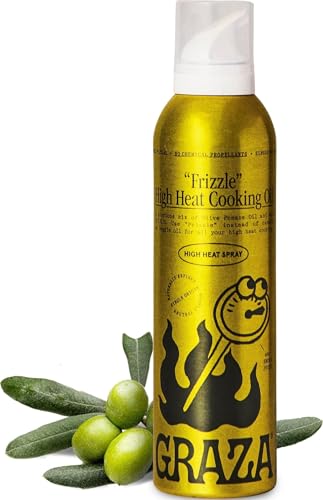
Graza Frizzle Oil Spray Made from 100% Olives: A neutral-flavored, high heat cooking oil made from 100% peak harvest olives. With a smoke point of up to 450 degrees, Frizzle is your high-heat kitchen hero. 1 can/5 oz.

Light Buttery Flavor That Elevates Every Meal: Algae Cooking Club Chef-Grade Algae Oil enhances every dish with subtle richness. Its neutral profile makes it ideal for searing, baking, and dressings, transforming everyday meals into gourmet experiences.
Cook Burgers With the Indirect‑Then‑Sear Method for Even Doneness
Because thick burgers need both gentle cooking and a quick crust, start by placing the patties over indirect heat at about 225 °F and let them smoke for 45–60 minutes until the internal temperature reaches 120–140 °F. Keep the lid closed, use a water pan, and monitor with an instant‑read thermometer to hit ideal timing. When the target is reached, crank the burners to 450–500 °F, open the lid, and move the burgers to direct heat. Sear each side for 3–4 minutes, rotating to avoid flare‑ups and preserve maximum moisture. For optimal results, ensure even patty thickness for consistent cooking throughout. Add cheese at 160 °F, close the lid briefly to melt, then remove and rest for 3–4 minutes before assembling with toasted buns and toppings. Patty formation should be done by shaping ground beef into a ball with cupped hands, then gently pressing it into a disk, and refrigerating the patties until ready to use.
How Long to Grill Each Side for Rare, Medium, and Well‑Done Burgers?
After the indirect‑then‑sear stage, the next step is timing each side for your desired doneness. For a rare patty, grill 2‑3 minutes per side on high heat, aiming for burger grilling temperatures of 120‑125 °F and a total of about 5 minutes. Medium‑rare requires 5‑6 minutes per side on a gas grill, reaching 130‑135 °F and roughly 6‑7 minutes total. Medium burgers need 4‑5 minutes per side over medium‑high heat, hitting 140‑145 °F and 7‑8 minutes overall. For medium‑well, set the grill to medium, cook 5‑6 minutes per side, and target 150‑155 °F, totaling about 9 minutes. Well‑done patties demand 9‑10 minutes per side, achieving 160‑165 °F and a fully browned interior. Frequently flipping your burgers during cooking can reduce moisture and tenderness, so minimize flipping to keep them juicy. Use a reliable instant‑read thermometer to confirm burger grilling temperatures and adjust searing time accordingly. Yield is typically four burgers per batch.
Add Cheese Just Before the Final Sear So It Melts Perfectly
Slide the cheese onto the patty during the last 30 seconds of the second side’s cooking, then cover the grill briefly to trap the residual heat. Choose a young, moist cheese—American, Monterey Jack, or Fontina—so it melts quickly without graininess. For perfect cheese melting, add a couple of water droplets onto the grill surface, then snap the lid shut; the steam creates uniform heat and prevents the cheese from stiffening. Guarantee even cheese coverage by laying each slice flat, overlapping edges slightly. The brief cover keeps the patty warm while the steam finishes the melt, yielding a glossy, gooey layer that adheres fully. This method avoids extra cooking time and preserves the burger’s juiciness. For best results, consider that cheese melts more evenly when exposed to consistent, indirect heat, similar to how mayo creates more even browning on grilled cheese sandwiches compared to butter alone. Cheese caramelization enhances flavor and texture.
Rest the Burgers Covered for Five Minutes to Let Juices Redistribute
A brief five‑minute rest under a loosely tented foil blanket lets the patty’s fibers relax and the juices redistribute evenly, preserving the burger’s juiciness while the residual heat carries it to the perfect doneness. Transfer the patties to a wire rack, then loosely cover them with aluminum foil; this maintains a stable resting temperature without trapping steam. Aim for a resting duration of five minutes—long enough for muscle fibers to unwind and juices to reabsorb, yet short enough to keep the burger warm. The foil tent slows cooling, while the rack allows air circulation, preventing soggy buns. After the rest, the burger retains peak juiciness and uniform doneness, ready for assembly. This practice also ensures proper doneness by allowing residual heat to finish cooking the patty. For food safety, verify the patty reaches an internal temperature of 160°F before serving.
Fix Common Grilled‑Burger Issues for Restaurant‑Quality Results
If you want restaurant‑quality burgers, you must guarantee the common pitfalls that turn a juicy patty into a dry, crumbly mess. First, adjust patty thickness based on desired fat content: lean meat needs thinner patties or added fat like tallow, while ground chuck can stay thicker. Handle the meat gently; over‑shaping melts fat early and densifies fibers, making the burger chewy and prone to crumble. Clean and preheat the grill until the grates are hot and lightly oiled, which prevents sticking and verifies a proper sear. Flip only once after 3‑5 minutes using a spatula, and never press the patty—pressing squeezes out juices and sparks flare‑ups. Finally, make a thumb‑sized dimple in the center to stop doming and promote even cooking. To ensure food safety, aim for an internal temperature of 160 degrees Fahrenheit for well-done burgers. Avoid over‑seasoning the meat to keep the flavor balanced.