
Pick a cut that fits your grill—rounds for even marks, lengthwise steaks for smoky flavor, or half‑moon wedges for bite‑size pieces. Sprinkle kosher salt, let sit 30 – 60 minutes, then rinse and pat dry to banish excess moisture. Heat the grill to about 400 °F, clean the grates, and oil them with a high‑smoke‑point oil. Marinate or brush the eggplant with garlic, vinegar, herbs, and oil, then grill 7‑10 minutes, flipping once when the first marks appear and finishing with a quick high‑heat burst for a light char. Continue for and you’ll uncover sauces, toppings, and troubleshooting tips.
Choose the Best Eggplant Cut for Grilling
Choosing the right eggplant cut sets the stage for perfect grilling. You’ll want cut sizing that matches the variety: globe eggplant takes ½‑inch rounds, Japanese eggplant shines as ¼‑inch lengthwise steaks, and Indian eggplant works well in thick half‑moon wedges. Slice orientation matters—crosswise rounds give even grill marks, while lengthwise steaks expose more surface for smoky flavor. Keep each piece uniform; a single‑layer arrangement on the grill prevents overlap and guarantees consistent heat. Brush both sides with oil, then season before they hit the grates. Thicker ½‑inch cuts need 3‑7 minutes per side for tenderness, whereas thinner ¼‑inch slices finish in 2‑3 minutes. Preheating your grill to medium heat before cooking will ensure even browning and proper texture development. By mastering cut sizing and slice orientation, you’ll avoid limp, mushy edges and achieve a perfectly charred, meaty bite every time. For the best results, select oblong globe eggplants rather than bulbous or round ones, as they have fewer seeds and a more consistent texture.

The Only Meat Smoking Guide Magnet You'll Ever Need: Unlike single-page magnets, this 4-side set includes smoking temps, cook times, meat temperature chart, pellet grill wood pairings, and a simple step-by-step How-To guide—all organized for quick use at the smoker. Everything you need, nothing you don't.
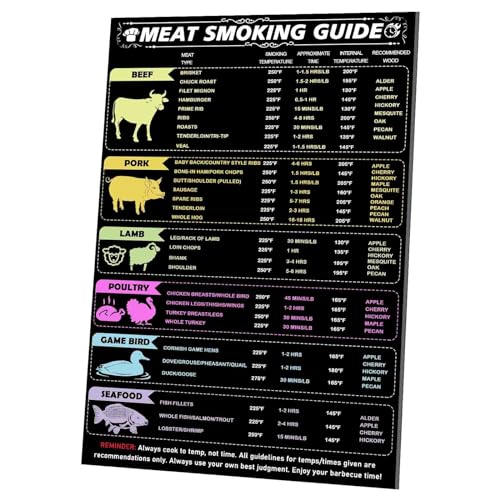
Meat smoking guide: This is a helpful guide for you want to smoke meat to save time searching on your phone. The chart includes meat type, smoking temperature, approximate time of smoking, internal temperature and wood types. In addition to your grill and BBQ tools, it is essential to prepare a guide.

DURABLE DESIGN - Made with high-quality material to last indoors. Not for outdoor use
Salt and Press Eggplant to Remove Moisture
Let the eggplant sit and sweat after you sprinkle it with kosher salt, because the salt will draw out the excess water that makes the flesh soggy on the grill. Slice the vegetable to your desired thickness, then season each side generously—about half a tablespoon for a large eggplant—ensuring even salt distribution. Arrange the slices in a colander over a plate and let them rest 30 minutes to an hour; you’ll see beads of liquid forming on the surface as moisture retention decreases. After sweating, rinse briefly under cold water to remove surface salt, then pat dry with paper towels. Press each slice gently with another towel, blotting until no droplets remain. This step reduces oil absorption and reads a firm, creamy texture ready for grilling. For optimal results, preheat your grill to medium-high heat before adding the eggplant to ensure proper cooking. Fresh eggplants typically do not need salting because they lack bitterness.
Preheat and Oil Your Grill for Non‑Stick Marks
After you’ve dried and pressed the eggplant, heat the grill to a steady medium‑high, about 400 °F. Let the grates glow for a few minutes, then perform a quick grate cleaning technique: use a hot metal brush or a folded foil packet to scrape away any char residue. For best results, incorporate routine light cleaning after each use to maintain your grill’s performance. While the grill stays hot, grab a paper towel, hold it with tongs, and drizzle one to two tablespoons of neutral, high‑smoke‑point oil onto the towel. Rub the oil in an ideal oil application motion, dragging from back to front to coat the bars evenly without causing flare‑ups. The oil instantly forms a thin, protective layer, ensuring the eggplant slices won’t stick and will develop those coveted grill marks. Choose firm eggplants for best texture.

Light Buttery Flavor That Elevates Every Meal: Algae Cooking Club Chef-Grade Algae Oil enhances every dish with subtle richness. Its neutral profile makes it ideal for searing, baking, and dressings, transforming everyday meals into gourmet experiences.

Graza Frizzle Oil Made from 100% Olives: A neutral-flavored, high heat cooking oil made from 100% peak harvest olives. With a smoke point of up to 450 degrees, Frizzle is your high-heat kitchen hero. 1 bottle/750ml.

Graza Frizzle Oil Spray Made from 100% Olives: A neutral-flavored, high heat cooking oil made from 100% peak harvest olives. With a smoke point of up to 450 degrees, Frizzle is your high-heat kitchen hero. 1 can/5 oz.
Marinate or Brush Eggplant With Flavorful Seasonings
If you want the eggplant to burst with flavor, start by whisking together minced garlic, red wine vinegar, a pinch of red pepper flakes, fresh herbs, and a generous drizzle of extra‑virgin olive oil until the mixture emulsifies. Then slice the eggplant uniformly, ¼‑inch thick, and salt it for 15 minutes to draw out bitterness. Pat dry, then choose a marinade application method that fits your workflow: spoon the sauce over warm slices, turning to coat evenly, or dip each slice in the bowl and rub extra over both sides for a thick, glossy film. The marinade flavor profiles develop as the herbs, acid, and oil mingle, while the oil helps the grill’s heat create a tender, smoky exterior. Let the seasoned slices rest at room temperature for at least 30 minutes before they hit the grill. Salting the eggplant improves its flavor and keeps it from getting soggy. For optimal results, aim to grill your eggplant for about 7-10 minutes on medium-high heat to achieve attractive grill marks and tender texture.

ORGANIC EXTRA VIRGIN OLIVE OIL: Bragg Extra Virgin Olive Oil is USDA Organic, Non-GMO Project Verified, Kosher, and Gluten-Free. To maintain the integrity of the oil store in a cool, dark place.

SMOOTH EXTRA VIRGIN OLIVE OIL BULK SIZE: Expertly crafted by The Olive Oil People using first cold pressed olives, Smooth EVOO with naturally occurring polyphenols

Grill Eggplant: Timing, Flipping, and Char Control
When the grill hits a steady 400‑450 °F, lay the seasoned eggplant slices directly over the hot grates and let them sear for about three minutes until the first set of grill marks appears. Then, make grill timing adjustments based on thickness: thinner slices need only two more minutes per side, while thicker pieces require four to five. Flip consistency matters—use a thin spatula to turn each slice once, when the marks turn golden and the skin ripples. After flipping, keep the lid closed for a minute to trap steam, then finish with a brief, high‑heat burst for a light char. Watch the edges; a subtle, smoky line signals perfect char without overcooking. Like corn, eggplant cooks faster when not wrapped, so careful attention to turning every few minutes prevents burning. For added flavor, brush the slices with a herb‑infused olive oil mixture before grilling.
Check Grilled Eggplant Doneness – Texture and Color
The seared marks and gentle puff of the skin tell you the eggplant is ready for the next check, so shift your focus to the color and texture cues that confirm doneness. First, evaluate charring patterns: look for a golden‑to‑deep‑brown flesh and a deep dark purple exterior, while the skin should appear matte and slightly wrinkled. Next, monitor moisture retention by probing with a skewer or your fingertip— the flesh should feel creamy and soft, yielding slightly under firm pressure without turning mushy. If the interior stays dry and fibrous, it’s undercooked; a tender, melt‑in‑mouth texture signals perfection. Much like how higher heat tolerance prevents burning in other cooking methods, properly grilled eggplant achieves its ideal texture through careful heat management. Together, these visual and tactile signals let you confidently decide when the eggplant has reached its peak flavor and mouth. Check for firmness with minimal give when pressed.
Finish Grilled Eggplant With Toppings and Dressings
A handful of bright toppings and tangy dressings can instantly transform your grilled eggplant into a Mediterranean‑inspired masterpiece. Sprinkle Mediterranean cheese toppings like crumbled sheep’s milk feta over the warm slices; the cheese melts slightly, adding creamy tang that balances the smoky char. Toss fresh herbs—parsley, basil, mint—alongside chopped Kalamata olives for a briny pop. Drizzle a garlic vinaigrette or herb‑infused olive oil to introduce savory depth, then finish with a dollop of yogurt based sauces such as cool tzatziki or mint‑infused Greek yogurt. The yogurt’s tangy, creamy texture tempers heat, while the herbs and olives contribute crunch and brightness, delivering a layered, fragrant bite every time. For even caramelization without burning, apply your dressings and toppings after the eggplant has achieved proper caramelization, similar to the technique used when grilling other vegetables.
Troubleshoot Common Grilling Issues and Quick Fixes
Bright toppings and tangy dressings turn grilled eggplant into a Mediterranean‑inspired masterpiece, but the same slices can run into common pitfalls that ruin texture and flavor. If your planks slip, slice lengthwise, keep them ¼‑½″ thick, and oil the grates well before laying them down. Salt both sides, let them rest fifteen minutes, then pat dry to pull out excess moisture and bitterness. Cook at medium heat (≈400°F) for three to four minutes per side, watching closely to avoid excess char. Add a honey glaze near the end for caramelization without burning. Like corn cooked indoors, you can also use your oven broiler briefly to achieve that charred, grilled effect on your eggplant slices. Choose slabs that are thick enough to hold shape but not so thick they stay raw inside. These quick fixes keep your eggplant firm, flavorful, and perfectly browned. Peel the skin to avoid bitterness.


