Smoke boneless chicken breasts at 275 °F for 65–90 minutes, depending on size, and bone‑in pieces for 60–75 minutes at the same temperature (or 45–75 minutes at 325 °F). Pull the meat when its internal temp reaches 160 °F, then rest it 10 minutes so it climbs to the safe 165 °F. Use a fast‑response digital thermometer in the thickest part, flip halfway, and keep the smoker closed for even heat. If you want deeper details on timing tweaks and wood choices, keep going.
What Is the Ideal Smoking Temperature for Chicken Breast?
Any smoker who wants consistently juicy chicken breast should aim for a narrow temperature window. You control air temperature management between 250 °F and 275 °F. Below 250 °F you risk a rubbery exterior; above 275 °F you lose smoke flavor and speed cooking, which can dry the meat. The evidence shows that 275 °F delivers the best balance of juiciness and smoke infusion while keeping the breast within the maximum doneness range. Target an internal temperature of 160 °F, then let the meat rest to reach the USDA‑required 165 °F. Monitoring the probe every 10–15 minutes after the breast hits 115 °F internal guarantees you stay within the safe window without overshooting the maximum doneness. Smoking at a minimum temperature of 250 °F helps avoid a rubbery texture.
How Long Does It Take to Smoke Boneless Breasts at 275°F?
If you set your smoker to a steady 275 °F, a typical 0.7‑lb boneless chicken breast will hit the safe 165 °F internal temperature in about 65 minutes, while larger pieces can stretch toward the 90‑minute mark. You’ll notice the time‑temperature correlation tightens when the smoker maintains consistent heat; a 45‑minute lower bound appears only with smaller breasts or a hotter zone. For adequate smoke absorption, place the breast on the grill grate with indirect heat and keep the lid closed, allowing the smoke to envelop the meat uniformly. Wood choices like oak, pecan, and hickory complement chicken without overpowering it and enhance the overall smoking experience. Insert a digital probe into the thickest portion, watch the temperature climb, and remove the breast at 160 °F to let carry‑over bring it to 165 °F. Rest the meat tented for ten minutes before slicing. The bone‑in breast took 85 minutes to reach 165 °F at the same temperature.
How Do You Use a Meat Thermometer for Precise Doneness?
When you insert an instant‑read thermometer, push the tip through the thickest part of the chicken breast until it reaches the thermal center, then withdraw it slowly to scan the temperature gradient; the lowest reading you see marks true doneness. Use consistent probe placement for each check, avoiding bone or pan contact, to guarantee accurate temperature tracking. Choose a fast‑response model so the meter captures rapid shifts as you move through layers. Watch the digital display; if it dips below 165°F (74°C) or 157°F (69.4°C) for the required hold time, keep cooking. Employ the min/max function to verify stability, and reset between sections. After removal, let the meat rest; carryover cooking will bring the interior to the safe target. For boneless, skinless chicken breasts, aim for an internal temperature of 165°F to 170°F to ensure both safety and optimal juiciness. Remember that Salmonella must be eliminated by reaching the proper internal temperature.

【8X Faster + 4X More Precise】: Upgraded with an industrial-leading professional thermocouple sensor, Themomonster meat thermometer digital with NIST certified ±0.5℉ precision provides you the accurate temperature of your food in just 0.5 Seconds.

【Fast & Accurate】Our meat thermometer digital delivers accurate readings within ±1°F in just 1–2 seconds, with a wide temperature range of -58°F to 572°F (-50°C to 300°C). No more waiting over the heat - know your food's exact temperature instantly.
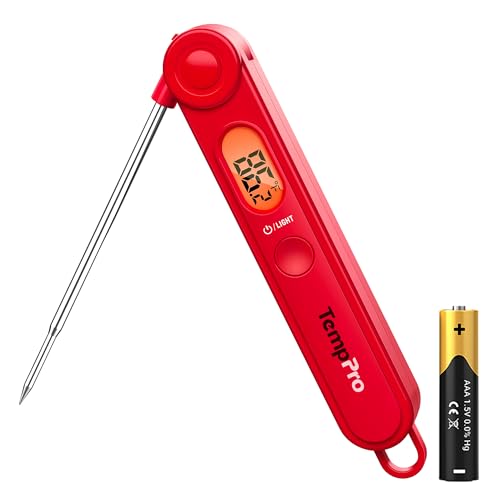
【Easy to Use】Easily release the meat probe at the push of a button, and control the backlight or power with another button. With TempPro, cooking becomes a seamless, stress-free experience
How Long Do Bone‑In Breasts Take at 275°F and 325°F?
Wondering exactly how long bone‑in chicken breasts need at 275°F versus 325°F? At 275°F, the data shows a 60‑75‑minute window for skin‑on, bone‑in breasts, depending on size. Pull the meat at an Expected internal temperature of 160°F, then let it rest 10‑15 minutes to reach the safe 165°F. The bone in skin advantages keep moisture locked and the skin crisps nicely at this moderate heat. At 325°F, extrapolate to roughly 45‑75 minutes; the higher temperature shortens the smoke time but still requires pulling at 160°F and resting to 165°F. Monitor with a digital thermometer, rotate every 15 minutes if hot spots appear, and avoid overcooking to preserve juiciness. For enhanced flavor and moisture retention, consider air-drying the chicken uncovered in the fridge overnight before applying your spice rub. Brine the breasts for 1‑4 hours before smoking to enhance flavor and tenderness.
Why 225°F Makes Smoked Chicken Breast Rubbery (and How to Avoid It)?
Although 225 °F seems gentle, the prolonged exposure forces moisture out of the breast faster than the meat can retain it, leaving a rubbery exterior and dry interior. The low temperature extends cook time to roughly 60 minutes, which pushes water out before the internal temperature reaches the safe 157 °F target, causing surface dryness and a tough texture. To counteract this, brine the breast for up to six hours—this moisture retention during brining creates a buffer that slows evaporation. Pat the meat dry, apply oil, and season 4–12 hours ahead to promote bark without further drying. Wrap the breast at 120–125 °F and monitor the thinnest spot with a thermometer, pulling at 160 °F then resting ten minutes for carry‑over cooking. This protocol prevents rubberiness while preserving juiciness. Using a leave‑in probe thermometer allows precise monitoring of internal temperature.

13oz package contains packet of brine mixture and packet of rub

GET THE BEST-SELLING BRINE KIT: Formerly Urban Accents, this turkey brine and rub kit features the same fan-favorite poultry seasoning in brand-new packaging.

AUTHENTIC ORIGINAL CHICKEN INJECTION & BRINE: Our secret combination of ingredients capture the true taste of Memphis-style championship BBQ with the perfect balance of sweet & heat to take your BBQ to the next level.
What Are the Trade‑offs of Smoking Chicken Breast at 325°F?
Three key trade‑offs define smoking chicken breast at 325 °F: speed, texture, and flavor. At this temperature a boneless breast reaches 165 °F in roughly 45 minutes, saving about 40 minutes compared with 275 °F, so you can meet tight schedules. However, the rapid heat causes muscle fibers to seize, producing a tougher texture and reducing juiciness. Moisture retention issues arise because higher heat accelerates surface and interior evaporation; brining for up to 6 hours or basting with oil becomes essential. Flavor development tradeoffs are also clear—smoke penetration drops as temperature rises, limiting the time for compounds to infuse the meat. Consequently, you sacrifice the deeper, more balanced smoke flavor typical of the 250‑275 °F range. For optimal results, consider finishing at higher heat for crispy skin similar to techniques used with other poultry cuts. Applying a heavy coating of Grilling Addiction rub before smoking helps lock in moisture and enhance flavor.
Why Remove Chicken at 160°F and Rest for 10 Minutes to Reach Safe 165°F?
Why does pulling the breast at 160 °F and letting it rest for ten minutes confirm a safe 165 °F? Because the meat’s internal heat continues to rise once you remove it from the smoker. At 160 °F, bacterial death in lean white meat is achieved in roughly 15 seconds, and a typical 5‑degree increase—known as carryover cooking temperature—occurs during a ten‑minute rest. Residual heat penetration drives this rise uniformly, especially when you loosely tent the breast with foil. Monitoring the thinnest spot verifies the temperature hits 165 °F, the USDA safety threshold, without overcooking. The rest period also redistributes juices, preserving moisture while the internal temperature climbs to the required safe level. Smoking at 225‑240 °F ensures a gentle, even heat that helps achieve the desired internal temperature without drying out the breast.
How Should You Adjust Smoking Time for Different Breast Sizes?
When you size‑grade your chicken breasts, adjust the smoking time by matching each piece’s weight and bone content to its expected heat‑up rate: boneless breasts under 1 lb typically hit 165 °F after 65 minutes at 275 °F, while bone‑in breasts over 1 lb need about 85 minutes at the same temperature because the bone slows heat transfer. For variable breast thickness, start checking at 45 minutes, then add 5‑minute increments until the thickest spot reaches 160 °F; this prevents uneven cooking temperatures. Small boneless cuts (under 1 lb) usually finish by 50 minutes, whereas large bone‑in pieces require up to 90 minutes. Use an instant‑read thermometer in the center of each piece, stagger removal, and rest all breasts at 160 °F for 5‑10 minutes to carry over to 165 °F. Internal temperature is critical for food safety and flavor. Many pitmasters also recommend flipping breasts halfway through the smoking process to ensure even heat distribution and optimal moisture retention.
How Do Smoker Types and Heat Consistency Affect Smoking Time?
A smoker’s design and its ability to hold a steady temperature are the biggest factors that dictate how long you’ll need to smoke a chicken breast. Pellet units like Traeger keep temperature consistency within ±5 °F at 300 °F, so a large boneless breast finishes in about 60 minutes. Electric smokers also excel at stable heat, cutting variance to 10‑15 minutes, while charcoal or offset models often wobble 20‑40 minutes because airflow design and wood‑chip burn rates fluctuate. A well‑engineered airflow design reduces hot‑spot formation and keeps the internal chamber near the set point, letting you trust the 275 °F window of 45‑85 minutes. For most meats and vegetables, medium heat ranges between 300 and 400 degrees Fahrenheit, providing enough heat to brown and tenderize food without harsh charring. Conversely, poor airflow forces you to monitor the meat thermometer every 10‑15 minutes to avoid overcooking. Adding a brine before smoking can further help retain moisture and juiciness.
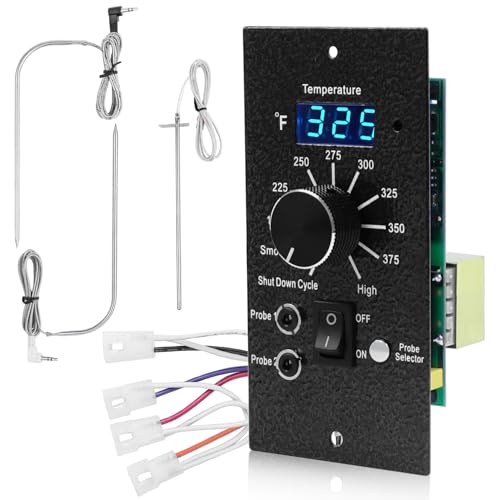
【COMPATIBILITY】: This Traeger Digital Controller kit replacement part compatible with most Traeger Wood Pellet Grills (except PTG), ideal replacement for Traeger Controller BAC365.
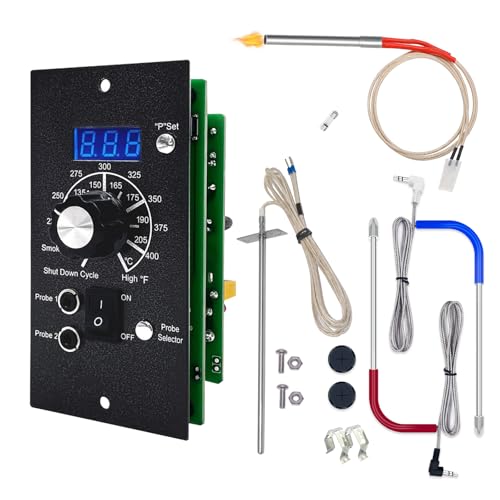
Compatibility: ✔ Direct replacement for Traeger models: Pro 20, 22, & 34, Texas Elite 34, Lil Tex 22, Junior Elite 20, Ridgeland, Heartland, Mesa 22, Century 22/34, Silverton (2019) (Compatible with BAC365/BAC236 systems). ✖ Excludes: Junior, Tailgater, Bronson grills.

Replaces 3 speed smoker control, compatible with Traeger wood pellet grill models (except PTG)
Common Mistakes When Smoking Chicken Breast and How to Fix Them?
Maintaining a steady temperature is only half the battle; the real pitfalls appear once the chicken is in the smoker. You’ll overcook low‑heat, drying the exterior and creating a leathery texture, especially where thin sections hit the heat first. Fix this by monitoring internal temperature and pulling the breast at 155 °F, then resting. Over‑smoking adds bitter creosote; limit wood to short bursts and keep the smoker between 275‑325 °F to curb excess smoke. Over‑seasoning masks the natural smoky flavor—apply a light rub that lets the meat show through, aiming for a proper seasoning balance. Guarantee uniform heat distribution by using a fan‑assisted pellet smoker and rotating the rack, so every bite reaches the same doneness without dry spots. Low‑heat cooking can cause the exterior to become tough and dry due to extended exposure to air flow and evaporation. Many pitmasters achieve optimal tenderness by allowing connective tissues to break down through gradual cooking, similar to smoking thighs at low temperatures for extended periods.