Set your smoker to the low‑and‑slow range—225‑250°F for most cuts—and plan roughly 1–1.5 hours per pound. Beef brisket needs 12‑20 hours at 225‑250°F, aiming for a 190‑210°F internal temperature; pork butt cooks 1‑1.5 hours per pound to 205°F, with a stall around 160‑167°F that you can push through by wrapping. Poultry follows similar rules—whole chicken 235‑250°F, turkey 240‑275°F, thighs 225°F—always checking internal temps for safety. Rest the meat before slicing, and you’ll uncover deeper tips on adjusting for smoker type, altitude, and weather.
Quick Reference: Smoke Times for Every Cut
When you’re planning a smoke, the key is matching each cut to its ideal temperature, time, and internal finish so you can hit perfection without guesswork. For brisket, set the smoker at 225‑250 °F and smoke 12‑20 hours until the internal temperature reaches 190‑205 °F; this window yields ideal smoke ring formation and a balanced smoke flavor profile. Short ribs need 6‑8 hours at the same oven, while back ribs finish in 3‑4 hours, both targeting 190‑190 °F internal. Chuck roast follows an 8‑10‑hour schedule, 60 min per pound, ending at 190‑200 °F. Prime rib stays lower, 130‑135 °F medium, for 4‑5 hours. Pork shoulder/butt cooks 1 hour per pound, 6‑7 hours total, to 195‑200 °F. Spare ribs, baby back ribs, and pork loin each require 4‑5 hours at 225‑250 °F, hitting 190‑205 °F, 205 °F, and 145 °F respectively. For beef ribs specifically, you can smoke at 275°F for approximately 3 hours until reaching 205°F internal temperature, or choose a low-and-slow approach at 250°F for 8‑10 hours for probe-tender results. Whole poultry, thighs, and wings follow their listed times, ensuring each cut reaches its safe internal finish while preserving smoke ring integrity and flavor balance. A $19 per year subscription also helps keep the website running and provides ad‑free access to all articles.
Choose the Right Smoker Temperature for Beef, Pork, and Poultry
A solid rule of thumb is to match each protein to a narrow smoker‑temperature band that balances safety, tenderness, and smoke flavor. For beef, set the ideal smoker temperature at 225‑240 °F for most cuts; brisket thrives at 250 °F with roughly one hour per pound, while prime rib stays at 225 °F until it reaches 130 °F internal. Pork benefits from the same 225‑240 °F range for butt, shoulder, and ribs; aim for 250 °F when you need a faster pull‑apart texture, and hold pork loin at 141 °F internal before carry‑over. Poultry calls for a slightly higher band: whole chicken at 235‑250 °F, turkey at 240‑275 °F, and bone‑in thighs at 225 °F. Each temperature aligns with the proper cooking time to hit safe internal limits while preserving moisture and smoke depth. Lower smoking temperatures can help reduce the formation of carcinogens like PAHs that occur when meat is exposed to excessive heat or smoke. Accurate thermometers are essential to verify that these internal temperatures meet USDA safety standards.

【Fast & Accurate】Our meat thermometer digital delivers accurate readings within ±1°F in just 1–2 seconds, with a wide temperature range of -58°F to 572°F (-50°C to 300°C). No more waiting over the heat - know your food's exact temperature instantly.

More Accurate, More Professional: With a National Institute of Standards and Technology (NIST) certification for its ±0.5℉ accuracy, this meat thermometer is a game-changer cooking tool for BBQs, roasts, candy, and everyday meals, ensuring your food is cooked safely and deliciously every time.

Completely Waterproof: IPX6 waterproof rating means you can wash this cooking thermometer under running water without fear. This food thermometer for cooking ensures cleanup is ultra-fast
Calculate Smoke Time by Weight – 1–1.5 Hours per Pound
If you know the weight of your meat, you can estimate the smoke time by applying the 1 – 1.5 hours‑per‑pound rule at 225‑250 °F, adjusting for temperature and the specific cut. Use a reliable thermometer to verify internal temperature; 203 °F for brisket and 200 °F for pork shoulder are typical endpoints. For a 10‑pound brisket, calculate 900 minutes (15 hours) at 225 °F, or reduce to 8–10 hours if you raise the pit to 275 °F. Pork butt follows the same 90‑minutes‑per‑pound guideline. Factor in equipment considerations—steady heat, proper airflow, and consistent fuel—to avoid temperature swings. Apply meat selection guidance: choose well‑marbled cuts for even heat penetration, and plan a 30‑minute rest for pork or 1‑2 hours for whole brisket before slicing. Expect a yield of 45‑57 % after cooking, depending on trimming and wrapping methods.
Beef Brisket Timing – 12–20 Hours at 225–250°F, 190–210°F Internal
Low‑and‑slow cooking of a beef brisket typically occupies 12 to 20 hours, depending on its size and the smoker’s stability, with the smoker held steady at 225–250 °F and the meat’s internal temperature targeted at 190–210 °F. You’ll set the smoker, keep vents tight, and monitor the probe. The unwrapped phase lasts until the internal hits 150–170 °F, about 3–8.5 hours, during which you apply bark development techniques—spritzing every hour and maintaining a dry surface. When the stall phase management begins around 145–175 °F, wrap in butcher paper or foil at 150–180 °F to push through the stall. Continue smoking until the flat reaches 200–205 °F, then rest for at least one hour before slicing. A reliable meat thermometer ensures you monitor doneness by internal temperature rather than relying solely on time. Use oak as the primary wood for consistent heat and flavor.
Pork Butt Timing – 1–1.5 Hours per Pound to 205°F Internal
Set your smoker to 225 °F and plan for roughly 1–1.5 hours per pound of pork butt, aiming for an internal temperature of 205 °F before you pull the meat. At 225 °F an 8‑lb butt will need about 14 hours; a 5‑lb piece still requires roughly the same total due to the stall. Flip the meat around the two‑hour mark for even bark, then watch for the 160‑167 °F stall. Apply stall mitigation techniques—wrap in foil or a butcher paper at that point to push through evaporative cooling. To enhance flavor and moisture retention during the long cook, consider spritzing with a vinegar-water mix periodically throughout the smoking process. Continue smoking until the probe registers ideal probe tenderness, typically 200‑205 °F. When the meat pulls apart easily, remove it, let it rest, and enjoy perfectly tender pulled pork. Use lump charcoal for consistent heat throughout the cook.
Rib Cook Times – Back, Baby Back, and Spare Ribs
After mastering pork butt’s 1–1.5‑hour‑per‑pound rhythm, turn your attention to ribs, where timing hinges on cut and temperature more than weight. When Verifying smoking temperature, choose 225°F for classic 3‑2‑1 spare ribs or 250°F for quicker baby backs. At 225°F, baby‑back racks (2–2.5 lb) become toothpick‑tender around the 4‑hour mark; extend to 4.5–5 hours to reach an internal 180‑185°F, then finish with a 15‑minute sauc‑rest at 200°F. The 3‑2‑1 method—3 hours unwrapped, 2 hours foil‑wrapped, 1 hour unwrapped and sauced—works for spare and St. Louis ribs at 225‑250°F. Confirming final internal temperature ensures you stop at 180‑185°F for baby backs or 200°F before resting, guaranteeing perfect texture without over‑cooking. Use 2‑3 oz wood to maintain consistent smoke flavor throughout the cook.
Poultry Smoke Times – Whole Chicken, Turkey, and Thighs
Start by preheating your smoker to 225 °F and placing the whole bird on the rack; the low, steady heat allows the meat to absorb smoke while the internal temperature climbs steadily toward safety. For a standard 4‑lb chicken, smoke 2.5‑3 hours, checking for 165 °F in the thickest breast. A 5‑lb bird may need up to 5 hours, or use the 35‑minutes‑per‑pound rule, then raise the temp to 275 °F for the final 30 minutes. Spatchcock chicken smoking cuts cooking time to 2.5‑3 hours at 225‑250 °F because the flattened bird cooks evenly. Turkey follows the same pattern but scales with mass; start at 225 °F, then increase to 275 °F after the first hour, aiming for 165 °F breast and 175 °F thigh. Using indirect heat ensures even cooking and prevents hot spots that can dry out certain areas of the bird. For thigh positioning, place legs toward the heat source; this guarantees the thighs reach 165‑175 °F while the breast stays juicy. Rest all poultry 20‑30 minutes before carving. Adding a dry rub of brown sugar, paprika, salt, black pepper, and garlic powder enhances flavor and creates a caramelized crust.
Adjust Smoke Times for Smoker Type, Altitude, and Weather
Because smoker type, altitude, and weather each shift heat and moisture dynamics, you must tweak your smoke times to keep the meat safe and flavorful. Use an electric smoker and cut the standard time by 10‑20 % because its temperature stays steady. Charcoal or offset units need 1.5‑2 hours per pound for brisket at 225‑250 °F, and ribs at 225 °F may require 20‑30 % longer. At 5,000 ft, reduce times 10‑15 % for faster heat transfer, but at 8,000 ft add 10 % for brisket tenderness. Cold air below 50 °F adds 20‑50 % time; wind can extend rib smokes 25 %, so mitigate wind effects with a windbreak. When humidity is high, adjust for relative humidity by adding 10‑15 % to pork shoulder time. Remember that pork shoulder is considered safe to eat at 145 °F internal temperature.

Product Applications: 1650W Universal Electric Heating Element for Electric Smokers and Electric Grills. Compatible with Smoke Hollow, Masterbuilt, Char-Broil, Cuisinart, and Dyna-Glo. Please ensure it matches your model number

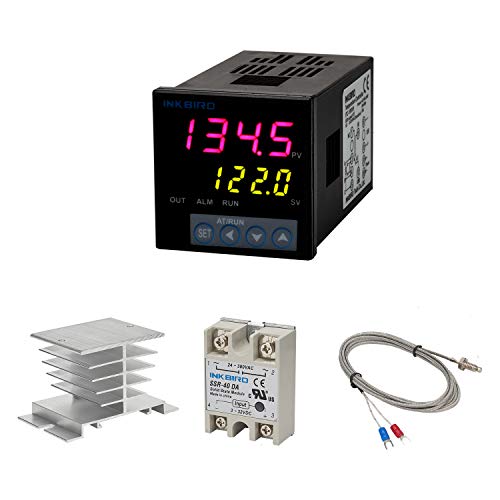
Alarm Output: With 1 alarm relay output, AC250 V, 3 A (Resistive load), ON or NC, you can wire a buzzer
Rest, Check Doneness, and Use a Thermometer Properly
How do you guarantee your smoked meat stays juicy, tender, and safe? First, monitor meat temperature with an instant‑read probe, inserting it into the thickest part without cutting fibers. Aim for a steak center of 120‑130 °F and an exterior of 125‑140 °F; brisket should rest at least an hour after reaching its target. Then apply proper resting techniques: tent thin cuts for 5‑7 minutes, thick cuts for 10‑20 minutes, or follow the rule of 5 minutes per inch of thickness. For larger pieces, wrap brisket double in foil with towels and let it sit in a cooler for 1‑4 hours. The reverse sear method can also enhance your final product by combining low-temperature smoking with a high-heat sear to develop a flavorful crust. Resting lets juices redistribute, proteins set, and the meat cool safely before slicing, preserving flavor and texture. Rest also prevents liquid from pouring out, avoiding dry meat.

UPGRADED PROBE FOR FASTER, MORE STABLE READINGS - This meat thermometer features a precision-upgraded probe with higher sensitivity and enhanced thermal conductivity, delivering more accurate and stable readings in just 0.5 seconds. Unlike standard probes, the upgraded design transfers heat faster from first contact, giving you a more reliable and consistent temperature measurement every time—no more guessing, only perfect meals!

【Fast & Accurate】Our meat thermometer digital delivers accurate readings within ±1°F in just 1–2 seconds, with a wide temperature range of -58°F to 572°F (-50°C to 300°C). No more waiting over the heat - know your food's exact temperature instantly.

FAST & ACCURATE INSTANT READ: Get temperature readings in just 2-3 seconds with ±1°F accuracy. Whether you're grilling steaks, roasting turkey, smoking brisket, or baking bread, this digital meat thermometer helps you monitor food temperature quickly and confidently
Fix Common Smoke‑Time Mistakes and Keep Your Meat Tender
Now that the meat is properly rested and its internal temperature is set, the next step is to eliminate the timing errors that turn a juicy roast into a dry, tough piece. Limit lid openings; when you must peek, combine temperature checks and water refills to keep smoke inside and temperature stable. Avoid excessive smoke by using the right amount of wood and ensuring proper airflow—selecting quality wood chips prevents bitter, stagnant smoke. Apply proper meat brining before smoking; a well‑brined cut retains moisture and balances smoke penetration. For optimal results, finish cooking at higher heat to achieve crispy exteriors while maintaining tender interiors. Choose bone‑in, high‑quality cuts, trim fat to a quarter‑inch, and preheat the smoker to the target range. These disciplined actions keep the meat tender and flavorful. Use a meat thermometer to verify doneness and prevent overcooking.