
Trim a 12‑14 lb whole‑packer, strip excess fat, then dry‑rub it with garlic powder, onion powder, paprika, chili powder, salt, and pepper; refrigerate overnight to dry‑brine. Preheat your electric smoker to 225°F using oak and a hint of cherry, place a water pan beneath the grate, and set the brisket fat side down. Smoke unwrapped until the stall ends, then wrap tightly and raise the temp to 260‑280°F, keeping the internal temperature at 200‑205°F before probing tenderness. Rest for two hours, wrapped, before slicing against the grain, and you’ll uncover more detailed tips ahead.
Prepare the Brisket and Set Up Your Electric Smoker
Before you fire up the smoker, trim the whole‑packer brisket (12‑14 lb) by removing excess fat and loose meat from the point, squaring off the flat’s edges, and thinning the fat cap to about ¼ inch. Bring the meat to room temperature for 60 minutes, then coat it evenly with a dry rub of garlic powder, onion powder, paprika, chili powder, kosher salt, and coarse black pepper. Refrigerate overnight to dry‑brine. Set the electric smoker to 225°F, preheat with the lid closed for 15 minutes, and load hardwood oak with a hint of cherry for an ideal smoke profile. Place a water pan beneath the grate, insert a probe into the thickest part, and position the brisket fat side down, point end toward the heat source. Prepare apple juice for mop liquid application during the cook. Using a full packer brisket ensures you have both the lean flat and the fattier point for optimal flavor and texture. Maintaining a steady temperature throughout the smoking process is essential to achieving tender, flavorful results.

No sawdust, no fluff—just real wood. Our large, dry chips burn slow and steady, not in a puff so fast. No tiny wood shavings, no fillers—just clean hardwood for real smoky flavor.


Smoke the Brisket Unwrapped Until It Hits the Stall
Once the brisket reaches about 150 °F, keep it unwrapped and let the smoke continue; the internal temperature will soon plateau around 160‑165 °F, signaling the classic stall. At this stage you must monitor internal temperature constantly while you maintain consistent smoker temperature. Keep the smoker set at 225 °F, avoid opening the door, and let evaporative cooling do its work. The unwrapped surface will develop a firm bark and a deep smoke ring, while moisture evaporates and slows the rise. Resist the urge to wrap or increase heat; the stall will naturally last several hours. When the temperature finally climbs past 165 °F, you’ll know the stall has ended and it’s time to wrap. This resting period after cooking allows connective tissues to break down, resulting in maximum tenderness. Choose a whole packer brisket for the best results.
What Temperature Should I Use After Wrapping?
Set your smoker to a steady 260‑280 °F after you wrap the brisket; this range keeps the bark crisp while letting the internal temperature climb 10‑20 °F per hour. Maintain steady temperature by trusting the electric smoker‘s ability to hold a narrow band, and avoid excessive drying by never exceeding 280 °F. Keep the heat on the fat side up, and let the foil or butcher paper lock in moisture; you won’t need spritzing. Expect the internal rise to be roughly 10‑20 °F each hour, so a 1‑hour‑per‑pound schedule works well. If the bark begins to soften, trim the dome a few degrees, but stay within the 260‑280 °F window to preserve texture and juiciness. Use a uniform fat cap to ensure even rendering and consistent moisture throughout the cook. Remember that your brisket is done when it reaches an internal temperature between 190°F and 205°F, which is more important than following a strict time-based schedule.
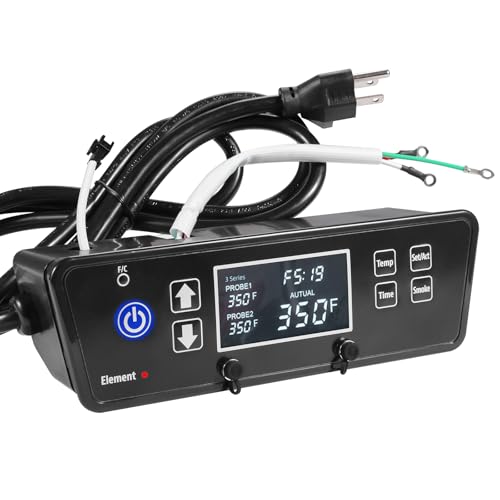
✅【Perfect Compatibility】Digital Thermostat Control Board Replacement Parts exclusively designed for Pit Boss 3 Series Digital Electric Vertical Smokers, direct replacement for model PBV3D1 (Replacement Part Number: 80122). Seamless fit with no modifications needed to restore your Pit Boss

【COMPATIBLE MODELS】- Digital Control Panel Replacement for MASTERBUILT 20071117, 20071217, 21071218, 20071317, 20071417, 20071517, 20071819, 20072318, 20074517, MB20071117, MB20071619, MB20071819, MB20072918, MB20073018, MB20077018, MB20077818, MB21072918, MB25071217 MB26071317, MB28071517. (TIPS: PLEASE CHECK COMPATIBILITY)

Widely Compatible: The Universal 1650W Electric Smoker Heating Element Replacement Kit with Adjustable Thermostat Controller fit for most electric smokers and grills as Masterbuilt, Char-Broil, Smoke Hollow, Cuisinart, Brinkmann Gourmet, Dyna-Glo and more. As long as you make sure there is a rectangular opening (inch).
Check When the Brisket Reaches 200‑205 °F and Test Tenderness
If you’ve kept the smoker steady at 260‑280 °F, the next step is to watch the internal temperature climb into the 200‑205 °F window and confirm tenderness. Insert a digital probe into the thickest part of the flat, avoiding fat pockets, and let the smoker alert you at 200 °F. As the reading approaches 205 °F, test the meat by sliding the probe or a thin skewer; it should glide with no resistance, like butter. This tactile cue lets you assess doneness based on probe feel and confirm ideal internal temperature. When the probe passes effortlessly, the brisket is ready. For best results, slice against the grain to achieve optimal texture. Immediately vent it for 15 minutes to halt cooking, then proceed to rest before slicing. A thick fat layer helps retain moisture during smoking.

BBQ High/Low Temperature Alarm: This smoker thermometer will flash and beep to notify you if your grill's temperature ever exceeds your desired range, and when to add more fuel. HI/LOW temp range alarm is specifically designed for usage with smokers, grills and BBQs
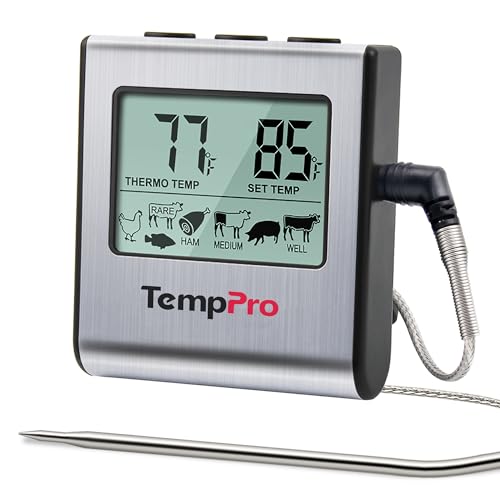
Cook mode with USDA preset temperature settings: TempPro cooking thermometer ideal for meat, oven, smoker or stove top; Programmable alert with preset temperatures for specific foods recommended by USDA; All of the preset temps can be reset to your desired tastes

2.0 inches large auto-rotating backlit display: Digital food thermometer has a 180° auto-rotating backlit display, making this kitchen thermometer perfect for left-hand users and allows you to use it in low light conditions
How Long Should I Rest the Brisket Before Slicing?
How long should you rest a brisket before slicing? Aim for an ideal rest period of two hours. You’ll have an adequate rest duration of at least one hour on the counter, but two hours yields the best juice redistribution and connective‑tissue breakdown. Wrap the meat in butcher paper or foil and keep it in the smoker at 160‑170 °F if you exceed two hours; a cooler with towels holds it safely for four to eight hours. Maintain internal temperature above 140 °F to prevent bacterial growth. Short rests of 30‑60 minutes often fall short of flavor and moisture goals. For electric smokers, a two‑hour minimum is the standard benchmark before you slice. Resting allows carryover cooking to continue breaking down collagen, further enhancing tenderness. During the resting phase, the brisket’s internal temperature should reach approximately 202°F for optimal tenderness before the rest period begins.
Slice Against the Grain for Maximum Tenderness
When you slice the brisket against the grain, you’re shortening the muscle fibers so each bite falls apart effortlessly; start with the flat, locate the grain on the bottom, and cut 1/4‑inch uniform slices using smooth, long strokes. Keep the pressure even and the blade sharp to guarantee bark preservation on every piece. Feel for the fat layer separating flat and point, then make a straight cut at that line; the grain shifts here, so rotate the point half 90 degrees before slicing. Cut the point into thin, 1/4‑inch slices, twisting the blade to stay perpendicular to the fibers. This technique shortens fibers, maximizes moisture retention, and delivers consistently tender, sliceable meat. The grain direction changes midway through the brisket, so separating the two muscles ensures each side is sliced correctly. Proper slicing technique works best when the brisket has been rested for at least 30 minutes after reaching the target internal temperature to retain all the juices.
Troubleshoot Common Issues and Fine‑Tune Your Process
Even a small temperature swing can ruin a brisket, so keep the smoker steady at 225 °F, use a water pan for humidity, and verify your thermometer’s accuracy in boiling water before you start. When the meat cooks too fast, double‑check the probe in boiling water; a mis‑calibrated gauge often causes premature pulls. For Ideal electric smoker cleaning, empty the chip tray after each run, scrape burnt drippings from the platform, and wipe the interior with a damp cloth to prevent residue buildup that chokes airflow. Identifying smoke quality issues means watching for thin, steady trails rather than thick clouds; adjust chip placement and limit additions to the initial burst. Keep vents at roughly 75 % closed, rotate the brisket hourly if needed, and pull at 198‑200 °F for tender, juicy results. The grate keeps ashes below the fire and allows airflow to the coals for consistent heat. Wrapping the brisket in butcher paper during the cook helps maintain moisture and develop a good bark while you work toward your target temperature.


