
Pick a 12‑14 lb whole‑packer brisket, chill it, then trim the fat cap to about ¼ inch and shave off silverskin. Season evenly on all sides. Light a chimney, dump hot coals on one side, and set up a water pan on the opposite side to keep the grill at 225‑250 °F with indirect heat. Smoke the meat, watching for the 165 °F stall, then raise the temp to 280 °F for the final fat render. Wrap, rest, slice against the grain, and you’ll uncover the next steps.
Choose the Right Brisket for a Charcoal Grill
A 12‑14 lb whole‑packer brisket hits the sweet spot for charcoal grilling, balancing manageable cooking time with ample yield. You should check the color—reddish‑pink indicates prime beef—and the white fat cap, which must be uniform and free of yellowing. Press the meat; a flexible feel signals good meat consistency and that chillers impact will be minimal during the low‑and‑slow smoke. Choose a whole packer over a flat cut to retain the point’s extra fat, which supplies moisture for long cooks at 225‑250 °F. Guarantee the marbling is even; it will melt into the meat, enhancing juiciness. Using a remote temperature probe minimizes the need to open your grill frequently and helps maintain consistent heat throughout the cooking process. Opt for a grill with a two‑zone setup so the brisket can sit in the indirect zone while you manage smoke flow. This selection maximizes flavor without overcomplicating the process. Proper airflow is essential to keep a consistent temperature throughout the long cook.

Prestige Brisket Flat Weighing 6 lbs on average- they are well marbled, tender and ready for your smoker
Trim and Season the Brisket for Maximum Flavor
With the right brisket selected, move straight to trimming and seasoning. Chill the meat briefly, then lay it fat‑side up. Use a sharp boning knife, blade parallel to the surface, to shave the hard fat cap down to a quarter‑inch, removing the waxy wedge under the mohawk and the moon‑shaped pocket at the point. Square the flat’s outer edges, trim the tapering corner, and round the point’s knobby sections. Flip the brisket, trim underside fat pockets, and skim silverskin for even bark formation. Apply a thin, even layer of seasoning to every exposed surface, letting the ¼‑inch fat cap baste the meat during cooking. This uniform coating promotes consistent flavor and aids grill heat control, ultimately helping you achieve the tender finish around 202°F that defines perfectly smoked brisket. A large, sharp, and durable knife is essential to ensure clean cuts and prevent injury.
Set Up Your Charcoal Grill for Low‑and‑Slow Cooking
After you’ve trimmed and seasoned the brisket, fire up the grill for indirect heat: light a chimney starter on one side, wait until the coals turn grey‑ash, then dump them into a single‑side pile or create a “snake” of briquettes at a 45‑degree angle around half the grill’s circumference. Use high‑quality lump charcoal; its consistent fuel quality guarantees steady burn and clean smoke. Open the top and bottom vents to about 50 % each, then close the top vent halfway once the grill reaches the desired cooking temperature range of 225‑250 °F (110‑121 °C). Monitor the thermometer; small vent tweaks change temperature within 5‑10 minutes. Proper airflow management ensures consistent heat distribution throughout your cook. Add fresh lit coals only when the temperature drops, avoiding unlit additions that could introduce toxins or off‑flavors. This setup sustains a low‑and‑slow environment for the brisket’s entire cook. A lid helps retain heat and smoke.

20 pounds of 100 percent natural lump charcoal


READY TO GRILL QUICKLY: Kingsford Original Charcoal Briquettes light fast and are ready to cook on in about 15 minutes, thanks to innovative Sure Fire Technology and more edges for faster ignition
Create a Moisture‑Rich Indirect Zone With a Water Pan
Why not add a water pan to your indirect zone? Position a foil boat or metal tray on the empty side of the grill, directly above the coals, and fill it with a cup of water. The pan acts as a heat sink, capping the ambient temperature near 225 °F and smoothing out hot spots. As the water boils, it creates steam that raises humidity, which promotes a pink smoke ring and delays bark formation for better smoke adhesion. Lava rocks or a shallow depth increase the evaporative surface, boosting smoke density enhancement. The pan also catches drippings for easy cleanup and reduces the need for frequent spritzing. Maintain steady water replenishment throughout the cook to keep the moisture‑rich microclimate stable. Water’s high latent heat prevents temperature spikes by absorbing excess heat as it turns to steam. Aim for an internal temperature between 190°F and 205°F to determine when your brisket has reached optimal tenderness.

Tired of drip pans that don't fit? – This half-moon stainless steel drip pan is compatible with Weber 22" kettle grills, hugging the curved wall perfectly. Just drop it in – no tools. The tall side wall separates charcoal from the pan, giving you true two-zone cooking. Built for your kettle, not a one-size bandage.
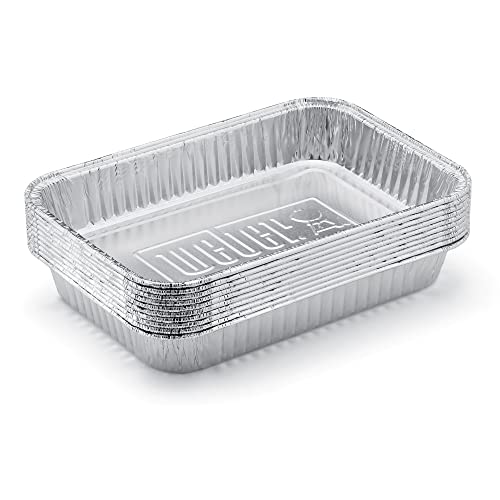
Use these reliable Weber Aluminum Drip Pans to line the drip tray of your Weber Gas Grill, simplify grease disposal, and make the cleaning process quicker after you're done grilling

Grill pan for small or delicate foods
Smoke the Brisket on a Charcoal Grill Until It Hits the Stall (≈165°F)
A brisket will typically plateau between 150 °F and 170 °F, and you’ll know it’s hit the stall when the internal temperature steadies around 165 °F. Keep the grill at a steady 225–250 °F, close the vent openings enough to limit airflow but still allow a thin, steady draft. Insert a probe in the thickest portion and monitor evaporative cooling effects; the surface moisture will offset heat, holding the rise. If the temperature spikes, adjust the vents or add a modest amount of charcoal to absorb excess heat and manage temperature spikes during stall. Expect the plateau to last 2–6 hours, depending on size and humidity. When the bark darkens and the probe moves easily, the stall is ending, and you can proceed to the next phase. Evaporation cooling is the primary reason the temperature stalls at this range.
Spritz and Manage Temperature During the Charcoal Smoke Phase
Keeping the grill steady at 225‑250 °F while you spritz the brisket every 45‑60 minutes after the bark forms is key to consistent smoke and moisture. Use a 50/50 water‑vinegar spray or apple juice blend; apply lightly to preserve bark. Monitor vents continuously: open both vents for preheat, then quarter‑open the bottom vent to keep the ambient range at 230 °F, adjusting in small increments to avoid spikes above 270 °F. Add charcoal in measured batches without lifting the lid, and keep a water pan or foil‑wrapped bricks as a heat sink. Employ a remote probe or Fireboard for ±2 °F stability, tracking both pit and meat temps. Precise Spritz application techniques coupled with diligent Charcoal grill temperature control guarantee the brisket progresses smoothly toward the stall, where you may experience a temporary slowdown in cooking around 150–160°F due to moisture evaporation. Prime brisket should be used for optimal marbling and moisture.
Wrap the Brisket (Texas Crutch) and Continue Cooking on a Charcoal Grill
When the brisket hits the stall around 155 °F, wrap it tightly with heavy‑duty foil or pink butcher paper, sealing the edges edge‑to‑edge to trap steam and keep the meat’s own juices inside. Lay the brisket on a large work surface, spray a thin mist of water or oil on the wrap, then coat the meat with a light butter film. Fold the foil or paper over itself multiple times, overlapping seams to create an airtight seal; this is adjusting wrapping techniques for maximum steam retention. Place the package seam‑side‑down on the grill’s indirect zone, maintain a steady 225°F, and insert a probe. Continue monitoring wrapped temperature progression until the internal reading reaches 200‑205 °F for optimal tenderness, then remove and rest. The Texas Crutch speeds up cooking by allowing the meat to get past the stall period.
Raise Grill Temperature to 280°F for the Final Charcoal Fat‑Render
Once the brisket’s internal temperature climbs past 165 °F and the stall eases, you’ll raise the grill to a steady 280 °F to finish rendering the fat cap. Add fresh lit coals in a snake pattern, spacing them near existing embers, and open the bottom vents fully while keeping the top vents half‑open to trap heat. Place a water pan to stabilize temperature and layer unlit briquettes for a gradual ramp‑up. Use a remote thermometer to monitor temperature control within ±2 °F. Check the point‑flat junction hourly; when it reaches 190‑192 °F, keep the grill at 280 °F for 1‑2 hours until the thickest part hits 200‑205 °F. Adjust airflow and add charcoal if the grill drops below 275 °F, and rotate the brisket midway for even exposure. Resting the brisket for at least 30 minutes after removing from heat will help retain the juices. This phase fully renders the fat cap, yielding a juicy, pull‑apart texture without over‑cooking the lean flat. Maintain a steady grill temperature throughout this stage.
Rest the Brisket Properly, Then Slice and Serve
After the fat cap has fully rendered at 280 °F, pull the brisket off the grill and let it rest. Wrap it in a towel, place it in a pre‑heated insulated cooler, and keep the internal temperature above 60 °C (140 °F). Aim for a 2‑3 hour rest to let juices redistribute and fibers relax; a shorter 1‑hour room‑temperature rest risks safety. Resting allows connective tissue to break down further and the brisket retains its tenderness. For optimal results, the internal temperature should reach about 195–205°F before resting to ensure complete collagen breakdown. When the timer hits the 2‑hour mark, remove the brisket, locate the grain, and apply proper slicing technique: cut against the grain, separating point and flat before thinly slicing each. Serve immediately at an ideal serving temperature of 70 °C (158 °F) to preserve moisture and flavor.


