At 250 °F a 12‑lb brisket usually takes 8‑12 hours, roughly 45‑75 minutes per pound, until its internal temperature hits 195‑197 °F. Keep the door closed the first 4‑5 hours, then watch for the stall around 160‑170 °F; wrap in foil once the bark is dark mahogany‑reddish to push through it. Spritz with apple cider vinegar for flavor, and rest the wrapped meat in a pre‑heated cooler for at least 30 minutes, ideally 2‑3 hours, before slicing. Follow the next steps to fine‑tune timing, stall management, and rest techniques.
How Long Does a 250 °F Brisket Take?
A 12‑pound brisket smoking at 250 °F usually needs about 8 to 12 hours, but you’ll see a 45‑ to 75‑minute per‑pound range in practice. You’ll monitor the pit, evaluating pit conditions every half hour, because wind, humidity, and wood type can shift the chamber temperature by up to 75 °F. Keep the door closed for the first 4‑5 hours, then watch the internal heat climb to 150‑165 °F and hit the stall. When the bark turns dark mahogany‑reddish brown, wrap in foil to accelerate through the stall, maintaining a steady 225‑250 °F. Optimize wood usage by adding small chunks just enough to sustain the flame without over‑fueling, ensuring consistent smoke and avoiding temperature spikes. Achieving the perfect brisket requires precise temperature control and careful internal thermometer monitoring throughout the entire cook. Aim for a final internal temperature of 200‑205 °F for tender, juicy results. Use a fat cap trim to improve moisture retention during the smoke.
Calculate 250 °F Brisket Time by Weight
Knowing that a 12‑pound brisket typically spends 8–12 hours at 250 °F, you can estimate the cook time for any weight by applying the per‑pound rule that ranges from 30 minutes for smaller cuts to about 45 minutes for larger ones. Start by measuring the brisket’s weight, then multiply: 30 minutes per pound if it’s under 10 lb, 45 minutes per pound for 10 lb and up. For a 14‑lb piece, expect roughly 10–11 hours of smoking. Position the meat at the ideal smoker placement—centered, away from direct heat—to guarantee even exposure. If your grill runs hot, adjust smoking time downward; if it’s cooler, add a half‑hour per pound. Consistency in temperature and placement keeps the stall manageable and the texture tender. Remember that internal temperature rather than cook time is the best gauge of doneness. Maintain a consistent smoker temperature.
Why 250 °F Is the Sweet Spot for Most Briskets
Collagen’s slow melt at 250 °F is the secret sauce behind a tender brisket, because this temperature lets connective tissue dissolve into gelatin without rushing the process. At this steady heat you hit the sweet spot for Smoke ring development and a Fat rendering balance, letting the bark set while the meat stays juicy. The 250 °F range stays within the ideal 225‑250 °F window, so your smoker can hold temperature without frantic adjustments. Moisture stays trapped, preventing the meat from drying out, and the low‑slow burn gives the internal 195‑203 °F target a reliable path. You’ll see even bark, a deep pink ring, and perfectly rendered fat—all without the uneven breakdown that higher temps can cause. Trimming the excess fat while leaving a good amount of the fat cap helps maintain moisture during the long cook. Adding wood chunks like mesquite or oak throughout the smoking process enhances the smoke flavor and develops that signature taste profile.
Managing the Stall: When to Wrap and Its Effect on Total Time
When the internal temperature stalls around 160 °F, you’ll notice the heat plateau as moisture evaporates from the meat, turning the smoker into a giant sweat lodge. This stall can linger for hours, especially if you keep airflow high, which accelerates evaporative cooling and extending the stall duration. To regain momentum, wrap the brisket once it hits 170 °F, after the bark has set and smoke has penetrated. Double‑wrap in pink butcher paper, then re‑insert the probe; the paper traps heat and moisture, balancing airflow effects while preventing a soggy crust. The wrap cuts the stall dramatically, allowing temperature to climb exponentially toward 195 °F, shaving several hours off the total cook time. Consider spritzing with apple cider vinegar during the smoke to maintain moisture and enhance flavor development. The stall temperature range is typically between 150°F and 170°F.

【PREMIUM NATURAL QUALITY】Made from premium virgin pulp, our butcher paper is unwaxed, uncoated, and unbleached for a natural and pure product. Ideal for grill masters seeking top-notch, food-safe paper to enhance their culinary creations.

Designed specifically for the culinary enthusiast, our 18 paper roll dispenser is optimally crafted to handle barbecue butcher paper, thereby ensuring the authentic taste of your smoked meats is maintained. This is your ideal bbq wrapping paper for smoking

Unrivaled in durability and strength, our bucher paper offers optimal smoking results with its unmatched ability to trap smoke and release steam
12‑lb Brisket 250 °F Timeline
After the stall eases and you’ve wrapped the brisket at 170 °F, the clock starts ticking toward the finish line. At the ideal smoking temperature of 250 °F, you can expect roughly 30‑40 minutes per pound. A 14‑lb packer will hence need 12‑16 hours total, with the first five hours unwrapped and the remaining three‑to‑four hours wrapped. This timeline cuts the cook time in half compared with 225 °F, preserving brisket moisture retention while still forming a deep bark. Monitor the thickest flat, aiming for 200‑208 °F; probe tenderness takes precedence over exact numbers. Consistent heat, smoker type, and the brisket’s shape will tweak the exact finish, but the 30‑40 minutes‑per‑pound rule keeps you on track. After removing the brisket from the smoker, allow at least one hour to rest so the juices can redistribute throughout the meat. Proper trimming and a simple dry rub enhance flavor throughout the cook.
Adjusting the Schedule for Smaller or Larger Briskets
A 5‑lb brisket will finish in about 3 hours at 250 °F, while a 20‑lb packer can need up to 16 hours, so you must scale the schedule based on weight, thickness, and wrap timing. For cuts under 10 lb, shave 10‑20 % off the base 30‑40 minutes‑per‑pound estimate; a 5‑lb will hit 170 °F in roughly 2.5 hours, then wrap to shave another hour. Larger packs demand the opposite: add 10‑15 % and factor in thermolocation changes, as thicker sections lag behind. Wrap at 160‑180 °F to accelerate finish, and plan a 2‑4‑hour buffer for anything over 12 lb. If bark burns, apply burned bark remediation by spritzing apple juice and re‑wrapping to preserve moisture and flavor. Increasing temperature can reduce overall cook time by roughly 10 % when moving from 225 °F to 250 °F.

Enhance your smoking meat adventure with our 24-inch wide roll of butcher paper specially crafted to entrap the flavorful smoke, while simultaneously ensuring the release of steam for a superior taste experience
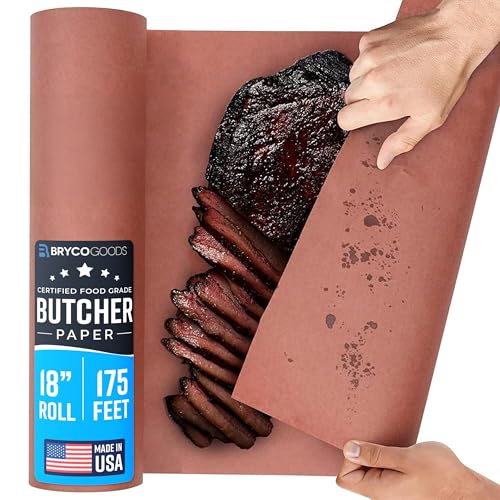
Butchers Paper is ultra durable and strong; does a superior job trapping smoke while releasing steam

Butcher paper for smoking meat is ultra durable and strong and does a superior job trapping smoke while releasing steam. Wrap your brisket, steaks, ribs, and more while smoking in our pink butcher paper to help meats reach their optimum temps faster, remain juicy.
Tracking 250 °F Brisket Internal Temp With a Wireless Probe
Adjusting the schedule for different‑size briskets is only half the battle; keeping an eye on the internal temperature in real time is what really prevents over‑cooking. You’ll want a wireless probe that talks to your phone via Wi‑Fi, because Bluetooth falters behind a metal smoker door. Insert the probe into the thickest part of the brisket, making sure the immersion line is fully submerged and avoids bone; this guarantees accurate probe positioning. The probe’s internal sensors will track the stall around 150‑170 °F while the ambient sensor monitors the smoker’s 250 °F environment, compensating for ambient temperature variations. Set a 203 °F target in the app, enable alerts, and let the real‑time data guide you to perfection. For best results, wrap the brisket in pink butcher paper once it reaches the stall to push through the plateau and continue cooking. Ensures every piece of meat is cooked just right, retaining flavor, moisture, and texture.

Anywhere Remotely Monitor Temperature: Our smart meat thermometer sends instant notifications to the Govee Home App and your digital thermometer when any temperature goes outside your presets.(Note: not support 5G.)

PERFECT DONENESS, EVERY TIME: This smart cooking thermometer takes away guesswork with real-time internal temperature updates, flip reminders, rest timers, estimated cooking times, Guided Cooking recipes, and more!

Smart Display Base with Control: The ThermoMaven G1 wireless meat thermometer features a versatile smart display base that offers real-time temperature readings and allows you to set temperatures directly on the device—no app required. With our user-friendly one-click setup, you can connect the probe, pair it with the base, and start cooking in seconds—no complicated setup needed!
Ramp Up to 275 °F When These Signs Appear
When the internal temperature stalls around 150‑165 °F and the bark deepens to a mahogany hue, you know it’s time to crank the smoker up to 275 °F. At this point you’ve identified the stall and the surface evaporation has peaked, so you wrap the brisket and set the probe to 150 °F. Immediately after wrapping, increase the smoker to 275 °F to achieve target temp faster while the foil shields the meat, allowing you to maximize heat exposure without burning the bark. Keep an eye on the low‑air alarm at 225 °F; when it triggers, add fuel or open vents to hold the new temperature. This brief, higher‑heat phase accelerates fat and connective tissue rendering and collagen breakdown, moving you toward the final internal goal of 203 °F. The humid environment helps preserve tackiness for better smoke penetration.
How Long to Rest a 250 °F Brisket and at What Temp?
Now that the brisket’s internal temperature has stalled and you’ve cranked the smoker up to 275 °F, it’s time to focus on the resting phase. You’ll pull the meat at an optimum internal temperature of 195‑197 °F, then double‑wrap it in towels and slide it into an insulated cooler. Aim for a minimum rest of 30 minutes, but the sweet spot is 2‑3 hours, allowing the juices to redistribute and the bark to set. Resting the brisket after smoking allows the connective tissue breakdown from the cooking process to set properly before slicing. If you preheat the cooler, you can extend rest duration to 4‑6 hours while keeping the meat above the safe 140 °F hold. Monitor with a wireless probe; once the internal read drops to 140 °F, you’re ready to slice. Cooler preheating helps maintain temperature stability during the extended rest.
Typical 250 °F Brisket Timing Errors and Quick Fixes
One common mistake when smoking a brisket at 250 °F is relying on the clock instead of the meat’s internal temperature, which quickly leads to over‑cooked bark or under‑done flesh. You’ll often set a 3‑2‑1 timer, but the 30‑40‑minute‑per‑pound rule at 250 °F is the real guide. When the fire dips, the stall stalls; when it spikes, the bark burns. Fix it by watching a probe in the thickest spot and aiming for 195‑197 °F. Keep rub consistency balanced—apply a generous layer, then let it rest an hour so the pink still shows. Maintain even cooking by trimming the fat cap to a quarter inch, allowing the brisket to sit at room temperature before smoking, and spritzing after three hours to prevent a dry crust. Using a water pan for moisture retention helps keep the environment consistent throughout the smoking process. Adjust temperature based on the specific smoker being used.