Smoke a 1.5‑inch steak at 225 °F for roughly 1 hour 15 minutes to hit medium‑rare; a 2‑inch piece needs about 50 minutes, while anything thinner than 1.25 in will dry out after 20 minutes. Pull back 5–10 °F below your target (e.g., 125 °F for medium‑rare) and let the steak rest 10‑15 minutes under foil before searing. Adjust time proportionally for thickness, and you’ll find detailed steps and tips ahead.
How to Smoke a Steak at 225 °F – Quick Overview
Preheat your smoker to a steady 225 °F before you even think about placing the steaks on the rack. Apply a simple salt‑and‑pepper dry rub, then let the meat rest for five minutes to let the seasoning adhere. If you prefer a marinating technique, submerge the steaks in a low‑acid brine for 30 minutes; this boosts moisture retention without masking beef flavor. Place the steaks directly on the rack and smoke until the internal temperature is 5 °F below your target—roughly 1 hour for a rare one‑inch cut, 1 hour 15 minutes for a 1.5‑inch medium‑rare. When the smoke phase ends, tent with foil, crank the smoker to 450 °F, and sear two minutes per side. Different wood types such as hickory and oak offer distinct flavor profiles that can enhance your steak’s smoky character. Finish with a sauce pairing that complements the smoky profile, then rest ten minutes before slicing. Wood pellets provide consistent heat and flavor for both pellet grills and electric smokers.
Thickness Impact on Smoke Time for 225 °F Steak (1.25‑2 in Ideal)
A 1.25‑2 inch steak hits the sweet spot at 225 °F because its thickness lets the smoke penetrate without drying the meat. Within this range, the smoke absorption rate remains high enough to infuse flavor while the meat retains moisture. A 1.5‑inch cut typically requires a 1 hour 15‑minute ideal smoking timeframe for medium‑rare, whereas a 1.75‑inch steak extends to about 1 hour 30 minutes. Thicker 2‑inch pieces balance flavor and tenderness, reaching 125°F in roughly 50 minutes, then need a brief reverse‑sear. Thinner than 1.25 inches risk over‑drying after 20 minutes. During the smoking process, your steak may experience a temperature stall where cooking slows due to moisture evaporation, similar to what occurs with larger cuts of meat. Monitor internal temperature, not clock time, and adjust for smoker variance to maintain the perfect smoke absorption rate. Use a pellet smoker for consistent heat and easy temperature control.
Doneness Targets & Pull‑Back Points for 225 °F Smoking
Since thickness determines how long the smoke penetrates without drying the meat, the next step is setting precise doneness targets and pull‑back points to account for carry‑over heat. For rare, aim for a final internal temperature of 120 °F and pull back at 110‑115 °F. Medium‑rare finishes at 130 °F; pull back at 110‑115 °F or 125 °F – 10 °F. Medium targets 140 °F; pull back at 135 °F – 10 °F. Medium‑well ends at 150 °F; pull back at 145 °F – 10 °F. In every case, set the thermometer alarm 10‑20 °F below the final target. Apply rest time consideration to let carry‑over cooking bring the steak to the exact doneness before searing. After achieving your target pull‑back temperature, allow the steak to rest for 5–15 minutes with an optional pat of butter to reach the final internal temperature. Monitoring pit temperature with an air probe is essential for maintaining the optimal smoke range.
Step‑by‑Step Reverse‑Sear Process at 225 °F
Want a perfectly cooked steak without a burnt edge? Set your grill or oven to a steady 225°F, position the steak farthest from the heat source, and close the lid to lock in low‑temperature smoke. Pat the meat dry, season generously with salt, then place it on a wire rack over a foil‑lined sheet to promote airflow. Insert a probe thermometer at the thickest point, start checking after 20‑25 minutes, and flip every 30 seconds during the final checks to avoid hot‑spot buildup. Aim for a 30‑40 minute cook on a 1.5‑inch cut, monitoring until you hit the target pull‑back temperature. Rest the steak 10‑15 minutes under foil. This method mitigates 225°F steak smoke challenges while preserving 225°F steak smoke quality. Dry brine helps develop a richer crust and deeper flavor. Achieving perfect results requires precise temperature control and careful monitoring of the steak’s internal temperature.

Upgraded Convenient Handle: Design with handle on both sides which make the baking rack easy to transport while cookies are still cooling. Easy for handling in and out of the oven, even while wearing thick oven mitts, no more lifting tools needed or losing balance, more steady moving.
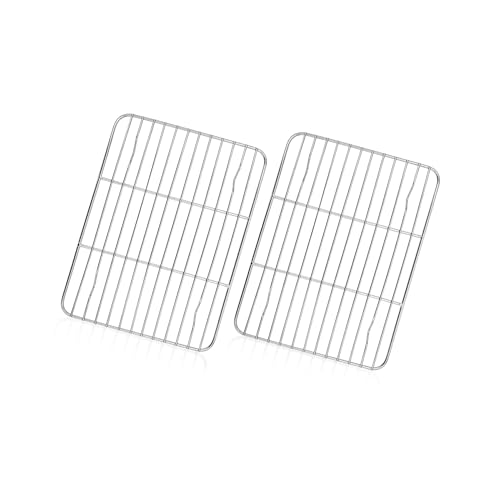
MINI SIZE & VERSATILE: Compact size of 8.75”x6.25” to fit most toaster oven pans, Mini cooling rack is more suitable for 1-2 persons, 2 pieces helpfully handle different small kitchen tasks at the same time, Ideal for Cooling muffins and cookies, Baking tarts and breads, Roasting sausage and chicken thighs, Serving bacons and fries, and Putting the mini hot pans without burning the counter

Perfect for Small Cuts - Specifically designed for individual steaks, crisping bacon, and smaller portions, this compact pan is built for the perfect 5-minute rest. Its optimized width works flawlessly with a standard roll of aluminum foil, allowing you to create the ideal warming tent that locks in heat while the juices set exactly as intended.
Searing Temperature & Timing After the Smoke
The pan must be scorching—400 °F to 450 °F—before the steak hits it, and you should add a thin layer of high‑smoke‑point oil once the surface is hot enough to shimmer. Pat the steak dry, season, and place it in the skillet. Maintain sear temp consistency by checking with an infrared thermometer; any dip below 400 °F compromises crust formation. Sear each side for 1 minute, flipping every 30 seconds to build a uniform brown crust. After the first minute, let the meat sit for 30 seconds; this allows the surface to develop Maillard reactions without over‑cooking. Total sear duration is 2 minutes per side, yielding a final internal temperature 10 °F above the target before searing, ensuring carry‑over reaches the desired doneness. Use a meat thermometer to verify the steak reaches between 130 and 135 degrees Fahrenheit for medium-rare doneness. Gentle oven heat activates enzymes that further tenderize the meat before searing.
Monitoring Steak Doneness With a Wireless Probe (225 °F)
Even if you’re smoking a steak to a precise 225 °F target, a wireless probe lets you monitor internal doneness without stepping into the chamber. Place the probe in the thickest part, away from direct flame, to keep the sensor within its probe heat tolerance. RFX MEAT and Meatstick 4X maintain reliable internal readings from 32‑212 °F, while ambient data stabilizes after roughly seven hours. RFX alerts when the meat hits your chosen doneness temperature, preventing over- or under‑cooking. Continuous logging creates a temperature curve you can review for consistency across sessions. Because internal measurements stay accurate throughout low and slow cooks, you rely on wireless probe accuracy rather than ambient fluctuations, ensuring repeatable results without manual checks. Wireless probes provide consistent readings even when the grill lid is closed, reducing connectivity interruptions. This approach allows the fat to render and connective tissues to break down, contributing to tender, flavorful meat.

Smart Display Base: Unlike other thermometers that require an app to function, the P2’s smart base provides direct target temperature setting and real-time readings display. For advanced features like cooking history and AI-guided cooking, the free ThermoMaven APP (iOS/Andriod) is also available, giving you the best of both worlds.

Smart Display Base: Unlike other thermometers that require an app to function, the P4’s display base provides real-time readings and lets you set temperatures directly on the device. A smart app is also available, giving you the best of both worlds.

Smart Display Base with Control: The ThermoMaven G1 wireless meat thermometer features a versatile smart display base that offers real-time temperature readings and allows you to set temperatures directly on the device—no app required. With our user-friendly one-click setup, you can connect the probe, pair it with the base, and start cooking in seconds—no complicated setup needed!
Wind, Fuel & Temp Swings: 225 °F Steak Smoke Tips
Your wireless probe keeps you informed of internal doneness, but maintaining a steady 225 °F smoker environment hinges on controlling wind, fuel, and temperature swings. Position the smoker in a sheltered spot or erect a wind screen to prevent heat loss; gusts can raise fuel consumption 20‑30 % and destabilize temperature regulation. Choose oak or cherry pellets for balanced smoke, keep the hopper full, and monitor pellet management to avoid dips below 225 °F during a 1‑2‑hour smoke. Use a water pan and indirect heat to dampen swings, checking the chamber every 20‑45 minutes. Maintaining clean ash catchers and smoker interiors ensures consistent airflow that supports stable temperature control throughout the cook. Preheat fully before loading steaks, and adjust vents promptly if gusts occur. This disciplined approach guarantees consistent 225 °F smoke and reliable internal temperatures. A thick cut like a 16‑oz ribeye benefits especially from this steady low‑heat method.

Long-Lasting: Constructed from stainless steel double-layer material, ensuring durability and longevity compared to single-layer screen filters. SIZE: outer diameter 1.3'', inner diameter 0.97''.

Complete 15-Piece Set: Includes 15 stainless steel cocktail smoker screens with premium double filter mesh design for enhanced smoking experience

Product material: made of stainless steel, exquisite workmanship, sturdy and reliable, can be reused many times.
Top Mistakes & Quick Fixes for 225 °F Steak Smoking
When you let wind, fuel, or temperature swing unchecked, the 225 °F smoker drifts out of the sweet spot, causing thin steaks to overcook, thick cuts to stay underdone, and smoke to become overpowering. First, keep the ambient temperature steady at 225 °F for no longer than 45 minutes; this avoids dryness and optimizes smoke time. Use a probe to monitor internal temperature, pulling the meat at 120 °F for 1.5‑inch cuts. Apply a reverse‑sear technique: after smoking, preheat a cast‑iron pan to 550 °F and sear each side 1–2 minutes with high‑smoke‑point oil. Choose mild wood, limit initial smoke to 20 minutes at 180 °F, and never peek to prevent heat loss. These fixes keep flavor balanced and texture perfect. Resting your steak for 5–10 minutes after the high-heat sear maximizes juiciness and ensures the best final result. Cold smoking provides a more robust smoke flavor when done correctly.