Smoke your sausages at 225‑250 °F for 2–3 hours, adjusting the time roughly 15 minutes for each ¼‑inch of thickness. Thin links finish around 90 minutes, medium pieces at 2 hours, and thick links need about 2.5–3 hours. Aim for an internal temperature of 160‑165 °F—165 °F confirms full doneness, while 154‑155 °F works for smaller links. Keep humidity near 65 % and avoid opening the lid too often to maintain steady heat. Continue for you’ll uncover deeper‑flavor techniques and common pitfalls.
Exact Sausage‑Smoking Time by Type
When you match sausage type to its thickness, you can predict the smoking time within a tight range; standard fresh sausages generally need 2‑3 hours at 225‑250 °F, with the internal temperature hitting 165 °F for safety. You’ll notice that sausage thickness adjustments shift the window by roughly 15 minutes per ¼‑inch increment, so a ½‑inch link leans toward the lower bound while a 1‑inch link pushes toward three hours. An ideal smoker setup maintains 225‑240 °F, supplies at least 2 inches of airflow between links, and uses an instant‑read thermometer for mid‑smoke checks. Breakfast links finish at 145 °F after about two hours at 250 °F; pork, beef, and mixed varieties converge on 165 °F within the 2‑3‑hour band, provided you flip halfway and monitor temperature precisely. For best results, select quality smokewood like hickory or cherry to develop a rich smoky crust and enhance flavor. Meat should not linger between 40 and 140°F to prevent bacterial growth.

2 Pack BBQ, Smoker, Grill thermometer, grill temperature gauge.

Effortlessly smoke meat, fish, and sausages with this multi-functional oven smoker, designed for outdoor gatherings and family feasts.

1. Versatile Smoking Capability: This multi-functional smoker allows you to expertly smoke meat, fish, and sausages. Create delicious feasts for outdoor gatherings with family and friends. The spacious design ensures ample room for all your favorite foods, making it perfect for enhancing flavor through traditional smoking methods.
Cold‑to‑Hot Smoker Temperature Curve for Sausage Smoking
If you start the smoker at a low, steady 180 °F and then ramp it up to 225 °F after the first hour, you create a controlled cold‑to‑hot curve that lets the sausages absorb smoke before the internal temperature climbs. Begin with a 180 °F plateau for 60 minutes, positioning the thermostat beneath the baffles to capture rapid temperature changes. This phase satisfies temperature stability requirements while you monitor smoke density control; keep smoke thin to avoid heavy coating. After the hour, raise the setpoint to 225 °F and hold for another 60 minutes, allowing fat rendering and casing shrinkage without overshooting. Maintain humidity around 65 % throughout to prevent surface drying. Record each temperature increment and smoke output to fine‑tune future runs. Using a meat thermometer ensures your sausages reach the safe internal temperature of 160 °F for optimal juiciness.
Key Internal Temperatures for Sausage‑Smoking Safety & Flavor
A target internal temperature of 160 °F is the benchmark for safe, flavorful smoked sausages, because it reliably kills bacteria in ground‑meat mixtures while preserving moisture. You’ll watch the thermometer as you insert it through the end toward the center, aiming for 160 °F as the primary target. For most sausages, 165 °F at the core confirms full cook, while a brief dip to 154 °F may signal readiness for smaller links. Venison requires a precise 152 °F before cooling to lock in ideal smoke flavor without drying. Use a digital probe for continuous tracking, minimizing lid openings to keep heat stable. Pair these temperatures with proper curing techniques to enhance bacterial kill and integrate spices, ensuring texture and moisture remain perfect. Low, steady temperature is essential for maintaining sausage casing integrity and preventing dryness. Once cooked, store your smoked sausage properly by refrigerating unopened sausage for up to 2-3 weeks beyond the sell by date, or freezing for extended storage.
Quick Reference: Sausage Size, Smoke Phase Length, Final Temp
Most sausage‑smoking sessions fall into three clear categories—thin links, average‑size pieces, and thick links—each with a distinct smoke‑phase length and target internal temperature. You’ll check thin links at 90 minutes, then verify at two hours, keeping the smoker at 225‑240 °F to maintain ideal smoke concentration levels and efficient flavoring agent infusion processes. Average pieces linger 90 minutes to two hours, often reaching 155‑154 °F internal before removal. Thick links demand a 2.5‑hour check and total about three hours, targeting 165 °F for doneness. Adjust airflow to prevent crowding and use an instant‑read thermometer for precision. For gas grillers, smoker boxes are an effective solution for achieving the wood smoke flavor needed during sausage preparation. By aligning size, smoke‑phase length, and final temperature, you achieve consistent flavor and safety across all batches. The ideal temperature range of 225‑240 °F is crucial for proper smoke penetration.

Kaluns Smoker Box For A Scrumptious Smokey Flavor Using Any Grill - Add delicious smokey flavor to your favorite piece of meat. Position our heavy-duty smoker box right underneath the grill grates for best results. l The holes around and on the lid of the box release tons of smoke within 10 minutes of the smoker box burning on the grill. Choose your favorite wood chip flavor,have it smoked up, and enjoy tasty smokey flavored Ribs, Chicken, Turkey

Infuse food with smoky flavors

Thicker sturdy stainless steel construction will hold up great under the heat of the grill. With the unique hinged design, you can easily add or remove wood chips from the smoker box while in use.
Classic 2‑Hour Sausage‑Smoking Timeline (Ice‑Bath Finish)
When you start the classic two‑hour sausage‑smoking timeline, begin with a cold‑smoke phase at 160‑180 °F, letting the links sit for 1.5–2 hours until they hit 150‑155 °F internally; this low temperature gently renders fat, infuses smoke, and prevents casing rupture. After the smoke, plunge the links into an ice bath for 15 minutes—your primary cooling method—to halt cooking, lock moisture, and tighten the casing texture for a crisp snap. Pat them dry, then rest on a refrigerated rack for at least 30 minutes; this drying step stabilizes the skin and prevents rubbery shrinkage. Using an instant-read thermometer ensures you avoid undercooking or overcooking during the final stages. Finally, raise the smoker to 225‑250 °F and finish until the internal temperature reaches 155 °F, achieving juicy interior and snappy exterior without overcooking. Mastering the casing is essential for the perfect snap.

【5G Wi-Fi & Bluetooth5.0 Mode】Inkbird smoker controller fan supports two networking methods;can monitor the grill through smartphone; one smartphone can control multiple smoker controllers at the same time, or multiple people can monitor one smoker controller.
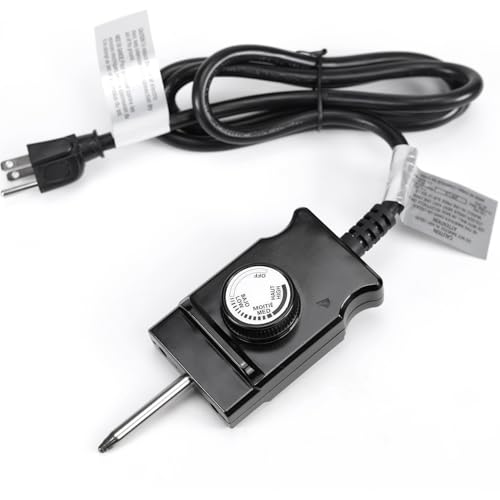
【APPLICATION】Our adjustable controller thermostat probe cord fits most of the electric smokers, grill heating elements,electric skillets etc. Masterbuilt: 20070712, 20100809, 20070812, 20070909, 20071012, 20072817, 20072917, 20073017, 20073716, 20074116, 20075517, 20078516, 20078616, 20150112, 20150210, 20150211, 20150209, 20070210, 20070410, 20070610, 20070612, 20150213, 20150309, 20150311, 20150514, 20150611, 20150613, 20150614, 20150713, 20150716, 20150813, MB25075517, MB20070210, 20150411, 20150414, 20150511, 20150513,

【SPECIFICATION】: 120V 15A Analog controller, adjustable Temperature Range: 50F-500F (Depends on the size of your smoker/grill).
3‑5‑Hour Sausage‑Smoking Techniques for Deeper Flavor
The classic two‑hour timeline ends with a hot‑smoke finish, but extending the process into a three‑hour window lets you deepen flavor without sacrificing texture. First, start a cold smoke at 160–180 °F for 1.5 hours, keeping ambient humidity considerations in mind; higher humidity slows smoke uptake, so adjust airflow to maintain a steady low temperature. When internal temperature hits 150 °F, plunge the links into an ice bath for 15 minutes, then dry them and observe a resting duration importance of at least 30 minutes in the fridge. This rest tightens casings and sets a pellicle. Raise the smoker to 225 °F and finish for 45 minutes until the interior reaches 155 °F. The extra hour allows gradual fat rendering and richer smoke penetration while preserving a snappy exterior. Use a meat thermometer to ensure precise timing and doneness throughout the smoking process. Use apple wood for a mild, fruity flavor that complements the sausage without overwhelming it.
Common Sausage‑Smoking Mistakes That Add Time Without Improving Taste
Three common mistakes—excessive heat, frequent lid openings, and overcrowding—each add minutes without delivering flavor. When you push the temperature too high, fat melts out, casings split, and the exterior burns while the interior stays raw; the “fat‑out” effect lengthens the smoke cycle without enhancing taste. Opening the lid repeatedly lets smoke escape, destabilizes temperature, and forces you to extend exposure to recover lost flavor. Overcrowding traps moisture, creates steaming instead of browning, and forces uneven smoke penetration, so you spend extra time chasing consistency. In addition, an inadequate resting time prevents juices from redistributing, and an unbalanced seasoning blend masks subtle smoke notes, compelling you to smoke longer to achieve a palatable result. Maintaining a proper fat content is essential for flavor and texture. The optimal approach involves smoking at controlled medium temperatures between 200 and 350°F to slowly render fat and infuse smoke flavor while achieving your desired texture.


