You can keep unopened smoked sausage in the fridge for 2‑4 weeks, but once you break the seal it should be eaten within 3‑5 days for best quality and safety, with a hard limit of 7 days per FDA guidelines. If it’s vacuum‑sealed, expect 1‑2 weeks of freshness at 35‑39 °F. Summer‑type smoked sausage lasts longer at room temperature, but regular smoked sausage needs prompt refrigeration. Proper wrapping and quick cooling after smoking will extend its life, and the next section shows how to freeze it safely.
Smoked Sausage Fridge Life: Quick Answer
If you’ve just opened a pack of smoked sausage, expect it to stay safe and tasty for about seven days in the fridge. You should keep it in an airtight container, wrap it tightly in plastic, and label the opening date. The unopened storage duration for sealed smoked sausage can reach two to four weeks, but once you break the seal the bacterial growth curve accelerates, so the quality peak occurs within the first seven days. Refrigerator drying effects are mitigated by the tight wrap; otherwise the surface will lose moisture, leading to texture degradation and faster spoilage. Monitor for sour odor, slime, or mold—any sign means discard. This protocol maintains safety and peak flavor throughout the recommended period. For best results, ensure your smoked sausage reaches an internal temperature of 160°F during the smoking process to guarantee food safety. Summer preservation is achieved through curing, smoking, and drying, which together keep the sausage safe without refrigeration.
How Long Does Unopened Smoked Sausage Last? (by Type & Packaging)
You’ve learned that opened smoked sausage stays safe for about a week, but the unopened product can last far longer depending on type and packaging. For standard refrigerated smoked sausage, keep it in its original sealed pack; it stays fresh 2‑4 weeks after purchase and can extend 2‑3 weeks beyond the printed sell‑by date if consistently refrigerated. Unopened precooked sausage packets also last up to two weeks in the fridge, thanks to vacuum sealing that preserves moisture and prevents spoilage. Summer‑type smoked sausage, when unopened, can sit 3‑6 months at room temperature in a cool, dry pantry, and up to a year if cured and vacuum‑sealed. If you freeze, wrap tightly in a well-ventilated area to prevent odor transfer; frozen smoked sausage remains quality‑stable for six months. Always check sell‑by dates and keep temperatures steady. Cooked sausage can be kept in the refrigerator for 3‑4 days.

🌭High quality edible sausage casings material with HALAL certificate,Grade A, safe and non-toxic, vacuum sealed package.

PREMIUM FRESH SAUSAGE SIZE: These 32mm edible beef collagen casings are specifically designed for dinner-sized links, making them the perfect choice for Italian sausage, bratwurst, chorizo, and stadium-style dogs.

Made with 100% Premium Cuts of Meat
Opened Smoked Sausage: Safe Consumption Timeline
Once you crack open smoked sausage, the clock starts ticking: USDA and FDA guidelines cap safe refrigerated storage at three to four days for fresh‑made varieties and up to a week for pre‑cooked, vacuum‑sealed packs. You must keep the opened smoked sausage tightly wrapped or in an airtight container at ≤ 40 °F. For opened smoked sausage quality, aim to consume within three to five days; beyond that, texture and odor deteriorate, and Listeria risk rises. Opened smoked sausage food safety hinges on visual cues—no slime, off‑smell, or discoloration—and on strict temperature control. The FDA Food Code mandates discarding perishable items after seven days, but a conservative three‑ to‑day window maximizes safety. Label any leftovers with the opening date and discard if any spoilage signs appear. Proper cold‑chain maintenance is essential to prevent bacterial growth. For a quick and convenient way to prepare your smoked sausage before it expires, consider air frying at 370-400°F for a flavorful meal ready in under 18 minutes.
Vacuum‑Sealed Sausage: Extending Refrigerator Life
Vacuum‑sealed sausage can stay fresh in the fridge for one to two weeks when you keep it at a steady 2‑4 °C (35‑39 °F). The seal eliminates air exposure risks, so moisture and oxygen can’t accelerate spoilage. Low water activity (Aw < 0.86) and acidification to pH ≥ 4.8 act as preservative impact, inhibiting E. coli, Listeria, and Staphylococcus. Consistent refrigeration slows bacterial growth; a thick, intact bag prevents micro‑leaks that would re‑introduce air. Even after smoking, the meat’s reduced moisture further limits spoilage. Monitor for slime, off‑colors, or off‑smells—smell alone isn’t reliable. If the seal fails, air exposure risks rise sharply, and the safe window drops to a few days. Follow rapid cooling post‑smoking to maximize shelf life. Temperature control is crucial because lower temps significantly slow bacterial proliferation. Maintaining steady temperatures is similar to how consistent heat management extends the usable duration of energy sources in cooking applications.

These plastic vacuum seal bags can be used to store fruits, vegetables, meat, duck's neck and other foods as you like. It also ideal for storing, packaging, sampling, displaying, kitchen storage or home organization.

Easy Use Design: No scissors required for these bags. Just align to seal and tear to open.
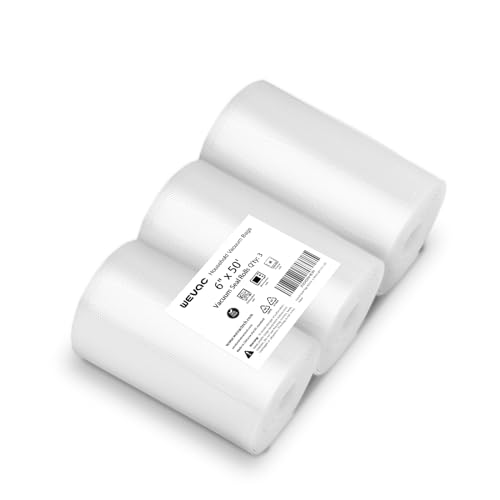
VERSATILE COMPATIBILITY: 3 rolls 6" x 50' compatible with both chamber and external vacuum sealers, providing flexibility for various machines, such as Food Saver, Seal a meal, Nesco, Weston, Cabela’s, Ziploc etc.
Summer Sausage Shelf Life Compared to Regular Smoked Sausage
While vacuum‑sealed sausage can stay fresh for one to two weeks, summer sausage stretches that window dramatically—up to three months unopened and two to three weeks after you’ve opened it. You’ll notice that the unopened shelf life of summer sausage is explicitly documented: three months in the refrigerator, thanks to its semi‑dry curing and airtight packaging. In contrast, the research provides no concrete timeline for regular smoked sausage, leaving its unopened shelf life undefined. Post‑opening storage requirements for summer sausage are strict: keep it refrigerated, wrapped tightly or in an airtight container, and consume within two to three weeks for ideal safety and flavor. Regular smoked sausage lacks comparable guidance, so you must treat it conservatively, assuming similar refrigeration needs until you find specific data. Summer sausage is traditionally cured and smoked to preserve it through warm months. For achieving optimal flavor in smoked sausage, using quality smokewood like hickory can significantly enhance the final product’s taste and preservation qualities.
Smoked Sausage Spoilage Indicators
Three key signs tell you a smoked sausage has gone bad: visual changes, off‑odors, and texture shifts. Spot a gray‑green film, iridescent sheen, or fuzzy mold; those are clear bacteria growth triggers. A slight brown tint is normal oxidation, but any slimy coating means discard. Conduct a sniff test reliability: sour, ammonia‑like, rancid, or sweet‑sour smells signal volatile organic compounds from bacterial breakdown and outweigh visual cues. Feel for slickness or mushiness; loss of firmness confirms degradation. Remember that temperature spikes accelerate bacteria growth, so keep the fridge at ≤40 °F and verify with a thermometer. For maximum safety, maintain refrigeration just above freezing to prevent the growth of harmful bacteria during storage. Combine sight, smell, and touch for a definitive spoilage verdict before deciding to eat or throw away. Smoked sausage can safely be stored unopened for up to seven days before refrigeration quality begins to decline.
Freezing Smoked Sausage: When & How Long
If you’re not going to eat smoked sausage within three days, pop it in the freezer now to lock in flavor and texture. Freeze it as soon as the pre smoking temperature reaches a safe internal level and the meat has cooled to refrigerator temperature; this prevents ice crystals and preserves the post smoking shelf life. For best quality, store whole, vacuum‑sealed or tightly wrapped portions for two to three months; sturdier cuts can stretch to four‑six months, while delicate smoked meats should not exceed three months. Fatty sausages lose flavor faster, so label each package with the freeze date and track storage time. Keep the freezer at a constant 0 °F (‑18 °C) to guarantee safety, but expect gradual texture decline after the recommended period. Proper cooling before freezing reduces the risk of bacterial growth. When you’re ready to eat your frozen smoked sausage, use low temperature reheating techniques to restore moisture and prevent the meat from drying out.

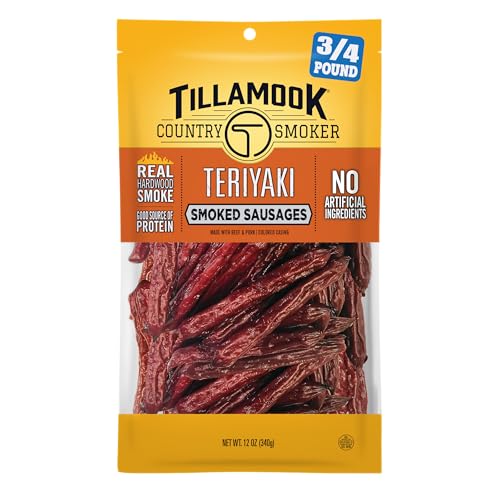
BOLD TERIYAKI PROTEIN SNACK BUILT FOR BUSY DAYS: These teriyaki smoked sausages deliver delicious sweet and savory flavor with 9g protein per serving. Satisfying and flavorful, these protein snacks help curb hunger between meals, workouts, road trips, or busy days

Made with 100% premium cuts of beef and a perfect blend of spices
Smoked Sausage Wrapping & Storage Tips
Because proper wrapping is the single most effective way to keep smoked sausage fresh, you should seal any opened package in an airtight container or tightly wrap it in plastic film immediately after use. Use airtight storage techniques: wrap the meat tightly, remove excess air, and press it into a resealable bag or a vacuum‑sealed pouch. This prevents moisture loss and limits bacterial exposure, extending fridge life to seven days. Apply proper portion handling by slicing only the amount you’ll eat within 3‑4 days, keeping the rest sealed. Label the package with the opening date, store at ≤40°F, and use clean utensils each time you access it. To ensure safety, reheat any leftovers to at least 165°F before consumption. Observe texture and odor; any drying or off‑smell signals failure of the wrap. Smoked meat lasts 3–4 days in the refrigerator when stored at or below 40°F.
Common Storage Mistakes That Reduce Sausage Shelf Life
Even a brief lapse in temperature control can slash smoked‑sausage shelf life, as exposing the meat to anything above 40 °F lets harmful bacteria multiply rapidly and makes the product unsafe after just a few days. You often commit time/temperature abuse by leaving sausage on the door shelf, where frequent opening spikes the temperature, or by letting it sit out longer than two hours. Moisture control issues arise when you wrap only in paper, allowing condensation to pool on the surface, or when you store it revealed on shelves, inviting cross‑contamination from drips. Failing to vacuum‑seal or use a moisture‑tight barrier accelerates oxidation and mold growth. Likewise, mixing raw and cooked sausage, or placing it near ethylene‑producing produce, speeds spoilage and reduces the safe storage window. Fresh sausages may contain up to 3 % water which can promote bacterial growth if not properly sealed.
FAQ: Unsure About Smoked Sausage Freshness?
Label dates, keep packaging intact, and freeze for up to six months if you need longer storage. Just as routine maintenance extends your grill’s longevity, proper food storage practices preserve the safety and quality of your smoked sausage.