Preheat your smoker to 225‑250 °F and place the brined, mayo‑bound turkey breast skin‑side up. Cook for about 2½‑3 hours, checking the internal temperature with a probe; you’ll pull it at 160 °F, then let it rest 10‑15 minutes so carry‑over heat brings it to the safe 165 °F. If you prefer a faster method, bump the temp to 275 °F for 2‑2½ hours, basting every 30 minutes to keep the surface moist. Continue for deeper wood‑pairing tips, rub recipes, and troubleshooting tricks.
Pick the Best Smoking Temp & Time for Turkey Breast
Which temperature should you set your smoker to for a juicy, perfectly cooked turkey breast? You’ll want to preheat to 275°F for a moderate turkey breast smoking duration of 1–2 hours, then lower to 225–240°F indirect heat until the thickest part hits 162°F. For an 8‑lb breast, a 375°F burst can finish it in 2–2.5 hours, but the low‑and‑slow method yields steadier moisture. Throughout the cook, apply turkey breast basting techniques every 30 minutes—spritz with melted butter, broth, or a citrus‑herb mix—to maintain surface humidity and promote even browning. Brining the turkey breast beforehand will help keep it juicy throughout the smoking process. Pull the bird at 160°F, let it rest 15 minutes under loose foil, and the carryover will lift it to the safe 165°F target. Use a digital thermometer to verify each temperature checkpoint. Cook to internal temperature ensures perfect doneness.
Choose Wood & Flavor for Turkey Breast Smoke
After setting the smoker to the appropriate temperature, turn your attention to the wood you’ll use. Choose cherry for a mild, sweet, fruity profile that also deepens the skin to a mahogany hue; it pairs seamlessly with rubs, marinades, or oak. Pecan offers a nutty, slightly sweet edge that cuts turkey fat and blends well with peach or other fruit woods. Apple provides delicate sweetness and forgiving smoke intensity control, making it ideal for beginners or as a base mixed with cherry or pecan. For subtle, balanced notes, consider maple, peach, or alder—these mild fruit woods prevent over‑smoking and preserve poultry tenderness. Use strong woods like hickory, mesquite, or oak sparingly, mixing only small amounts with mild woods to fine‑tune flavor combinations without overwhelming the turkey breast. Expert recommendations often highlight apple as the most forgiving wood for beginners. Proper wood seasoning and moisture content ensures optimal smoking results and prevents excessive smoke production that could mask the turkey’s natural flavors.


Prepare the Breast: Brine, Mayo Binder, Pepper‑Forward Rub
While the smoker reaches 275 °F, submerge the turkey breast in a brine made by dissolving the packet’s contents in ½ gallon water, stir over low heat until fully dissolved, cool, then refrigerate for six hours; after brining, rinse under cold water, pat dry, and let rest 15 minutes. Slather the breast with a thin, even layer of mayonnaise; the binder creates a moisture barrier and a tacky surface for the rub. Choose a pepper‑forward blend such as Holy Cow, then apply generously, ensuring the rub consistency is paste‑like enough to cling without clumping. The brine strength, calibrated by the packet, penetrates uniformly, while the mayo‑rub combo yields a crisp, savory crust once smoked. Use a meat thermometer to monitor the internal temperature and ensure the turkey breast reaches the proper doneness. Enjoy the lean, tender meat that makes smoked turkey breast a favorite for family gatherings.
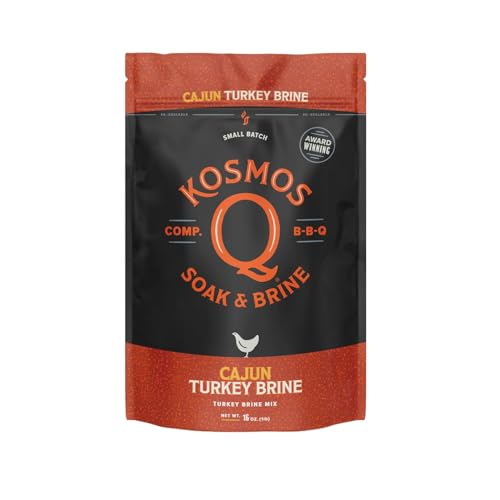
JUICY, FLAVOR PACKED RESULTS: Create a crave worthy centerpiece with Kosmos Q Cajun Brine Mix. This robust, 16 oz brine soak is crafted to infuse turkey and other poultry cuts with deep moisture and bold flavor from the inside out. Ideal for holiday spreads or any time you're cooking to impress.

LOCKS IN MOISTURE FOR JUICY RESULTS: Kosmos Q Chicken Soak Brine delivers a balanced mix of brown sugar, Worcestershire, and savory spices that draws moisture deep into the meat. Whether you're cooking whole birds or just tenderloins, this soak helps you get that juicy, flavorful bite in every piece without complex prep.

SIGNATURE FLAVOR – Infused with the classic herbs and spices of Bell’s iconic seasoning blend, delivering deep, savory flavor to every bite.
Get Your Smoker Ready: Preheat, Probe Placement, Alarm Settings
Now that the turkey breast is brined, rinsed, and coated with the mayo‑rub, you need to bring the smoker to temperature and set up monitoring before the meat hits the heat. Preheat the unit to the ideal preheating temperature of 225°F, closing the lid for 15 minutes on pellet grills. If your model offers a Super Smoke mode, enable it at 225°F; otherwise, use the fan control to stabilize around 275°F for indirect cooking. Place the breast, side up, on the middle rack, then insert a Smoke X4 or RFX MEAT probe into the deepest, boneless portion—this is proper probe placement. Set the high‑temp alarm to 157°F on the meat channel; the internal target will be 165°F. Verify the lowest reading with a Thermapen ONE after the alarm triggers, and monitor remotely via a wired or wireless leave‑in thermometer. Injecting the]]] the meat flavor a deeper flavor.

Bluetooth Monitor Remotely: Govee Bluetooth meat thermometer lets you check the temperature of your grill, smoker, or oven from your phone. With this smart BBQ thermometer, you can multitask while grilling.

More Stable Than Bluetooth: Our advanced RF technology ensures a stronger, more reliable connection than Bluetooth. This smoker thermometer provides the freedom to move around without losing connection! Monitor your BBQ from up to 1,000 feet away!

Anywhere Remotely Monitor Temperature: Our smart meat thermometer sends instant notifications to the Govee Home App and your digital thermometer when any temperature goes outside your presets.(Note: not support 5G.)
Smoke at 225‑250 °F: Time, Temp Monitoring, and Basting Tips
A typical 5‑lb boneless turkey breast will need roughly 2½ – 3 hours at 225 °F (about 30 minutes per pound) or 2 – 2½ hours at 250 °F (≈25 minutes per pound), but you must watch the internal temperature closely. Preheat the smoker to the desired range, then insert a probe into the thermal center before closing the lid. Set a high‑temp alarm at 157 °F; verify with a Thermapen ONE. Maintain a steady 225‑250 °F, adjusting airflow based on smoker type considerations—electric units hold temperature tighter than charcoal, which may require more frequent checks. Bone‑in breasts retain heat longer, so subtract a few minutes per pound. Focus on dry seasoning; basting isn’t required at these low temps. Brining the turkey breast beforehand helps maintain moisture and enhances flavor during the smoke process. After reaching 160 °F, rest the meat 20 minutes, loosely tented with foil. Smoking a day ahead can reduce day‑of‑stress and still deliver juicy results.
Smoke at 275 °F: Faster Timeframe and Basting Adjustments
If you raise the smoker to a steady 275 °F, the turkey breast will cook in roughly 13‑25 minutes per pound, cutting the total time to one or two hours for most sizes. Preheat to exactly 275 °F, then maintain that temperature with a pellet or electric unit; avoid drift below 250 °F or above 325 °F. Insert a probe alarm set at 157°F; the meat will reach the peak internal temp of 165°F after carry‑over. Begin basting when the internal reading hits 120‑145°F, then increase basting frequency to every 15‑20 minutes. Apply a butter‑mayo blend after 1.5 hours, and finish with a light glaze in the last 15 minutes. Allowing the turkey to rest after smoking helps redistribute juices before carving. Tent with foil while the final rest. Bone‑in turkey is recommended for better flavor and texture.
Apply Carry‑Over Cooking for a Perfect 160‑165 °F Finish
Raising the smoker to 275 °F gets the turkey breast to the target internal temperature quickly, so you can pull it at 160 °F and let carry‑over cooking complete the job. At 160 °F internal, the meat still holds enough residual heat to climb 5‑10 °F during a 20‑30‑minute rest under loose foil. This carry‑over cooking benefits you by preventing over‑cooking while guaranteeing the USDA‑approved 165 °F final temperature. Monitor the thickest part of the breast, verify uniform readings, and tent the bird with foil to retain moisture. The proper pull temperature of 160 °F guarantees the turkey reaches the ideal 160‑165 °F range without drying out, delivering juicy, safe meat ready for carving. 2‑3 hours per 5 lb at 225 °F is a typical guideline for smoking a turkey breast.
Rest & Carve: 10‑15‑Minute Rest Under Loose Foil Explained
While the smoker is still hot, tent the turkey breast with loose foil and let it rest for 10‑15 minutes; this brief period lets residual heat finish cooking to a safe internal temperature while the foil traps moisture. The foil’s loose seal creates a micro‑environment where juices reabsorb into the meat, delivering the juice absorption advantages that yield a tender, juicy bite. During the rest, the butter pad beneath the breast melts, mixing with drippings and further enhancing moisture retention. For optimal results, monitor that the internal temperature reaches about 160‑165°F during this resting phase. After 12 minutes, unwrap, drizzle the collected butter and juices, and slice against the grain. The meat will hold a consistent 160‑165 °F finish, ensuring safety and ideal texture for serving. The turkey breasts were sourced directly from a whole turkey, allowing for seasoning and injection as desired.
Troubleshoot Dry, Undercooked, and Over‑Smoked Turkey Breast Issues
Why does your turkey breast end up dry, undercooked, or over‑smoked? You’re likely missing uniform internal doneness, misreading temperature, or exposing the meat to excess smoke. Keep the smoker at 275°F, insert a probe thermometer in the thickest part, and pull at 157‑162°F; carry‑over will add ~3°F, guaranteeing against overcooking. Baste with melted butter or mayo‑slathered skin every 30 minutes to maintain moisture and aid crispy skin formation. Use moderate wood like pecan or fruit; avoid heavy hickory that forces excessive smoke at 425°F. Position the breast on a grill pan or rack for even heat circulation, and remove immediately once the target internal temperature is reached. This ascertains precise doneness, juiciness, and balanced flavor. Low‑fat turkey breast tends to overcook quickly, so a gentle temperature helps preserve moisture. Allow the turkey breast to rest for 10 to 15 minutes after smoking to let juices redistribute throughout the meat.