You’ll need about five hours to smoke a five‑pound whole chicken at a steady 250 °F; a two‑pound bird will finish in roughly two to three hours, while larger birds may exceed the five‑hour mark. Preheat the smoker to 225‑250 °F, use a water pan for temperature stability, and keep a remote probe in the water pan to monitor swings. After the first hour, raise the heat to 375 °F for a crisp skin, then rest the bird 20‑30 minutes before carving. Continue for for tips on weight‑based timing, internal‑temperature targets, and troubleshooting.
How Long Does a 250°F Smoker Take to Cook a Whole Chicken?
How long does a 250 °F smoker need for a whole chicken? You’ll need roughly one hour per pound, so a 5‑lb bird takes about five hours. Start by placing the chicken on the smoker and maintaining smoker temp at a steady 250 °F. Insert a probe into the thickest part of the breast, avoiding bone, and monitor internal temp continuously. When the reading hits 165°F, remove the bird; if you prefer a brief rest, pull it at 157‑162°F and let it sit 10‑15 minutes to finish at 165°F. Adjust timing for size: a 2‑lb bird finishes in 2‑3 hours, while larger birds may exceed five hours. Consistent temperature control and precise internal‑temp monitoring guarantee safe, evenly cooked meat. Spatchcock cooking is roughly half the time of a whole bird. Before smoking, pat the chicken dry and season it with a dry rub or garlic butter to enhance flavor and texture.
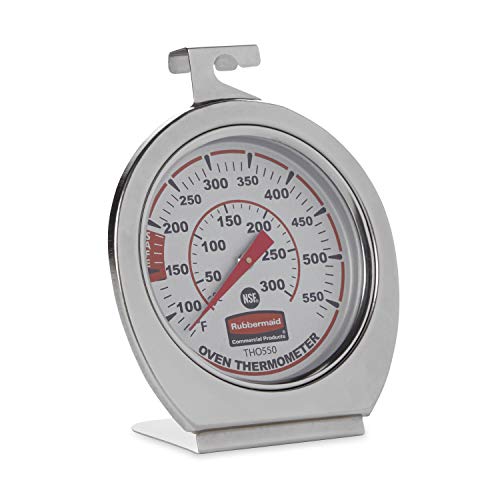
FOOD SAFETY: Thermometer displays true oven temperature instantly to ensure safe food preparation

【2-Pack Value Set + Large Easy-Read Display】Comes with 2 grill thermometers, each featuring a 2 3/8" oversized dial and 2 7/8" stem length—clear numbering ensures quick temperature reading, even from a distance, and the long stem enhances accessibility in various cooking environments.

Large Display: Features a 2 3/8 inches large face for clear visibility; Stem length of 2 7/8 inches enhances accessibility; Enables easy classification of food temperatures in various cooking environments
Preheat Your 250°F Smoker to a Steady 225‑250°F
When you fire up the smoker, set the control to reach a steady 225‑250 °F and let it stabilize before adding the chicken. Begin by lighting lump coal; allow 15‑20 minutes for ignition, then add another 30 minutes for the firebox to warm the chamber. Use a remote probe in the water pan to verify that the smoker chamber temperature swings stay within ±25 °F of target. Adjust intake airflow: open the intake if the temperature dips, close it and keep the exhaust open if it climbs. Thin blue smoke signals clean combustion, preventing thick white smoke that dries meat. Maintaining this range preserves the ideal moisture content, ensuring the bird stays juicy throughout the low‑and‑slow cook. Water pan helps buffer temperature fluctuations, providing consistent convective heat. For enhanced smoky flavor, consider using wood pellets such as apple, cherry, hickory, or mesquite.
How Chicken Weight Determines Cooking Time at 250°F
If you know the bird’s weight, you can predict its smoking time at 250 °F with simple adjustments: start with the 4‑lb baseline of 140 minutes, then add 10 minutes per pound for every 25 °F the target is below the 275 °F reference. For a 5‑lb chicken, the formula yields 150 minutes plus the 10‑minute per‑pound penalty for the 25 °F drop, resulting in roughly 200 minutes (≈3 h 20 m). Lighter birds (3‑4 lb) require fewer minutes per pound, but temperature variance still adds 10 minutes per pound, creating cooking time variances that weight based calculations can predict. Adjust for wind, smoker type, or brining by adding 5‑10 minutes as needed, then monitor internal temperature until it reaches 165 °F. Using an instant-read thermometer ensures you can verify doneness with precision throughout the smoking process. Humidity can further extend the cooking time by 10‑15 minutes.

This temperature gauge fits all Oklahoma Joe’s Smoker Grills with 13/16” mounting hole, like Longhorn / Highland / Bronco Drum smokers and Rambler Tabletop charcoal grill. (For more details of OK Joe’s grill series, please see “Product Description”)

TEMPERATURE GAUGE: Place directly on cooking surface for precise and easy use
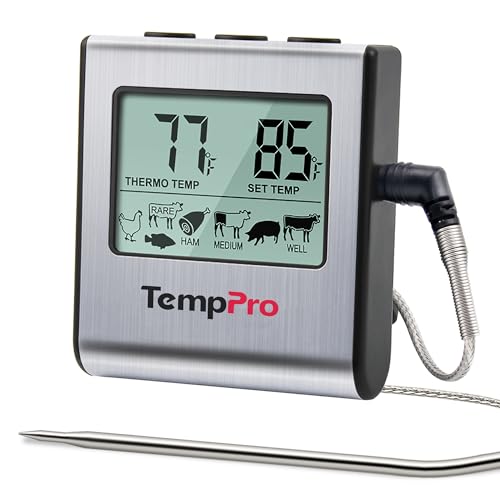
Cook mode with USDA preset temperature settings: TempPro cooking thermometer ideal for meat, oven, smoker or stove top; Programmable alert with preset temperatures for specific foods recommended by USDA; All of the preset temps can be reset to your desired tastes
First Hour at 240°F: Getting Smoke Into the Meat
While the smoker preheats to 240 °F, you should pat the chicken dry, drizzle it with neutral oil, and season it under the skin so the surface is ready to capture smoke particles. Close the lid, insert a probe in the breast’s thickest part, and monitor wood‑chip water levels. The low temperature maximizes smoke output, allowing fine particulate infusion that creates a visible smoke ring formation within the first 60 minutes. Keep the internal temperature modest to guarantee moisture preservation, which protects the ring’s integrity and maintains a juicy texture. Use the high‑smoke setting for maximum particulate density, and avoid bone contact with the probe for accurate readings. For added texture and flavor development, consider brining beforehand for extra juiciness before you begin smoking. This first‑hour phase establishes deep flavor penetration before any temperature increase. A mild smoke ring will form around the edges after about an hour.

Mild and Easy: Grapeseed Oil is at its best in stir-fries and sautés; it doesn't overwhelm other ingredients and lets fresh flavors shine. When grilling or frying, it is a must-have in the pantry.

For Food & Beyond: Non-GMO and organic, certified by USDA and CCOF, this sunflower oil is perfect for sauteing, frying, and grilling.

Light Buttery Flavor That Elevates Every Meal: Algae Cooking Club Chef-Grade Algae Oil enhances every dish with subtle richness. Its neutral profile makes it ideal for searing, baking, and dressings, transforming everyday meals into gourmet experiences.
Raise Heat on Your 250°F Smoker to 375°F After the First Hour
After the first hour of low‑temperature smoke, crank the smoker up to 375 °F to begin crisping the skin. Use the controller to hit the target high temperature range precisely; avoid vent tweaks and rely on fan control if available. The quick jump to 375 °F dries the surface, delivering crisping skin benefits without overcooking the interior. Brush the bird with butter or olive oil before the increase to enhance browning. For additional flavor depth, consider infusing your butter with herbs before applying to the chicken. Maintain 375–400 °F for 10–15 minutes, then close the lid and monitor until the skin reaches the desired crunch. This short high‑heat burst finishes the smoke infusion while preserving moisture, ensuring a flavorful, crispy exterior. Leave‑in probes help keep the internal temperature at a safe level during the transition.
What Internal Temperatures Should Your Breast and Thigh Reach?
What internal temperatures should your breast and thigh hit? Pull the breast at 157°F (69°C) and let it rest 10–15 minutes; the carry‑over will bring it to a safe 160°F while preserving moisture. This pull temperature meets the USDA minimum hold time of 31 seconds, so you’re within the 155°F‑157°F safety window. For thighs, aim for 180°F‑185°F; the dark meat needs a higher target pull temperature because it has less carry‑over. Remove thighs at 185°F after about two hours at 250°F, ensuring the minimum hold time of 31 seconds for 157°F is exceeded. Probe the deepest breast spot, avoid bone, and verify the coldest breast area before resting. Use a digital probe for precise readings. Smoke low for the first half‑hour to maximize smoke absorption. Maintaining consistent smoker temperature throughout the cooking process helps ensure even cooking and optimal results.
Even‑Cooking Tips for 250°F Smoker Chicken: Tuck Wings & Rotate
If you want evenly cooked meat and crisp skin, tuck the wings under the bird and rotate it halfway through the smoke. Proper tuck wings placement shields the tips from direct grates, preventing burn and dryness while keeping the bird’s heat flow uniform at 250°F. After 1.5 hours, rotate chicken heat by turning the whole bird 180°. This re‑exposes the breast and thigh to fresh smoke, balances temperature gradients, and eliminates hot‑spot buildup. During rotation, spray a thin oil layer to aid skin crispness and maintain moisture. Continue to monitor internal temps—breast near 140°F, thigh around 150°F—every 45 minutes. The combined tuck and rotate routine guarantees consistent smoke penetration and a uniformly cooked, juicy chicken. Use a hardwood such as cherry or apple for a mild, sweet smoke flavor.
Rest Your 250°F Smoker Chicken for 20‑30 Minutes Under a Foil Tent
You’ll want to let the smoked chicken rest 20‑30 minutes under a loosely‑tented sheet of foil. The foil tent holds temperature stability, preventing the internal heat from falling below 140 °F while carryover cooking pushes the breast back to 165 °F. During this interval, steam trapped by the tent enhances moisture retention, allowing juices to redistribute evenly through breast and thighs. Place the bird on a cutting board away from drafts; tent loosely to avoid soggy skin. After 15‑20 minutes, the meat fibers reabsorb expelled juices, and the internal temperature rises an additional 10‑12 °F, completing the cooking process. Verify the final temperature before carving to confirm maximum juiciness and consistent results. An instant-read thermometer provides the most accurate verification of doneness. Using a barbecue spice rub enhances flavor throughout the rest period.
Troubleshooting 250°F Smoker Chicken: Over‑Browning, Under‑Cooking, and Smoke Adjustments
Why does your 250°F smoker sometimes yield a chicken that’s too dark, under‑cooked, or overly smoky? Over‑browning often stems from low humidity and direct heat. Add a water pan, baste with oil or butter midway, and move the bird away from hot spots. If skin darkens early, drop the temperature to 225°F and switch to lighter woods like apple. For under‑cooking, verify breast 165°F and thigh 175°F with a probe; spatchcock to cut time to 2.5‑3 hours, and avoid opening the lid. Preheat 15‑30 minutes before loading. Smoke adjustments include using fruitwoods, limiting the first smoke hour, and monitoring white smoke—adjusting smoker air vents accordingly. Using an instant-read thermometer ensures you reach safe internal temperatures without overcooking the meat. For troubleshooting skin crisping, crank to 400‑500°F after thighs reach 170°F, dry‑brine overnight, and brush sauce in the last 30 minutes. Whole chicken should be brushed with oil before applying the dry rub to ensure the seasoning adheres evenly.