At 225‑250 °F, a 5‑lb whole chicken takes roughly five hours; at 275 °F, a 4‑lb bird finishes in about two hours and a 5‑lb bird in 2½ hours; at 350‑375 °F, expect 45‑75 minutes, depending on size. Use a calibrated leave‑in probe in the thickest part of the breast, set the alarm at 157 °F for carry‑over, and spray oil or butter after 45 minutes for crisp skin. Let the bird rest 20‑30 minutes before carving, and you’ll uncover more tips for perfect results.
How Long Does a Whole Chicken Smoke at 225‑250°F?
A typical 5‑lb whole chicken will need about five hours of steady smoking at 225‑250 °F before its breast and thigh reach the safe 165 °F internal temperature. You’ll want to dry‑brine the bird overnight, timing the brine so the salt penetrates fully without over‑softening the meat. After rinsing, pat it dry and choose a light oil—such as grapeseed or avocado—to rub over the skin; this helps the smoke adhere and promotes a crisp finish. Keep the smoker temperature stable; larger birds will stretch the timeline, while a spatchcocked bird can halve it. For enhanced flavor development, consider using fruitwoods like cherry or other aromatic smoking woods during the cooking process. Expect a 20‑30‑minute rest after smoking, allowing juices to redistribute before carving. Spatchcock reduces cooking time by roughly half compared to a whole bird.
How Long Does a Whole Chicken Smoke at 275°F?
If you’ve already mastered the 225‑250 °F range, you’ll find that bumping the smoker to 275 °F cuts the cooking time roughly in half. At this temperature, a 4‑pound chicken finishes in about 2 hours, roughly 30 minutes per pound, while a 5‑pound bird needs 2.5 hours. Preheat the unit to a steady 275 °F, then place the bird breast‑side up without a pan to let smoke penetrate. Keep the prime smoke chamber humidity around 60‑70 % and use ideal wood chip size—medium chunks that smolder evenly. After 45 minutes, spray the skin with oil or butter for crispness, and rotate at 1.5 hours for even browning. Monitor with a probe thermometer, pulling the chicken when the breast hits 165 °F and the thigh 175 °F. Allowing the chicken to rest for 20 minutes after smoking redistributes the juices throughout the meat, ensuring a moist and tender result before carving. Using a dry‑brine helps the skin cook more crisply.
How Long Does a Whole Chicken Smoke at 350‑375°F?
When you raise the smoker to 350‑375 °F after an initial low‑temp stage, the chicken finishes in roughly 45 to 75 minutes, depending on its size and whether it’s spatchcocked. Keep the heat steady; smoking at consistent temperature prevents hot spots and yields a uniformly crisp skin. If you spatchcock a medium bird, expect about 45 minutes, while a whole, unaltered chicken may need up to 75 minutes. Monitor the internal heat by inserting a digital probe into the thickest part of the breast, diagonal to the bone—this is ensuring accurate probe placement. Aim for a reading of 160 °F, then let the bird rest; carry over will bring it to the safe 165 °F threshold without drying out the meat. For additional crispness, you can raise the smoker temperature to 375-400°F for 10-15 minutes at the end to dry and brown the skin further. Applewood pellets add a subtle sweet flavor that pairs well with the simple salt‑and‑pepper seasoning.
How to Use a Probe Thermometer When Smoking Chicken
Raising the smoker to 350‑375 °F gives you a tight window to hit the perfect internal temperature, and a reliable probe thermometer is the tool that keeps you inside that window. First, run probe calibration using ice‑water and boiling‑water checks so the digital readout matches reality. Insert a leave‑in probe into the breast’s thickest part, at least 1–2 inches deep, avoiding bone, fat, and gristle; a second probe in the thigh tracks its higher 175 °F target. Set the alarm to 157 °F for carry‑over cooking, then monitor continuously without opening the lid. If the reading lags 12 °F or more, perform probe repositioning to the cooler spot and verify with an instant‑read thermometer. Keep hourly checks, let the bird rest 10‑15 minutes, and carve once all points meet or exceed the safe temperature. Check the meat temperature earlier than expected as it can rise quickly. Using a meat thermometer ensures you have the most reliable indicator of doneness rather than relying on cooking time alone.
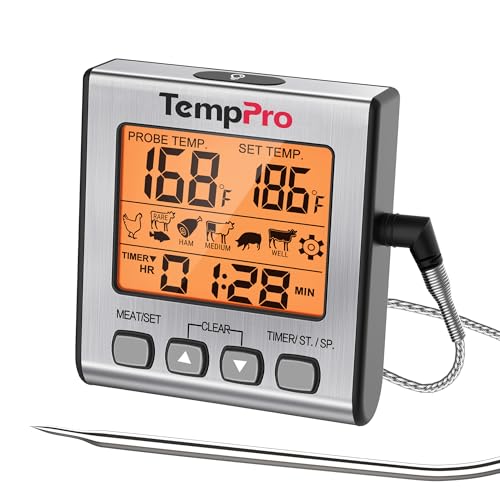
Precision Cooking, Perfect Results: Never overcook again! This digital meat thermometer features a food-safe probe with ±1.8°F accuracy and a 40" heat-resistant cable, continuously monitoring your BBQ, oven, or smoker from 14°F to 572°F for perfectly cooked meals every time

More Stable Than Bluetooth: Our advanced RF technology ensures a stronger, more reliable connection than Bluetooth. This smoker thermometer provides the freedom to move around without losing connection! Monitor your BBQ from up to 1,000 feet away!

【Fast & Accurate】Our meat thermometer digital delivers accurate readings within ±1°F in just 1–2 seconds, with a wide temperature range of -58°F to 572°F (-50°C to 300°C). No more waiting over the heat - know your food's exact temperature instantly.
Adjusting Smoke Time for 3‑5 lb vs. Larger Chickens
Usually, a 3‑5 lb chicken will finish smoking in roughly 2½–3 hours at 225°F, while a larger bird can easily push the clock past 4 hours. You’ll base the schedule on weight considerations, using the 35‑minute‑per‑pound baseline at 275°F and adding 20 minutes per pound for the lower 225°F setting. A 4‑lb bird then needs about 220 minutes, but wind or a brine soak can tack on 10–30 minutes. Larger chickens scale linearly: a 6‑lb bird may need 5 hours, especially if you’re smoking with hickory, which shaves a few minutes per pound. Adjust for your smoking environments—airflow, wood type, and temperature consistency—while always aiming for an internal 165°F before you rest the meat. Practices such as brining your chicken for up to 48 hours can enhance moisture retention and flavor development. Knowing the smoker type helps fine‑tune these estimates.
Spatchcocking vs. Whole Roasting When Smoking Chicken
If you’ve already figured out how weight tweaks smoking time, your next decision is whether to spatchcock the bird or keep it whole. Spatchcocking is a versatile cooking method that slashes smoking time to about 1.5 hours, versus roughly 2 hours for a whole roast. You’ll spend efficient preparation time—under a minute with poultry shears—to remove the backbone and flatten the bird, then you get even heat distribution that prevents a dry breast while legs finish. Whole chickens cook less uniformly, often leaving the breast ahead of the thighs. At 300‑350 °F, both achieve crisp skin, but the spatchcocked bird reaches 165 °F internal 10 minutes faster, delivering juicy, evenly cooked meat with minimal fuss. The shorter cooking time of a spatchcocked bird also reduces overall energy consumption. Allowing the chicken to rest after smoking helps juices redistribute and can raise the internal temperature an additional 5 degrees.

Professional-Grade Durability & Corrosion Resistance: Forged with rust-proof molybdenum-vanadium steel and precision-tempered 3.5mm blades, these poultry shears cut through poultry bones effortlessly. The corrosion-resistant coating prevents stains, while industrial-grade aluminum handles withstand 10x more pressure than regular scissors.

Professional-Grade Durability & Corrosion Resistance: Forged with rust-proof molybdenum-vanadium steel and precision-tempered 3.5mm blades, these poultry shears cut through poultry bones effortlessly. The corrosion-resistant coating prevents stains, while industrial-grade aluminum handles withstand 10x more pressure than regular scissors.

Professional-Grade Durability & Corrosion Resistance: Forged with rust-proof molybdenum-vanadium steel and precision-tempered 3.5mm blades, these poultry shears cut through poultry bones effortlessly. The corrosion-resistant coating prevents stains, while industrial-grade aluminum handles withstand 10x more pressure than regular scissors.
Two‑Stage Smoking: Start Low, Finish Hot
I’ll start the chicken at a gentle 225‑250 °F, letting the low heat render fat and soak the meat with smoke for about an hour and a half. During this low phase you spray a thin coat of butter or oil every 45 minutes, which boosts smoke flavor enhancement while laying the groundwork for skin crispness control. Rotate the bird after 1.5 hours, keep the wood‑chip water fresh, and monitor internal temps—target 140 °F breast and 150 °F thigh before the heat climb. Using an instant-read thermometer ensures you track doneness with precision throughout both stages. Then crank the smoker to 350 °F, letting the hot finish crisp the skin and finish the breast at 165 °F and thighs at 175 °F. This two‑stage method cuts total time, balances deep smoky notes, and delivers a perfectly crisp exterior. Use hardwood for a clean, flavorful smoke.


MATERIALS: Made from 100% natural seasoned hardwood with no unwanted byproducts, our wood chips burn cleanly and evenly.
Why Resting Your Smoked Chicken Matters (and How Long)
Resting a smoked chicken isn’t just a pause—it’s the key to juicy, tender meat. When you let the bird sit, muscle fibers relax and re‑absorb the juices that were forced to the surface during cooking. This post cooking resting period drives ideal moisture retention, so you lose far less liquid when you carve. A ten‑minute rest cuts lost liquid by about 60 %, while a forty‑minute rest can keep up to 90 % of the juices inside. Aim for 15‑20 minutes at around 165 °F internal temperature; the heat stays high enough for safe serving. The redistribution of moisture yields a softer texture, higher tenderness, and a consistently succulent bite that would otherwise dry out. Locally‑sourced chickens are the healthiest and tastiest option.
Common Mistakes That Add Unnecessary Minutes When Smoking Chicken
When you set a smoker too low, the chicken stays in the “slow‑cook” zone and every minute stretches into a costly delay. Running below 225 °F forces the bird into a prolonged smoke bath, while spikes above 250 °F char the skin and force extra low‑heat recovery. Skipping proper brine techniques leaves excess surface moisture, so the meat clings to the grill and cooks unevenly, adding minutes. Forgetting to air‑dry after brining traps steam, slowing the internal temperature rise. Inconsistent vent adjustments cause temperature swings, and over‑fueling creates hot spots that dry the breast, demanding a slower finish. Finally, neglecting to turn or spatchcock the chicken creates thick‑meat pockets that linger, extending the overall time. Resting the meat after smoking allows carryover cooking to reach ideal temperature without drying out the meat. Maintaining consistent temperatures and using proper brine techniques keep the cook efficient. Chicken breasts are prone to drying out quickly at low temperatures.
Quick Reference Chart: Temp, Time, and Internal Targets
If you want a no‑guesswork guide to smoking a whole chicken, keep this quick‑reference chart handy: set the smoker at a steady 275 °F for optimal efficient speed, aim for 2–3 hours total (or about 30 minutes per pound), and watch the internal temperature hit 165 °F in the breast and 175 °F in the thigh before pulling it out.
At 275 °F, a 4‑pound bird finishes in roughly 2.5–3 hours; lower the heat to 225 °F for a richer smoke flavor, extending the cook to 3–5 hours. Monitor smoke levels and control airflow to keep the fire steady, then raise the temperature to 375 °F for the last 20–30 minutes if you crave crisp skin. For enhanced juiciness, consider using a probe thermometer to accurately track internal temperature throughout the cooking process. Rest the bird 10–15 minutes, then verify the final internal temperature—165 °F minimum, 170 °F for a fully done finish.
Meat should not linger between 40 and 140°F to prevent bacterial growth.