Pick a 10‑12 lb turkey, spatchcock it, and set your smoker to a steady 300 °F. After a 30‑minute 400 °F sear, the 300 °F phase runs about 1 hour 15 minutes for a 12‑lb bird (roughly 130‑150 minutes for 10 lb). Monitor a breast probe aiming for 155‑160 °F (carry‑over to 165 °F) and a thigh probe target of 175‑185 °F. Rest 20 minutes before carving, and you’ll get juicy meat with crispy skin while the next sections reveal deeper tips.
Choose the Right Turkey Size for a 300°F Spatchcock
Choosing the right turkey size for a 300°F spatchcock is essential for achieving even cooking and preventing dryness. You should target a 10‑12 pound bird when you plan high‑heat spatchcock, because the flattened shape promotes uniform heat transfer and limits skin overcooking. Turkey weight considerations dictate that anything above 12 pounds risks a moisture loss at 300°F, while a 12‑pound turkey provides a safe margin for one‑person‑per‑pound serving. Apply temperature maintenance strategies by preheating the smoker to a stable 300°F and monitoring the internal temperature with a probe; aim for 165°F in the thickest part. This approach balances cooking time—roughly 1 hour 15 minutes for a 12‑pound bird—and avoids the extended exposure that larger birds require. After smoking, allow the turkey to rest for 10-15 minutes before carving to retain its juices. Heritage‑breed turkeys are especially juicy and tender when spatchcocked at high heat.
Set Up Your Smoker for Consistent 300°F Heat
After selecting a 10‑12 pound turkey, you’ll need to configure your smoker so it holds a steady 300°F. Begin by cleaning the bowl and ash catcher; unrestricted airflow is essential. Set the bottom damper fully open for initial intake, then adjust the top lid damper to roughly ¼ open, which targets the 250‑350°F band. For precise 300°F, perform consistent vent adjustments: close the bottom vent half‑way and fine‑tune the top daisy wheel to a 1/4 moon reveal. Attach a fan to the intake vent via the adapter; the probe will monitor pit temperature and the fan will modulate oxygen for ±1°F stability. Seal any smoke leaks, keep the exhaust fully open, and verify the sensor is clean and dry. These steps guarantee optimized airflow control and maintain the desired temperature throughout smoking, which is critical since internal temperature accuracy directly impacts food safety. The Masterbuilt smoker’s safety rollout limit switch may need replacement to ensure the heating element receives power.

HARDWOOD BOOST: Electric smoker lets you easily add wood chips or pellets for bolder flavor cues
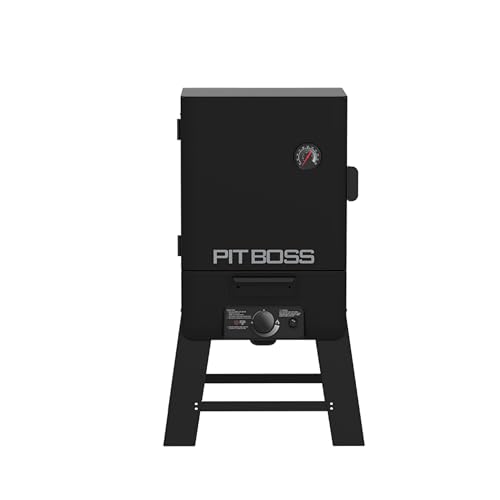
ROOM FOR ONE MORE: This electric smoker has 880 sq in of total cooking surface and six adjustable racks

【Wide temperature range.】The range for KT8230 is -22~572℉/-30~300℃,This is a relay temperature controller, There is no voltage output directly, you need to connect additional power supply for the load, then it can be set by differential (1~80℃/1~120℉) to turn on/off the load, it is like a switch.
Spatchcock and Season the Turkey
Start by laying the turkey breast‑side down and cutting out the backbone with kitchen shears, then flip it, press firmly on the breastbone to flatten, and tuck the wing tips under the breasts. Using appropriate butcher tools—sharp shears, a boning knife, and a sturdy meat mallet—you’ll remove the rib cage cleanly, then press the bird until the breastbone cracks and the turkey lies flat. Pat the skin dry, then apply the ideal seasoning blend: kosher salt, freshly ground pepper, and olive oil mixed with dried thyme and smoked paprika. Slip your hand under the skin, spread a herb‑butter paste of sage and thyme, and re‑smooth the skin. Consider brining the turkey beforehand to enhance juiciness and flavor throughout the smoking process. Let the rub adhere for at least fifteen minutes before smoking. Add the brine mixture to ensure the turkey stays juicy throughout the smoking process.

If you like herb butter on your steak, look no further. This is an expertly mixed seasoning with herbs and spices that match the rich taste of butter. Simply soften the butter, add the seasoning, churn and refrigerate again. Then add a slice of the herb butter to your meats, sausages or corn. Great for any BBQ dish.

Savory seasoning blend of garlic, butter and spices for grilling meat and seafood

Savory seasoning blend of garlic, butter and spices for grilling meat and seafood
Calculate Cook Time for a 10‑12 lb Turkey at 300°F
Since the 400 °F sear lasts exactly 30 minutes, you’ll spend the remaining cooking time at 300 °F until the breast hits 160 °F; for a 10‑lb spatchcocked turkey that translates to roughly 130–150 minutes (2.5–3 hours) at the reduced temperature, while a 12‑lb bird needs about 156–180 minutes (3–3.5 hours). Apply the 13–15 minutes‑per‑pound rule to estimate the 300 °F phase, then adjust upward to balance smoking time and the lower temperature. Monitor internal probes closely; if the breast reaches 160 °F early, you may alter doneness targets by extending the thigh exposure to guarantee uniform doneness. The spatchcocked shape equalizes heat, so the calculated window reliably yields juicy meat and crisp skin after the final rest. Spatchcocking increases surface area for better crisping. Resting the turkey post-smoking allows juices to redistribute, ensuring moist meat throughout.
Monitor Breast and Thigh Temperatures
When you’re smoking a spatchcocked turkey, keep a primary leave‑in probe in the thickest part of the breast and a secondary probe in the deepest thigh area, checking both continuously so the breast reaches 155‑160 °F (allowing a 5 °F carry‑over to hit 165 °F) while the thigh climbs to 175‑185 °F; insert the primary probe for temperature probe placement and use the secondary for temperature measurement consistency. Monitor the readings every few minutes, noting any differential. If the thigh lags, relocate the probe to a cooler spot to balance heat exposure. Verify the breast hits 162 °F before removal, then confirm final temperatures of 165 °F in breast, thigh, and wing after a 20‑minute rest. This guarantees uniform doneness and food‑safety compliance. Spatchcocking greatly reduces cooking time by increasing surface area. Using a meat thermometer to monitor temperature accurately helps prevent overcooking and ensures your turkey reaches the proper doneness throughout all sections.
Baste and Rotate for Juicy, Crispy Skin
A thin layer of melted butter brushed onto the turkey skin 90 minutes before it hits the smoker creates an even, glossy coating that prevents drying. You then position the bird breast‑side up on a wire rack over a sheet pan, pour a cup of white wine into the pan, and start the 300°F cycle. Every 20 minutes you rotate the pan to expose each side to uniform heat, then baste regularly with the pan juices, using a brush to spread the butter‑oil mixture. While rotating, you track skin color, noting when it reaches a golden‑brown hue; if it darkens too quickly, reduce baste frequency or add a splash of liquid to keep steam high. This coordinated rotation and baste schedule locks in moisture and yields crisp, glossy skin. To ensure food safety, use an instant-read thermometer to verify the turkey reaches an internal temperature of 165°F in both the breast and thigh before serving. The spatchcocking method also halves the cooking time compared to a whole turkey.
Adjust 300°F Spatchcock Time for Larger Birds
The 300°F spatchcock schedule that works for a 12‑14 lb bird must be stretched when the turkey weighs 16 lb or more, because the thicker breast and larger mass retain heat longer. For a 20‑lb bird, increase the baseline 6 minutes‑per‑pound rule to roughly 10‑12 minutes per pound at 300°F, yielding about 200 minutes total. Reduce the initial high‑heat phase to 375°F to prevent breast drying, then settle at 300°F for the remainder. Probe the thickest breast and thigh, confirming meat thermometer calibration before each check. Aim for the ideal smoking temperature range of 300‑325°F, holding the breast at 150‑155°F and the thigh at 165°F. Extend cooking if any spot lags behind these targets. The spatchcock method increases surface area for more even heat distribution. After smoking completes and the internal temperature reaches at least 165°F in the breast and 175°F in the thigh, rest the turkey to allow juices to redistribute throughout the meat.
Rest and Carve the Turkey (Carry‑Over Heat & Tips)
If you let the spatchcocked turkey rest for at least 20 minutes, the residual heat will raise the breast from the 155 °F removal temperature to the safe 165 °F and push the thighs past 175 °F, ensuring both safety and tenderness. Follow proper resting procedures: transfer the bird to a cooling rack over a pan, tent loosely with foil, and keep the rest time between 20 and 30 minutes for larger birds. During this interval, juices redistribute and carry‑over cooking stabilizes internal temperatures. After resting, apply ideal carving techniques: detach the legs first, then slice the breast against the grain into uniform, thin pieces. Portion wings, arrange all sections on a platter, and keep the carved meat tented with foil until serving to prevent moisture loss, similar to how covering with foil protects reheated poultry from drying out. Even cooking is achieved by spatchcocking, which flattens the bird for uniform heat exposure.
Troubleshoot Dry Breast, Undercooked Thighs, and Smoke Flavor
When you notice the breast turning dry while the thighs remain undercooked, the culprit is usually uneven heat exposure and insufficient moisture management. Pat the turkey dry, then slip butter or olive oil under the skin to shield the breast, and brine for 8‑12 hours to lock juices. Position the bird away from the smoker’s hottest zone and keep the temperature steady at 300 °F, using a water pan to curb drying. For thighs, verify a minimum internal 165 °F; if they lag, raise the smoker to 325‑350 °F after the initial smoke phase. Apply a 2‑hour smoke roll with mild wood, then baste with butter at the 275 °F juncture to enhance smoke clinging and flavor quality. Monitor both breast and thigh temperatures with separate probes to synchronize doneness. Using a smaller turkey, under 15 lbs, helps ensure even cooking and reduces the risk of dry breast meat.