
At 275 °F a 14‑lb turkey needs about 25 minutes per pound, so expect roughly 5½ hours of smoking; spatchcocking cuts it to 20 minutes per pound, shaving off about 30 minutes. Keep the smoker steady within ±5 °F and use a wireless thermometer to hit 157 °F in the breast before the thigh reaches 175 °F for safety and juiciness. Adjust timing for smaller or larger birds by ±10‑20 % and monitor internal temps closely, then you’ll uncover deeper setup tips.
Determine Cooking Time for a 14‑lb Turkey at 275 °F
A 14‑lb turkey at 275 °F typically needs about 25 minutes per pound, which translates to roughly 5½ hours of smoking. You calculate this baseline by multiplying 14 lb by 25 min, then converting to hours. When you compare cooking method options—whole, spatchcocked, or brined—you’ll notice spatchcocked birds drop to 20 min per pound, shaving 30 minutes off the total. Temperature fluctuations matter: a ±5 °F deviation can add 5–10 minutes per pound, so maintain a steady 275 °F with indirect heat and a water pan. Use a wireless thermometer to track the thickest breast and thigh, pulling the bird 5–7 °F below target to allow carry‑over heating to 165 °F (breast) and 175 °F (thigh). Resting the turkey after smoking helps juices redistribute for a tender result. This data‑driven approach yields a precise, repeatable smoking window. Dry brine ensures the skin stays dry for optimal crispness.
Explain the 25‑Minute‑Per‑Pound Rule for Smoking a Turkey at 275 °F
At 275 °F, the 25‑minute‑per‑pound rule means you allocate roughly 25 minutes of smoking time for each pound of turkey, a guideline that emerged from smoker forums and is supported by user data on 12‑14 lb birds. You build a cooking schedule that assumes a 20‑25 minute range per pound, with the upper bound (25 minutes) providing a safety buffer for larger birds or less efficient smokers. Heat regulation is critical: maintain a steady 275 °F, check the smoker every 2.5 hours, and verify internal thigh temperature reaches 165‑170 °F. For optimal results, consider using wood pellets for smoke flavor to enhance the turkey’s taste throughout the cooking process. The rule contrasts with the 25‑30 minute range at 250 °F and reflects a 15‑20 % time reduction. Remember to rest the bird an hour after cooking, and treat the time estimate as a guideline, not a USDA‑approved standard. Monitor skin color and tent with foil if browning too quickly.
Adjust Timing for Smaller or Larger Birds
Three key factors—bird weight, cooking method, and temperature stability—determine whether you need to trim or extend the 25‑minute‑per‑pound baseline at 275 °F. For birds under 12 lb, the surface‑to‑volume ratio speeds heat transfer, so you apply proportional time adjustments of 20‑30 % less than the baseline. A 12‑lb spatchcocked turkey, for example, finishes in roughly 2.75 hours (≈20 min/lb), reflecting the spatchcocking impact that flattens thickness and cuts total time by 15‑20 %. For birds over 14 lb, increase time by 10‑20 % for each additional 3‑5 lb; a 17‑lb bird reaches 4 hours. Scaling from the 14‑lb reference while monitoring internal temperature guarantees accurate timing across sizes, since doneness relies on reaching safe internal breast temperatures rather than time alone. Using a dry brine helps retain moisture during the long smoke.
Why Internal Temperature Matters When Smoking a Turkey at 275 °F?
Adjusting cooking time for different bird sizes only gets you so far; the true safeguard of safety and quality comes from hitting the right internal temperature. At 275 °F, a consistent smoker temperature lets the turkey’s core rise predictably, so you can rely on data rather than guesswork. USDA mandates 165 °F in the thickest part, but the lowest secure temperature—157 °F—already delivers a 7‑log pathogen reduction when held for the required seconds. Monitoring the deepest breast spot with a leave‑in probe secures you hit 157 °F before the thigh reaches its 175 °F limit, preventing overcooking. Because each degree below 165 °F preserves moisture, aiming for the lowest safe temperature balances safety, juiciness, and texture without relying on vague time‑per‑pound estimates. Using a meat thermometer to monitor temperature accurately ensures you achieve consistent results throughout the smoking process. Spatchcocking the turkey also shortens cooking time and promotes even heat distribution.
Set Target Internal Temps and Carry‑Over Strategy
You’ll set the breast’s pull temperature at 160 °F and the thigh’s at 165 °F, then count on a 5‑10 °F carry‑over during the 15‑20‑minute rest to reach the final safe zones of 165‑170 °F for breast and 170‑175 °F for thigh. Because a consistent turkey size reduces thermal variance, insert a wireless thermometer into the deepest breast and thigh meat, avoiding bone contact. Set a high‑temp alarm at 157‑160 °F for the breast and monitor the thigh for 165 °F minimum. Record the lowest probe reading after rest to verify carry‑over. This reliable temp monitoring lets you pull early, preserve moisture, and achieve USDA‑approved safety without overcooking. Smoking temperature can be adjusted to 275 °F for a balanced cook. Allowing the turkey to rest after smoking helps redistribute juices before carving, ensuring the most flavorful results.
Brine, Dry, and Season for Faster, Juicier Turkey
Start by deciding whether a wet or dry brine best fits your timeline and flavor goals, because each method quantifiably changes moisture retention, cooking time, and salt uptake. A wet brine adds water, raising meat water content by ~5 % and cutting heat penetration time by roughly 10 %. After an overnight soak, rinse and pat the bird dry to enable crispy skin formation. A dry brine extracts moisture, then reabsorbs it, delivering uniform seasoning and a 15‑30‑minute room‑temperature rest that equalizes internal temperature. Sprinkle kosher salt and black pepper directly on skin, then rub a spice blend of pepper, garlic powder, and paprika. For extra juiciness, smear a thin mayo or butter layer before the rub; this fat film promotes even browning and moisture retention during the 275 °F smoke. Using indirect heat ensures even smoke exposure and consistent cooking throughout the bird. Use a large meat bag and bucket to ensure the turkey stays fully submerged in the brine.

Heavy Duty Brine Bag: These brining bags are good thick, sturdy bag, no leaks, plenty big, sealed up easily

【Great Sealing】 Our brining bag has a double-zipper seal top for a leak-proof closure, which eliminates worry over ingredients poking through and leaks. Comes with 3 string to tie the top of the bag, that is more than enough protection from potential spills or leaks.

Dual Sealing: Our brining bags for turkey are the effective solution with two tight zippers and one bundle of robust string. With such dual protection, you can avoid the kitchen marinade mess from expanding outwards and spilling. Therefore, no more worries about cleaning the refrigerator and enjoy your turkey day
Set Up Smoker for a Steady 275 °F
A steady 275 °F smoker hinges on precise airflow and fire control; by calibrating intake and exhaust dampers to maintain thin blue smoke, you can keep the temperature within a ±5 °F band while avoiding spikes that ruin the turkey’s texture. First, open the firebox and verify the exhaust stays fully open; then adjust the intake damper until the draft yields a thin blue flame and blue smoke, indicating ideal combustion. Use airflow optimization to counteract blockages—remove excess meat that narrows the draft and increase intake if the gauge reads below 260 °F, or decrease it if it climbs above 285 °F. Smoke management demands a clean burn; small fires prevent thick white smoke and temperature spikes. Seal any leaks around the firebox and cook chamber, then let the system stabilize at 275 °F before loading the turkey. Fire needs oxygen to sustain the heat. Keeping the smoker lid closed where possible stabilizes temperature and prevents the fluctuations caused by opening and closing the chamber during cooking.

【Durable Stainless Steel Build】Crafted from premium rust-resistant stainless steel, this 95mm smokestack damper withstands high heat and harsh weather for long-term reliability.
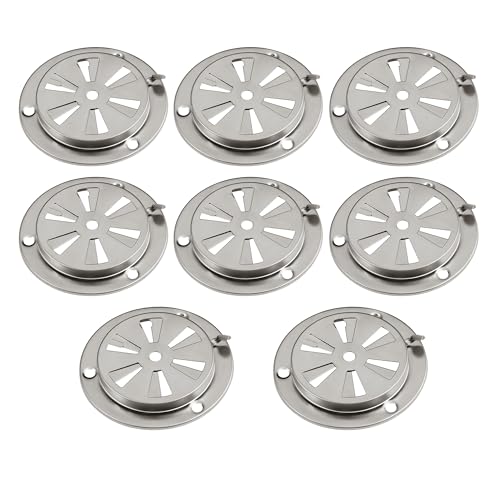
PREMIUM STAINLESS-STEEL CONSTRUCTION - Crafted from top-grade stainless steel, our smoker air vents are meticulously constructed to offer exceptional durability and resistance to corrosion, ensuring unparalleled performance that lasts.

[WHAT YOU WILL RECEIVE] - Each set includes a sufficient quantity of air vents, 2 pieces, ensuring you have an ample supply for your needs.
Monitor Smoke, Water Pan, and Wood for Consistent Heat
A thin, blue plume of smoke signals that the fire is burning cleanly, so keep an eye on the smoke color every 30‑45 minutes and tweak the intake and exhaust vents to maintain that wispy hue. You should check the smoke color, water‑pan level, and wood status together on a 30‑minute cycle for the first two hours, then hourly thereafter. Log the temperature at multiple grate points; if it drifts beyond 275 °F ± 10 °F, adjust the vents or add fuel. Maintain smoke quality by adding a new wood chunk every 45‑60 minutes, limiting total wood to 1‑2 lb per four‑hour session. Refill water pan whenever it drops below half capacity—typically every 1‑2 hours—to keep humidity stable and prevent temperature spikes. This data‑driven routine keeps heat consistent and flavor ideal. Cooking at a lower temperature helps preserve moisture, especially when the turkey breast is brined for protection. For optimal results, rotate the bird periodically to ensure even heat distribution throughout the cooking process. This data‑driven routine keeps heat consistent and flavor ideal.

Fiery Southwestern Kick – Steak & Game Specialist Lumberer Mesquite Chunks add a bold, peppery smoke to ribeye, lamb, or wild game, perfect for adventurous grillers.

Balanced Oak Flavor – Perfect for Any Protein Hearty yet subtly sweet smoke profile enhances beef briskets, pork ribs, smoked turkey, and artisanal cheeses.
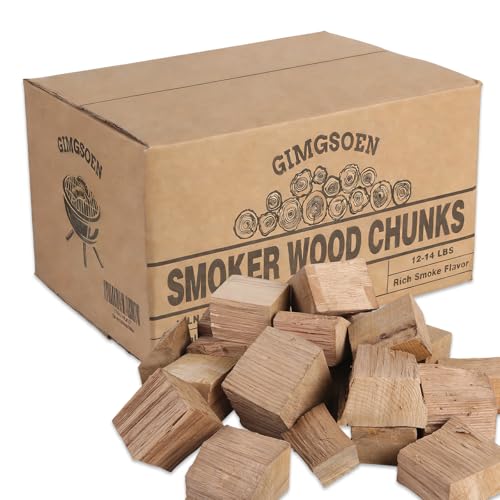
100% Pure Natural Oak Wood Chunks — Made from solid oak hardwood only. No chemicals, no additives, no artificial scents. Just real oak wood that delivers authentic, natural smoke flavor you can smell and taste from the first burn.
Rest the Turkey Smoked at 275 °F and Calculate Carry‑Over
Two‑to‑three minutes of resting after pulling the turkey at 159 °F (breast) and 170 °F (thigh) lets the internal temperature equalize and the juices redistribute, while keeping the meat safely above 140 °F. During a 30‑minute hold you should foil‑wrap and towel‑insulate the bird to limit heat loss; the temperature rise is typically 2‑5 °F, enough to reach the USDA‑approved 165 °F breast and 175 °F thigh targets without overcooking. Record the exact pull temperatures with a probe thermometer, then calculate carry‑over by subtracting the target temperature from the post‑rest reading. This data‑driven check confirms meat doneness, guarantees the bird stays above the 140 °F safety line, and validates that the low‑and‑slow 275 °F smoke produced minimal additional heat. Using apple wood chips during the smoking process enhances the turkey’s smoke flavor and contributes to the overall taste profile. The turkey should be cooked at the recommended low‑and‑slow temperature for optimal flavor and tenderness.
Troubleshoot Common Timing Mistakes and Quick Fixes
If you start the turkey at 225 °F and then raise the heat, you’ll see that the extra low‑temperature hour adds roughly 20 % to the total cook time while also causing the skin to stay rubbery and the smoke to become overly intense. To avoid this, schedule a one‑hour low‑heat start, then lift the smoker to 275‑350 °F. Track breast temperature with a wireless probe; pull at 155‑158 °F, allowing carry‑over to reach 165 °F. Tent the breast with foil once it hits 160 °F while thighs finish at 175 °F. Pat the skin dry, oil it, and increase heat for the final 20‑30 minutes to crisp. This sequence minimizes moisture loss and maximizes smoke absorption without harshness. Using a spatchcocked turkey helps the skin render better and reduces uneven cooking. Rest the turkey for 10-15 minutes after smoking before carving to allow the juices to redistribute throughout the meat.


