Trim the membrane, trim excess fat, and season your ribs uniformly. Load your pellet grill with a flavor that matches your taste, preheat to 225‑250 °F, and verify the temperature at the thickest rib before closing the lid. Smoke meat‑side‑up until the internal temperature reaches 165‑170 °F, then wrap in foil or butcher paper with a splash of apple juice or butter for 1‑hour‑15 minutes at 225‑275 °F. Unwrap, brush a thin layer of sauce, sear at 450‑500 °F for 10 seconds per side, and let rest before slicing; the next sections reveal deeper techniques and troubleshooting tips.
Prepare Your Ribs for Pellet Grill Cooking
Ready to prep your ribs for the pellet grill? Begin with the remove membrane procedure: slide a knife tip under the fourth rib edge, lift the membrane, then pull it off by hand while gripping it with a paper towel for better control. Use smooth knife cuts to avoid cutting meat or bone, and discard the membrane entirely once it’s free.
Next, execute the trim excess fat steps. Cut away any fatty pockets on the meat side and remove the flap of meat on the bone side after the membrane is gone. Keep trimming minimal to preserve natural fat rendering, but guarantee enough fat is removed for even exposure per bite. This precise preparation readies the rack for seasoning and smoking. Choose ribs with uniform size for even cooking. Proper preparation ensures that your ribs will cook evenly and reach the ideal tender range when smoked on your pellet grill.
Select a Pellet Flavor & Preheat to 225‑250°F
Pick a pellet that matches the rib profile—hickory for bold, bacon‑like depth; applewood for sweet, fruity subtlety; cherry for a mild, reddish hue; or a fruit‑nut blend for nuanced sweetness. Choose an ideal pellet blend based on the desired intensity: hickory alone for robust smoke, applewood‑cherry mix for balanced sweetness, or pecan‑maple combo for subtle nutty notes. Load the clean‑burning pellets into the hopper, then set the grill to a steady 225‑250°F. Use the probe to verify temperature at the thickest rib section before closing the lid. Apply smoke control tips by monitoring ash buildup and adjusting the feed rate to maintain consistent smoke density throughout the preheat phase. Different wood types affect temperature consistency and smoke production based on their composition. This precise setup guarantees consistent heat, optimal smoke penetration before and reproducible rib flavor. Pellet compatibility ensures you avoid damaging equipment by using the appropriate pellet type.

Bold, Bacony, Strong Smoke Flavor: Kona 100% Hickory smoking pellets deliver rich, savory wood-fired flavor with strong bacony notes and deep barbecue character. Perfect for burgers, beef, pork, poultry, ribs, and bacon when you want a fuller, more robust smoke profile

KINGSFORD CRAFTSMOKE PREMIUM WOOD PELLETS: Introducing Craftsmoke, the premium line of natural hardwood pellets, crafted in small batches for the chef in all of us; pack may vary

HICKORY WOOD FIRED FLAVOR: Traeger Hickory Hardwood Pellets are great for naturally enhancing beef, chicken, pork, and veggies with full-bodied, bold flavor. So it should come as no surprise that Hickory’s assertive flavor is one of the most popular choices for classic BBQ cooking.
Smoke Pellet‑Grill Ribs Low and Slow
Three to five hours at a steady 225 °F will render the ribs tender while preserving smoke flavor; start by placing the meat‑side up on the grill, insert a probe into the thickest portion, and close the lid. Maintain the ideal smoke temperature at 225 °F, checking the probe every 30 minutes to confirm grill temperature maintenance. After the first 2‑3 hours, the internal temperature should reach 140‑150 °F, indicating the initial smoke phase is complete. Continue smoking unwrapped until the ribs hit 180‑185 °F internal, typically after 4‑5 hours total. Keep the ribs centered for uniform heat, avoid peeking, and monitor multiple racks at 145 °F, 165 °F, and 200 °F to verify consistency. Consider using apple, cherry, or oak wood for optimal smoke flavor and tenderness. This precise low‑and‑slow regime maximizes smoke penetration and tenderness. Pellet smoker is the preferred equipment for this method.

Gourmet Blend BBQ Flavor: Take your grilling to another level by using this pack of Gourmet blend wood pellets which provides a sweet tasty finish to any red meats, poultry, or vegetable dishes
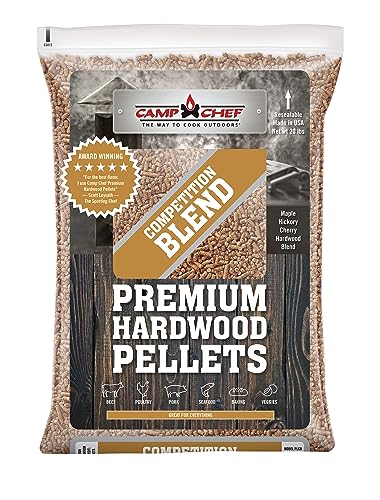
Maple, Hickory, and Cherry Blend: Competition blend is the Jack of All Trades. It's great with poultry, pork, baking, veggies, beef, and seafood. HARDWOODS: Camp Chef Hardwood bbq pellets are not a byproduct. They are 100% pure virgin hardwoods.

SIGNATURE BLEND WOOD FIRED FLAVOR: The flavors of hickory, maple, and cherry hardwoods combine for in our Traeger Signature Blend Hardwood Pellets for flavor that can take on just about anything you cook; From classic BBQ meats, to fish and veggies, this versatile blend gives you full-bodied flavor you'll go back to time and time again
Wrap Pellet‑Grill Ribs (Timing & Moisture Add‑Ins)
You’ll want to wrap the ribs once they’ve smoked for about two to three hours, when the internal temperature reaches roughly 165–170 °F and the bark shows a deep mahogany color with a tacky, leathery texture. Set your pellet grill to 225‑275 °F for the wrap phase; 275 °F works well for a 1‑hour‑15‑minute window that brings the internal target to 204 °F. Choose foil for maximum moisture retention or butcher paper for a firmer bark, but avoid crushing the meat. Add moisture add ins such as a splash of apple juice, a tablespoon of butter, or a mix of brown sugar and honey inside the packet. This creates a brief braise, softening collagen while preserving the bark. The wrapping process with moisture enhancers helps keep the ribs juicy during this critical cooking phase. Rotate racks every 30 minutes to maintain even heat and monitor the probe closely. Visual cues such as the bark’s deep mahogany hue and tacky texture can also signal the ideal wrap timing.

Designed specifically for the culinary enthusiast, our 18 paper roll dispenser is optimally crafted to handle barbecue butcher paper, thereby ensuring the authentic taste of your smoked meats is maintained. This is your ideal bbq wrapping paper for smoking

【PREMIUM NATURAL QUALITY】Made from premium virgin pulp, our butcher paper is unwaxed, uncoated, and unbleached for a natural and pure product. Ideal for grill masters seeking top-notch, food-safe paper to enhance their culinary creations.

Untreated: Our Brown Butcher Paper is unbleached, unwaxed, uncoated, and made from the finest virgin pulp. Butcher paper is more durable and resistant to tearing compared to aluminum foil
Unwrap & Sauce Pellet‑Grill Ribs
The moment the ribs hit the target internal temperature, you unwrap them immediately—lifting the foil or butcher paper carefully to preserve shape and juices—then place the meat bone‑side down on the grill for the saucing stage. Inspect the bark for uniform color and firmness; any soft spots indicate a needed smoke time adjustment. Using a brush, apply a thin, even layer of barbecue sauce, aiming for sauce flavor contrast that highlights the rub without drowning the smoke. Return the ribs to a steady 250 °F zone for 20‑30 minutes, allowing caramelization while monitoring bark to prevent over‑darkening. To achieve optimal results, maintain consistent temperature control throughout the final smoking phase to ensure the sauce sets properly without burning. After the sauce sets, rest the ribs 20 minutes off‑grill before slicing to preserve juiciness and texture. A full rack typically requires about four hours of smoking before this step.
Finish With a High‑Heat Sear for Crust
Crank the pellet grill up to 450‑500 °F, then slide the unwrapped, sauce‑coated ribs onto the hot grates meat‑side up; pre‑heat the grill for at least 10 minutes to guarantee even heat distribution. Pat the ribs dry, brush both sides with sauce, and place them directly on the grates. Sear each side for 10 seconds, rotating to achieve a uniform crust without grill marks. Monitor internal temperature control, aiming for 190‑205 °F as the meat stabilizes. Keep the sear period under 30 minutes to prevent over‑cooking; if needed, use a cold grate over coals for a consistent high‑heat surface. Once the glaze bubbles and the bark turns glossy, remove the ribs and let them rest 5 minutes before slicing. Ensure the ribs are fully seasoned on both sides before the final sear.
How to Test Ribs for Tenderness?
After the high‑heat sear, you need to verify that the ribs have reached true tenderness before serving. Begin with the fork test: insert a fork into the thickest portion and feel for a slight give; the fork should slide with minimal resistance and the meat should separate cleanly from the bone. Next, assess probe tenderness by inserting a thin needle probe between the bones at the rack’s midpoint, aiming for an internal temperature of 208‑214 °F, ideally 212 °F. The probe should glide smoothly without catching on connective tissue. Combine these readings with a quick bend test—lift the slab with tongs; a gentle arch and surface cracks indicate doneness, while excessive flexibility signals overcooking. After testing, allow the ribs to rest briefly to let the juices redistribute throughout the meat. Use multiple spots to account for hot‑spot variation. Ribs must be individually cut for accurate testing.
Explore 3‑2‑1, Low‑Slow, Hot‑Fast & Traditional Variations
If you want to master every rib‑cooking style on a pellet grill, start by comparing the four main variations—3‑2‑1, low‑slow, hot‑fast, and traditional no‑wrap—each of which balances temperature, time, and moisture differently to achieve distinct bark, tenderness, and flavor profiles.
The 3‑2‑1 method smokes unwrapped at 225 °F for three hours, wraps tightly in foil with cider or water for two hours, then finishes unwrapped with sauce for one hour, using a pecan complement pellet blend for subtle nutty depth. Spare ribs are larger and benefit from the longer moisture‑retaining wrap. Low‑slow holds 225 °F for four to five hours, then raises to 300 °F after a sauce baste to caramelize. Hot‑fast runs 250‑275 °F throughout, eliminating wrap but preserving moisture through higher heat. Traditional no‑wrap smokes at 225 °F, spritzing apple‑juice water after two hours for moisture management, relying on steady smoke for bark formation. Lower temperatures like 180 °F require significantly longer cooking times to break down connective tissues and achieve optimal tenderness compared to the higher temperature methods listed above.
Troubleshoot Common Pellet‑Grill Ribs Problems
Four common issues—dry‑tough ribs, uneven cooking and charring, moisture loss, and improper seasoning—often stem from temperature spikes, poor rib placement, inadequate spritzing, and premature wrapping on a pellet grill. To fix dry‑tough ribs, monitor internal temperature, aiming for 190‑203 °F, and avoid early foil wraps that trap heat. Counter uneven cooking, rotate ribs every 30 minutes and position them on a middle rack equidistant from the heat source, preventing hot‑spot charring. Implement moisture management strategies by spritzing with cider vinegar or water every 45 minutes and using a water pan only if it doesn’t cause steaming. Finally, guarantee even smoke penetration by selecting high‑quality pellets, maintaining a steady 225‑250 °F, and applying rubs after the initial smoke phase to avoid premature caramelization. Cook time can vary significantly based on meat thickness and smoker characteristics.