Preheat your oven to 250 °F, place the smoked turkey legs in a large covered casserole dish, and add 2–3 cups of broth or water; seal tightly with foil and bake two hours, flip, then bake another two hours until the internal temperature hits 165 °F. For sliced legs, use a skillet steam‑boost: add a quarter cup broth, cover, simmer 10‑15 minutes, then brown briefly. Finish any method with a short high‑heat burst to crisp the skin, and you’ll uncover extra tips for flavor and texture.
Choose the Best Method to Reheat Smoked Turkey Legs
Choosing the best method to reheat smoked turkey legs hinges on balancing speed, moisture retention, and flavor preservation. You must assess whether you need rapid results or gentle, indirect heating that safeguards texture. Microwave heating offers the quickest turnaround, but you should avoid direct exposure; instead, cover the leg with a damp towel and use a low power setting to minimize drying and uneven hotspots. For superior moisture control, opt for indirect heating techniques such as sous‑vide or steaming, which immerse the meat in a 140 °F water bath for one hour, ensuring uniform temperature rise without surface dehydration. Both approaches require a final internal temperature of 165 °F and a brief rest period to let juices redistribute before serving. To seal in juices and retain moisture, you can tent the turkey legs with aluminum foil while reheating in a covered pan. Long, slow cooking in a crockpot or oven for at least 5‑6 hours can dissolve tendons and make the meat fall‑off‑the‑bone tender.


ELEGANT PAPER FRILLS FOR TURKEY LEGS: Functional and decorative professional-grade Regency Turkey Frills; Make a lovely presentation and show your guests how much you care. The bottom has a diameter of approximately 1.25".

Packaging Details: generous package of 6 pairs of turkey trot leg sleeves, featuring a variety of 6 patterns; Each pair of turkey trot leg sleeves for women is designed for festive fun, meeting your needs for any turkey trot or Friendsgiving event; With a variety of styles available, sharing the festive spirit with friends and family is easy and fun
Set the Oven for Low‑and‑Slow Reheating of Smoked Turkey Legs
After weighing rapid microwave results against the moisture‑preserving benefits of sous‑vide, you’ll likely want the oven’s low‑and‑slow approach for consistent texture and flavor. Preheat the oven to a steady 250 °F, which supplies gradual, even heat without shocking the meat. Place the smoked turkey legs in a large, covered casserole dish, ensuring they sit on the second shelf from the bottom to avoid direct exposure to the heating element. Add 2–3 cups of water (or broth) to the pan, then seal tightly with aluminum foil; this airtight wrap creates the moisture control needed to prevent drying. To further protect against moisture loss, ensure the dish remains tightly covered throughout the entire reheating process. Bake for two hours, flip the legs, then continue for another two hours—making timing adjustments as needed to reach an internal temperature of 155 °F. Wrap each leg tightly in plastic wrap or place them in an airtight container before reheating to retain maximum juiciness.

Meet Your Daily Needs: DOWAN larger and deeper ceramic baking dish measures 15.6"L x 9.3"W x 3.1" H (including handle size)-135 OZ, sized perfectly for cooking lasagna, casseroles, chicken, roast, bread, pasta, beef, and more. Whether you're cooking a family dinner or serving food, this versatile casserole dish has got you covered.

【MADE OF DURABLE PORCELAIN】A type of premium LEAD-FREE and NON-TOXIC ceramic that is anti-chip, scratch resistant, bright surface, and easy to clean and maintain, longer service life. Safe for dishwashers, refrigerators, microwaves, and ovens. Get the most out of your investment with our MALACASA casserole dishes

【MEET YOUR ALL NEEDS】MALACASA casserole dishes for oven measure 15.6"L x 9.2"W x 3.1"H (including handle size)-142 OZ, straight-sided design allowing it to hold a larger capacity. Perfect for cooking lasagna, casseroles, chicken, roast, bread, pasta, beef, and more. Whether you're preparing a family dinner or serving, this versatile casserole dish has got you covered.
Skillet Steam‑Boost for Reheating Sliced Smoked Turkey Legs
Heat the sliced smoked turkey legs in a heavy‑bottomed skillet, adding a splash of broth and covering the pan to trap steam while the meat gently warms to 165 °F. Pat the slices dry, brush lightly with olive oil, and season with pepper or garlic powder. Arrange them in a single layer, ensuring the skillet stays oven‑safe container if you later transfer it to the oven for a quick finish. Add ¼‑½ cup chicken broth, preheat the pan to 300‑325 °F, then cover tightly with a lid or foil to maximize moisture retention. Simmer 10‑15 minutes, flipping halfway, until a thermometer reads 165 °F in the thickest part. Expose, raise heat to medium, and brown 2‑5 minutes for a crisp finish. For best results, allow the reheated turkey legs to rest briefly before serving, which helps concentrate the flavors just as the original smoking process recommends. Pre‑smoked turkey legs are readily available at most grocery stores, especially around the holidays.
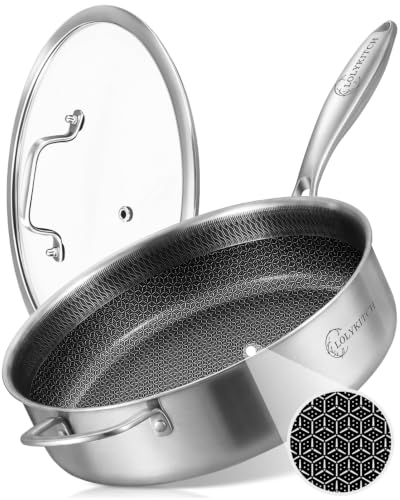
【MASTER ONE-PAN MEALS FOR THE FAMILY】 Stop struggling with cramped cookware. Boasting a generous 6 qt capacity and extra-deep sides, this 12 inch frying pan is the ultimate deep pan to 'feed a family of 6'. This large skillet with lid effortlessly handles big batches of chili or thick stews without spatter. Whether you are mastering weekend meal prep or daily cooking, this large skillet is your everyday workhorse.

HEALTHY SKILLET - Switzerland ILAG nonstick surface. Free of PFOA, PFOS, lead, cadmium and other toxic materials that can leach into food, safe & healthy.

CONFIDENCE IN EVERYDAY COOKING — Proven, dependable performance for everyday cooks looking to upgrade worn nonstick kitchen pans. This stainless steel pan features an uncoated surface with nothing to chip or wear, plus a lifetime warranty.
Sous‑Vide Perfection for Reheating Smoked Turkey Legs
If you set your sous‑vide machine to 148 °F (64.4 °C) and seal the smoked turkey leg with a light salt‑spice rub, the water bath will gently bring the meat to a safe 165 °F internal temperature while preserving its juicy texture. Preheat the bath precisely, then submerge a sealed bag for 4–6 hours; the extended soak pasteurizes and tenderizes without overcooking. Adjust sous vide temperature variation by raising to 150 °F (65.6 °C) for a firmer bite, or lower to 140 °F for a softer mouthfeel before the final safety rise. Apply flavor enhancement techniques such as a brief post‑sous‑vide sear in high‑smoke‑point oil or a quick broil to crisp skin, ensuring the surface is dry to maximize Maillard reaction. For optimal grill performance and consistent results, consider maintaining your cooking equipment regularly to ensure all surfaces and components function properly. This method delivers consistent, safe, and richly flavored reheated turkey legs. Dark meat can be cooked separately at its optimal temperature for best results.
Foil‑Wrap to Keep Turkey Juicy While Reheating
Switching from the controlled moisture of sous‑vide, you can achieve similarly juicy results with a simple foil‑wrap in the oven. Preheat a high temp oven reheat to 325°F, then place each smoked turkey leg on a sheet of heavy‑duty foil. Add a splash of chicken broth, water, or olive oil, seal tightly, and guarantee no steam escapes. Position the packet on a baking sheet for even heat distribution, and cook 30–40 minutes, extending time if the leg is frozen. Using a meat thermometer to verify the internal temperature reaches 165°F ensures your turkey is safely reheated throughout. For a grill foil wrap technique, preheat the grill to medium, wrap the leg similarly, and turn 2–3 times over 15–20 minutes. Unwrap the final 5–10 minutes (oven) or 2–3 minutes (grill) to crisp the skin while retaining moisture. Cover the turkey tightly with aluminum foil to lock in steam.
Check Internal Temperature: Reach 165°F Safely and Use Carry‑Over Heat
Make sure the turkey leg hits an internal temperature of 165 °F before you pull it out of the oven, because that exact mark delivers a 7‑log reduction in pathogens and meets USDA’s mandatory safety standard. Insert an instant‑read probe into the thickest part of the meat, avoiding bone contact, to verify using thermometer accuracy. Check both the thigh and the surrounding meat, confirming that each spot reads 165 °F. Because smoked turkey legs generate negligible carry‑over heat, you can’t rely on passive warming; you must maintain active heat until the target temperature is reached. Maintaining a steady temperature throughout the reheating process ensures consistent results and proper food safety. Record the reading, then remove the leg promptly to prevent overcooking, thereby ensuring proper temperature monitoring throughout the reheating process. Lower temperatures require longer holding times to achieve the same level of safety.
Add Carrots & Rosemary While Reheating Smoked Turkey Legs for Extra Flavor
One or two peeled carrots, cut rough and sized to fit around the turkey legs, go straight into the 250 °F oven along with a sprig of fresh rosemary. You arrange the carrots under and around the legs, ensuring they’re not touching, then cover the pan tightly to trap steam. Add 2–3 cups of water or broth; the liquid creates balanced moisture levels while the rosemary releases concentrated herb flavors. As the oven maintains low heat, the carrots absorb the smoky broth and the rosemary infuses the meat, softening tendons and preventing dryness. After 45‑60 minutes, the vegetables are tender, the turkey legs are fall‑off‑the‑bone, and the dish presents a layered, aromatic profile ready for plating. Low temperature ensures the turkey stays juicy while reaching a safe internal heat. Using a meat thermometer to monitor the internal temperature is essential to confirm the turkey legs have reached the proper doneness without overcooking.
Rest Reheated Turkey Legs 15 Minutes for Even Heat Distribution
Typically, once the smoked turkey legs have reached an internal temperature of about 115‑120 °F, you let them rest for roughly 15 minutes before serving. During this pause, residual heat migrates from the outer layers inward, smoothing temperature gradients and establishing a consistent internal temperature across the meat. The rest period also allows moisture to redistribute, preventing the outer surface from overcooking while the core finishes warming. By keeping the legs at room temperature, you avoid sudden cooling that would create cold spots, ensuring even heat distribution throughout. This 15‑minute interval balances safety—approaching the 165 °F target—against texture loss, delivering a juicy, uniformly heated turkey leg ready for slicing or plating. Aluminum foil helps retain moisture during the rest period. For additional flavor enhancement, consider preparing a rich gravy or sauce from the drippings to serve alongside your reheated turkey legs.
Troubleshoot Common Reheating Problems: Soggy Skin, Uneven Heating, Over‑Cooking
After the 15‑minute rest, you may notice three frequent issues: soggy skin, uneven heating, and over‑cooking. For soggy skin, avoid tight foil seals that trap steam; instead, expose the final two minutes and raise the oven to 300°F for a crisp finish. Apply proper moisture management by limiting broth drizzles and using a shallow water layer (2–3 cups per two legs) to prevent a waterlogged exterior while preserving juiciness. The stovetop method can also help retain texture when reheating on a skillet surface. To combat uneven heating, rotate legs after two hours, place them on the second shelf from the bottom, and guarantee they don’t touch, allowing hot air circulation. Monitor the thickest thigh with a probe, targeting 110°F after one hour. Prevent over‑cooking by setting an internal target of 140‑150°F, using a 35‑40‑minute 250°F bake, and removing the legs before residual heat pushes them past 155°F. Treat the skin like chips by crisping it in a hot oven after the rest period.