Trim the Boston butt, removing excess fat and tough connective tissue, then coat it with a balanced dry rub that penetrates the meat. Preheat your grill or smoker to a steady 225 °F and place the pork shoulder directly on the grate, maintaining that temperature for about nine hours. When the internal temperature reaches 160 °F, wrap it tightly in foil to preserve moisture, then continue cooking until it hits 195‑205 °F. Let it rest, shred, and assemble with classic sandwich toppings for a juicy, smoky result, and the next steps will reveal how to perfect every detail.
Choose the Right Boston Butt Cut and Trim
When you select a Boston butt, start by confirming it’s the sub‑primal from the pork shoulder that sits above the picnic cut and extends toward the backbone, often featuring a wedge‑shaped blade bone or sold as lean butt. Prioritize bone‑in selection if you want the marrow to enrich moisture during grilling; the blade bone also helps maintain structural integrity. Assess the ½‑inch‑to‑1‑inch fat cap and intramuscular marbling—these contribute flavor and juiciness. For trimming, retain the thick cap but remove excess surface fat that could cause flare‑ups. If you opt for boneless lean butt, trim more aggressively to preserve a uniform thickness, ensuring even heat penetration. Balance weight (6–14 lb) with your grill’s capacity, and verify that the cut’s rectangular shape promotes consistent fat distribution. Cooking low and slow between about 200°F and 275°F allows the fat cap and marbling to render slowly, creating the tender, flavorful results essential to smoked pulled pork. The picnic shoulder is the leaner bottom section of the shoulder and is best suited for slow roasting, braising, smoking, stewing, or grinding into ground pork.
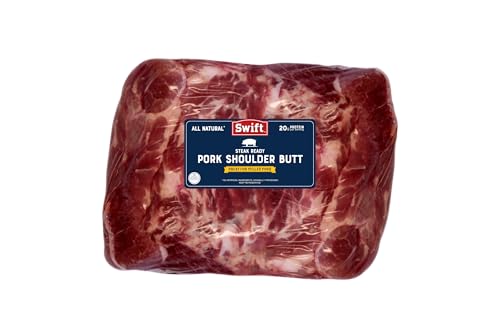
One package of Pork Butt Roast weighing between 6 and 9 pounds.


Meets standards for animal welfare, feed, and more, so you can know about what you're buying (and eating)
Build a Flavor‑Penetrating Dry Rub for Boston Butt
If you want the rub to penetrate deep and create a caramelized bark, start by balancing sweeteners, salts, and spices in exact proportions before you even touch the meat. Use ½ cup dark brown sugar, ¼ cup white sugar, and ¼ cup granulated sugar for caramel depth and bark formation. Add ¼ cup Diamond Crystal kosher salt and 1 tsp coarse black pepper per pound pork shoulder. Incorporate a full‑bodied spice blend: 2 tbsp smoked paprika, 1 tsp garlic powder, ½ tbsp onion powder, 1 tbsp chili powder, ½ tbsp cumin, 1 tbsp celery seed, and optional 2 tbsp chipotle for smoke. Finish with ¼ tsp red‑pepper flakes for heat. Whisk to break clumps, store airtight, and apply 1/3 cup to a 10‑lb butt after an oil coat. Before applying your rub, coat the meat with mustard to enhance rub adhesion and help the spices bond to the surface. This thorough dry rub recipe guarantees uniform flavor penetration and a robust bark. Combine all ingredients before storing.
Set Up Your Grill for Low‑and‑Slow Boston Butt Cooking
Your dry rub is ready, so now focus on the grill. Build a two‑zone fire: load coals or pellets on the right side, leaving the left side empty for indirect heat. Position a water‑filled drip pan under the meat zone to capture fat and add humidity. Set the chamber to 200‑250 °F using B&B Competition Char Logs or Royal Oak Hardwood Pellets; preheat before loading the butt, fat side up, directly on the grates over the indirect zone. Before cooking, ensure your grill grates are clean to maintain optimal performance and flavor. Insert a probe to monitor grill temperature and another for internal meat temperature. Keep vents partially open to maximize smoke exposure while you monitor grill ventilation for steady airflow. Close the lid immediately after placement to lock in low‑and‑slow conditions. Disposable aluminum pans are a pitmaster’s best friend for drip trays, wrap vessels, and serving trays.

--20 Pack Weber Grill Grease Catcher--Perfect replacement aluminum pans for the Weber Q grills, Spirit gas grills, Genesis gas grills, Genesis II / Genesis II LX 200 and 300 series gas grills.These drip trays are a necessary piece of equipment for your Webber grill and it is so nice to just throw away that yuck.Great for cooking side dishes as well.

Fits Akorn Kamado Kooker Grill & Smoker

[Compatible with Weber Grills] --- Fits the grease trays and compatible with Weber: Q Grills, Spirit Gas Grills, Genesis and Genesis II LX 200 300 Series
What Temperature Keeps a Boston Butt Tender?
What temperature truly keeps a Boston butt tender? You should aim for the ideal internal temperature range of 195‑205 °F. Below 195 °F the collagen remains intact, leaving the meat tight and resistant to pulling, while exceeding 205 °F dries the muscle fibers as they release moisture. The sweet spot is 200‑203 °F, where collagen fully converts to gelatin, yielding juicy, pull‑apart pork with minimal moisture loss. Remember the risks of under or overcooking: under 190 °F the meat stays chewy, and over 205 °F it becomes dry. Use a probe to confirm tenderness—bone should rotate cleanly at peak temperature. Maintain a steady smoker setting (e.g., 225 °F) to reach this range reliably without compromising texture, though some pitmasters prefer higher temperatures like 250 °F to reduce cooking duration while still achieving proper tenderness. Apple wood pellets provide a milder, sweeter smoke that complements the meat’s flavor.
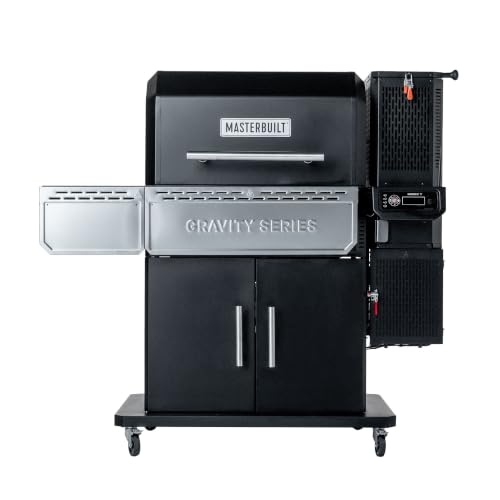
DIGITAL CHARCOAL GRILL & SMOKER: Experience the convenience of automatic temperature control with authentic charcoal flavor for smoking, grilling, searing, roasting, and baking.
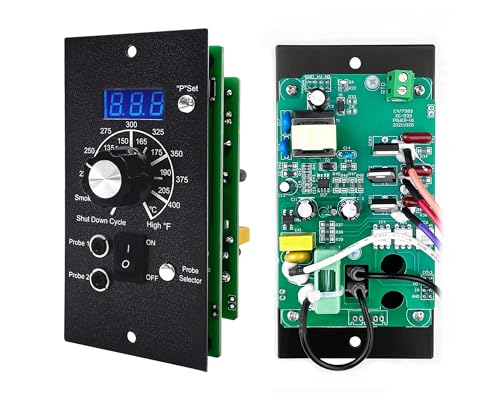
COMPATIBILITY: The grill digital thermostat is replacement for Traeger OEM part BAC365, BAC288, BAC236, fits 20, 22, & 34 Models, including Pro 20/22 34, Texas Elite 34, Lil Tex 22, JUNIOR ELITE 20, Ridgeland, Heartland, Mesa 22, Century 22/34, Silverton (2019), Select Pro, Eastwood 22/24(Not for PTG, Scout, Tailgater, or Bronson)
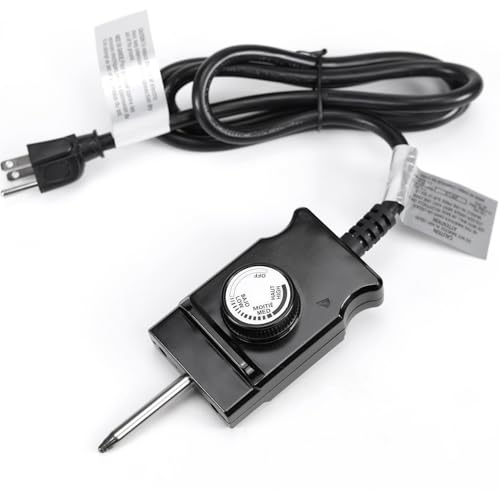
【APPLICATION】Our adjustable controller thermostat probe cord fits most of the electric smokers, grill heating elements,electric skillets etc. Masterbuilt: 20070712, 20100809, 20070812, 20070909, 20071012, 20072817, 20072917, 20073017, 20073716, 20074116, 20075517, 20078516, 20078616, 20150112, 20150210, 20150211, 20150209, 20070210, 20070410, 20070610, 20070612, 20150213, 20150309, 20150311, 20150514, 20150611, 20150613, 20150614, 20150713, 20150716, 20150813, MB25075517, MB20070210, 20150411, 20150414, 20150511, 20150513,
Wrap the Boston Butt (Texas Crutch) at the Right Time
The Texas crutch—wrapping the Boston butt during the stall—should be initiated once the internal temperature hits the 150‑160 °F plateau, where evaporation‑induced cooling stalls further rise. At this point, select the perfect wrapper material: a double‑layered combination of pink butcher paper and aluminum foil gives you the moisture retention of foil while preserving bark structure. Position the meat in the center, add ¼ cup apple juice, and fold tightly, crimping edges to eliminate leaks. Insert the probe through the seal without gaps. This ideal wrapping timing cuts through the stall, reduces total cook time, and locks in juiciness. Like brisket smoking, the internal temperature rather than elapsed time should guide your wrapping decisions and removal from heat. If you must delay, a late wrap at 170‑175 °F still works, but the earlier the better for smoke penetration and bark development. Use consistent 8‑pound butts for uniform cooking.
Check Doneness and Rest the Meat
When you reach an internal temperature between 195 °F and 205 °F, the Boston butt is technically done, but you still need to verify tenderness before resting. Use a digital instant‑read probe to monitor internal temperature precisely; insert it at the thickest point and watch for a steady reading in the target range. Then, confirm tenderness with probe by twisting a skewer or fork—if it rotates with minimal resistance and the meat pulls apart effortlessly, collagen has fully broken down. Once satisfied, remove the butt from the grill, wrap it loosely in foil, and let it rest for at least 45 minutes. This resting period allows juice redistribution and final connective‑tissue relaxation, ensuring ideal texture for serving. The USDA recommends a minimum internal temperature of 145 °F for pork safety.
Shred Your Boston Butt and Pair It With Classic Sandwich Toppings
After the butt reaches 200‑205 °F, pull the meat apart while it’s still hot, using two forks, meat claws, or gloved hands to create long, thin shreds; keep the bark mixed in for texture contrast, discard fat cap, gristle, and bone, and reserve the pan juices to remix later. Apply ideal shredding methods: work in small sections, pull opposite with forks or claws, and avoid chopping to preserve strand integrity. Toss the shreds with reserved juices or BBQ sauce, then Pairing shredded meat with toppings. Spread a generous layer of coleslaw on a toasted bun for crunch, add the moist shreds, and optionally sprinkle a sweet rub for depth. The bark‑laced texture and balanced toppings deliver a classic sandwich experience. The pork was smoked at 225 °F for about nine hours before wrapping.