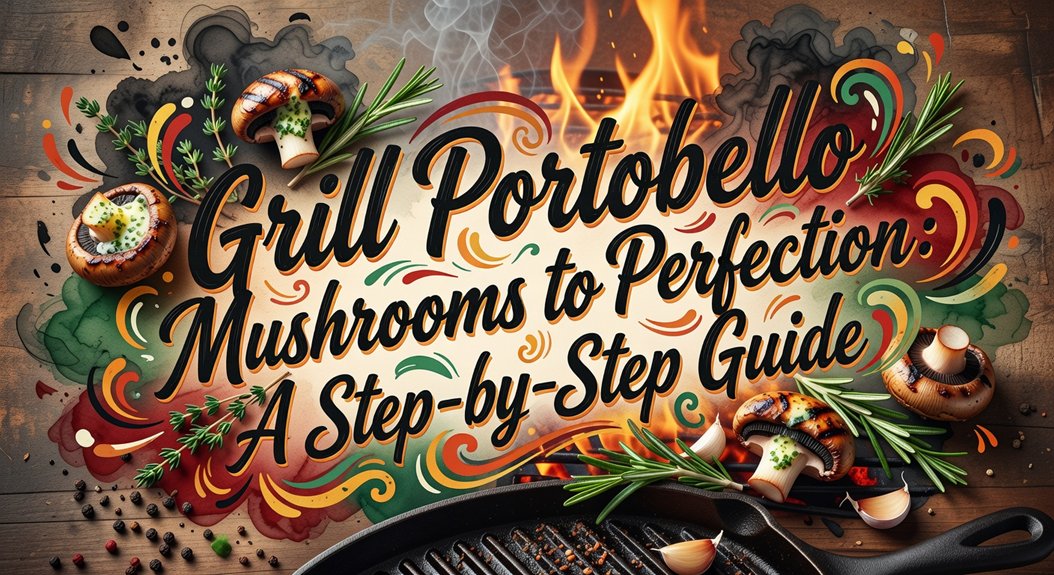
Pick large, firm caps and wipe them clean, then trim the stems leaving a little bit attached. Whisk together balsamic, soy, olive oil, lemon, and herbs, and brush the gills generously; let them soak for a few minutes. Preheat the grill to 450‑500°F, oil the grates, and place the caps gill‑side down, basting every minute until the edges caramelize. Flip, finish cooking, rest for two minutes, then sprinkle fresh parsley and a pinch of sea salt. The next steps reveal perfect pairings and finishing touches.
Choose the Right Caps for Grilled Portobello Mushrooms
When you’re hunting for the perfect portobello cap, start by feeling its firmness— a firm, slightly springy texture signals a fresh, mature mushroom ready for the grill. You’ll notice caps ranging from 10–15 cm (4–6 inches) across; those in the 4‑inch range give a hearty bite, while 6‑inch giants deliver steak‑like substance. Ideal size options balance surface area for seasoning with manageable thickness for even cooking. For proper mushroom selection, choose caps with a dry, plump surface and dark brown, crowded gills that stay firm under gentle pressure. Avoid any that feel spongy, have bruised spots, or look shriveled. A tan or brown cap that’s smooth to slightly wrinkled indicates peak maturity, ensuring the rich, earthy umami you crave when grilled. Coating your selected caps evenly with oil and seasoning before grilling will enhance their natural flavors and help achieve the ideal char and tenderness.


Prep and Clean Mushrooms for Optimal Flavor Absorption
How you prep a portobello can make the difference between a dry, bland bite and a juicy, flavor‑soaked morsel. First, wipe each cap and stem with a damp paper towel or a lightly squeezed sponge, brushing away grit from the top, underside, and stem. Pat the mushrooms dry with paper towels or spin them in a salad spinner; excess moisture would steam the flesh and dilute marinades. Use a spoon to scrape the dark gills outward, revealing a clean surface that will absorb seasoning without bleeding pigment. Trim ragged edges with kitchen shears, rotating the cap to expose the gill structure and create a uniform edge for even heat. Like asparagus, portobellos benefit from medium-high heat to achieve optimal char and flavor development. Store the cleaned caps in a breathable container, employing proper storage techniques to keep them firm, and apply handling techniques to minimize oxidation until you’re ready to grill. Clean mushrooms right before cooking to prevent moisture absorption and sliminess.
Score and Season the Caps Before Marinating
A clean, dry cap is ready for the next step: scoring and seasoning before the soak. You grab a sharp knife and carve a delicate cross‑hatch, about an eighth to a quarter inch deep, creating a diamond lattice that promises even char. The shallow cuts boost surface area, letting oil and spices seep in up to 30 % more efficiently. Brush both sides with extra‑virgin olive oil, then dust the gill side with ⅓ teaspoon kosher salt, a pinch of black pepper, garlic powder, and oregano. Your hands spread the seasoning uniformly, avoiding pools. For best results, follow the same approach used in preparing restaurant-quality dishes by ensuring your simple yet flavorful spices are evenly distributed across the entire surface. This pre seasoning preparation readies the caps for a brief 15‑minute marination, ensuring they stay juicy and flavorful when you flip them for post grilling seasoning techniques. Adding a quick sauce‑absorption boost can enhance flavor retention during grilling.
Mix a Balanced Balsamic‑Soy‑Olive Oil Marinade
If you whisk together soy sauce, balsamic vinegar, olive oil, honey, and minced garlic, the mixture instantly turns glossy, marrying salty umami with bright acidity and a hint of sweet warmth. You’ll notice a silky sheen as the honey dissolves, the garlic speckles the surface, and the soy sauce deepens the color. To balance oil to acid ratios, aim for a 3:1 olive‑oil‑to‑vinegar proportion—three parts oil, one part acid—while keeping the soy sauce equal to the vinegar for harmony. Taste, then test multiple marinade variations: add a pinch of chili flakes for heat, a dash of Dijon for stability, or extra honey if the tang feels sharp. Adjust until the aroma feels bright, the texture smooth, and the flavor rounded, ready to coat your Portobello caps. The added hot chili flakes bring a subtle kick that enhances the overall depth. This marinade will help maintain moisture during the grilling process, ensuring your mushrooms stay tender and juicy.

Vinaigrette Salad Dressing Variety 3-Pack: Italian Dressing, Balsamic Vinaigrette Dressing, and Greek Dressing take salads to the next level and double as a tasty marinade! Crafted with real ingredients including avocado oil, these refreshing salad dressings pack a punch of flavor that also delights in wraps, casseroles, and more.

Stonewall Kitchen Olive Oil and Balsamic, 11 Ounces

A BALSAMIC FOR EVERYONE - Our balsamic vinaigrette salad dressing is non-GMO, seed-oil free, vegan, gluten-free, and USDA organic! Light and flavorful, it's ideal for sharing with friends and family
Heat the Grill and Oil It So the Caps Won’t Stick
When the grill reaches a steady 400 °F, the grates glow a deep amber and a faint, metallic scent rises—signaling it’s time to oil them. You brush the hot bars with olive oil using a pastry brush, coating every ridge while the heat steadies. The oil sizzles, forming a slick barrier that keeps the caps from clinging. Keep the grill at a stable grill temperature; a quick glance at the gauge reassures you the fire isn’t wavering. As you lay the marinated caps gill‑side down, any excess drizzle drips, but the hot oil helps control flare ups from dripping marinade, preventing sudden sparks. For best results, use oils with a high smoke point to prevent degradation at high temperatures. The immediate placement captures peak heat, sealing flavor and ensuring a clean release when you flip. No marinading required for quick preparation, allowing you to apply oil, vinegar, salt, and pepper right before grilling.

Graza Frizzle Oil Made from 100% Olives: A neutral-flavored, high heat cooking oil made from 100% peak harvest olives. With a smoke point of up to 450 degrees, Frizzle is your high-heat kitchen hero. 1 bottle/750ml.

Graza Frizzle Oil Spray Made from 100% Olives: A neutral-flavored, high heat cooking oil made from 100% peak harvest olives. With a smoke point of up to 450 degrees, Frizzle is your high-heat kitchen hero. 1 can/5 oz.

Light Buttery Flavor That Elevates Every Meal: Algae Cooking Club Chef-Grade Algae Oil enhances every dish with subtle richness. Its neutral profile makes it ideal for searing, baking, and dressings, transforming everyday meals into gourmet experiences.
Grill Caps Gill‑Side Up First for Juicy Results
The sizzling oil‑coated grates hold the marinated caps firm, and as soon as you lay them gill‑side down the heat locks in moisture. You hear a soft sizzle, see the edges curl, and feel the natural bowl shape of each portobello cradle its own juices. Start with medium‑high heat, then lower a degree for the gill‑side‑up stage; this grill temperature consideration prevents scorching while letting the interior steam. After the first browning, position the caps gill‑side up, brush the tops with a thin glaze, and let them soften for two to three minutes. Lightly press each mushroom to encourage shape adjustments, ensuring even cooking. Like eggplant, mushrooms benefit from moisture removal to achieve optimal texture and prevent sogginess. Watch the gills darken to a tender hue, then prepare to flip without losing the built‑up moisture. Mushrooms provide a steak‑like texture that makes them satisfyingly meaty.
Flip Caps to Finish and Caramelize Without Burning
A quick flip after the gill‑side has softened releases the pooled juices onto the hot grates, turning the cap side into a sizzling canvas for caramelization. You’ll hear a faint sizzle as the liquid hits the 500‑degree grates, then brush the caps with a thin layer of reserve marinade. Keep the heat at medium‑high, around 375‑400 °F, and let the cap side sear for 2‑3 minutes, pressing gently after the first minute to flatten the surface for even browning. Monitor browning every two minutes, adjusting the flame to control char development. When the edges turn a deep golden brown, flip back to the gill‑side for another 2‑3 minutes. Using a digital meat thermometer inserted into the thickest part of the mushroom cap ensures you achieve the perfect internal temperature without overcooking. The result is a caramelized, tender cap without bitter burn. Adding a basic portobello mushroom marinade before grilling enhances flavor and moisture retention.
Baste, Rest, and Add Fresh Herbs for Extra Aroma
Because the caps are still sizzling, brush the gill side with a thin layer of reserved marinade every minute, letting the fragrant oil and garlic seep into the flesh while the heat caramelizes the edges. You’ll notice the aroma thickening as the balsamic‑soy glaze glistens, the rosemary and garlic turning the surface a deep amber. When the grill hisses its last, transfer to paper towel lined plate, gill side down, and let the mushrooms rest for two to three minutes—this pause lets juices redistribute, preserving a buttery texture. After the brief rest, apply final marinade brush to lock in moisture, then sprinkle chopped parsley and a pinch of fresh basil. The herb burst lifts the scent, delivering a lingering, earthy perfume that crowns your perfectly grilled portobello. For added texture and depth, consider finishing touches like toasted almonds or grated parmesan to complement the earthy mushroom flavor. Press on softened mushrooms to flatten for even grilling.
Serve With Creative Sides and Toppings
When the smoky scent of the grilled portobello lingers, you can elevate it with inventive sides and toppings that turn a simple mushroom into a star‑filled plate. Toss the warm caps with a drizzle of olive oil, a squeeze of lemon, and toasted pine nuts for a bright grilled mushroom salad that sings with texture. Lay a generous spoonful of bruschetta topping combinations—diced tomatoes, fragrant basil, minced garlic, and glossy oil—over each mushroom, letting the fresh acidity balance the char. The raised ridges of your grill pan create beautiful char marks while allowing excess fat to drain away, enhancing the natural flavors of your toppings. Pair the mushrooms with a crisp quinoa bowl, a buttery avocado sauce, or a caprese stack of mozzarella, cherry tomatoes, and balsamic glaze. Finish with a sprinkle of sea salt and a crack of black pepper for a satisfying, gourmet bite. Portobello mushrooms are grown up white button mushrooms.