Preheat your grill to a steady 375‑425°F and grease the grates. Skewer bite‑size pieces—1‑inch veggie chunks with 1‑1½‑inch meat cubes—leaving small gaps for flame. Rotate the kabobs every few minutes: chicken 8‑12 min, beef 6‑10 min (medium‑rare to medium), shrimp 2‑3 min per side, pork 12‑15 min, fish 10 min. Use a probe thermometer, pulling when the internal temperature hits 165°F for poultry, 145°F for pork, fish, and beef, and 140‑145°F for beef. Keep turning and checking, and you’ll master perfect kabobs quickly.
Grill Temperature & Timing for Perfect Kabobs
Wondering how to nail the perfect kabob on the grill? Start by preheating your grill to a steady 375°F—medium for salmon, medium‑high for chicken and beef. While the heat builds, focus on marathon application: brush each piece with sauce, letting it soak for a minute before you slide it onto the skewer. Arrange the kabob so meat and veggies alternate, giving each bite a balanced flavor and ensuring even heat exposure. Once the grill hits the target temperature, place the skewers over direct heat. Rotate them halfway through the 10‑15‑minute window—12 minutes for chicken, 8‑10 minutes for beef, 8‑10 minutes for salmon—until internal temps reach 165°F for poultry, 145°F for fish, and 140‑145°F for beef. For best results, ensure you’re soaking wooden skewers before assembly to prevent burning during cooking. Remove, let rest, and enjoy. Hand skewered with premium CARE Certified beef and chicken ensures consistent cooking.


Easy to Use - Each bamboo stick is selected, cleaned, and there is no burr to sting your fingers. It has semi-pointed tips which is easy to poke through the food, and your kids are safe from sharp objects while using it.

【 HIGHLIGHT VERSATILITY 】 These bamboo skewers 10 inch excel in various settings - from grilling outdoors to hosting a buffet dinner or preparing for a home party. Perfect for skewering meats, vegetables, fruits, and more, these skewers are your all-in-one kitchen companions.
Kabob Meat & Veggie Sizing for Even Cooking
When you cut the meat into 1‑ to 1½‑inch cubes and trim off any visible fat, the pieces will sear evenly and stay juicy. Aim for uniform kebab assembly by matching each meat cube to a vegetable chunk of the same size—1‑inch bell pepper, onion, zucchini, or whole cherry tomato. This consistency guarantees that every bite reaches the same temperature. Thread the pieces onto metal or soaked wooden skewers, alternating meat and veg for balanced heat exposure. Keep precise skewer spacing, leaving a small gap between each item so the grill’s flames can circulate. Avoid overcrowding; the slightly larger veggie pieces will sit snugly on the grate without falling through, delivering perfectly cooked, flavorful kabobs. Soak wooden skewers for 30 minutes before threading to prevent burning. For seafood kabobs, flat skewer designs help prevent delicate proteins from rotating during cooking.
Chicken Kabob Grilling Times & Internal‑Temperature Checkpoints
How long should your chicken kabobs stay on the grill before they’re safe to eat? Preheat the grill to medium‑high (375‑425 °F) and grease the grates. Skewer bite‑size chicken pieces with peppers, onions, and zucchini, keeping the Ideal kabob size ratios around 1‑part meat to 2‑parts veg. Place the skewers on the hot grates, turning every few minutes. For chicken only, grill 8‑12 minutes total, rotating halfway; for vegetable‑only kabobs, aim for 10‑14 minutes, turning once halfway. Use an instant‑read thermometer; the chicken is done when the internal temperature hits 165 °F and the juices run clear. Flipping the kabobs halfway through cooking ensures even cooking across all pieces. Baste once while the outside browns, then rest the kabobs under foil for five minutes before serving. Soak the wooden skewers in water for at least 30 minutes to prevent burning.

NO METALLIC TASTE OR SMELL: These bamboo skewers are an alternative to metallic skewers as they do not cause any metallic taste or smell. These bamboo sticks are 100% natural for a safe and delicious grilling experience with skewer sticks

【PREMIUM STAINLESS STEEL, EXCELLENT WORKMANSHIP】The Metal skewers for Grilling are made of premium stainless steel which is food grade, rust proof and heat resistant. The heavy duty grill skewers are corrosion resistant and can last long. All edges around the metal skewers are well polished, making the barbecue skewers safe to use.

17 Inches long shish kabob skewers, Rust resistant stainless steel blade,Comfortable wooden handle grip;
Beef Kabob Grilling Times & Medium‑Rare to Medium Guide
What’s the sweet spot for a beef kabob that’s juicy, tender, and hits that perfect medium‑rare to medium range? Start by marinating kabobs for at least 30 minutes; the acid and oil will keep the meat moist. Use skewer loading techniques that alternate meat with vegetables, leaving a little space between cubes for even heat. Preheat the grill to medium‑high, about 350‑400°F, and close the lid. Place the skewers over direct heat and rotate every two minutes. For 3/4‑inch cubes, aim for 6‑8 minutes total, flipping halfway, to reach a 130‑135°F internal temperature for medium‑rare. If you prefer medium, let them cook 8‑10 minutes, checking for 140‑145°F. For best results, use a meat thermometer to verify doneness rather than relying on time alone. Rest the kabobs five minutes before serving. Grill temperature should be maintained at a steady medium heat for consistent cooking.

【PREMIUM STAINLESS STEEL, EXCELLENT WORKMANSHIP】The kabob skewers are made of premium stainless steel which is food grade, rust proof and heat resistant. The heavy duty grill skewers are corrosion resistant and can last long. All edges around the metal skewers are well polished, making the barbecue skewers safe to use. Metal skewer sticks is of solid one-piece design. The bbq kabob sticks is thick enough, allowing you put more weight on each skewer without getting bent or twisted
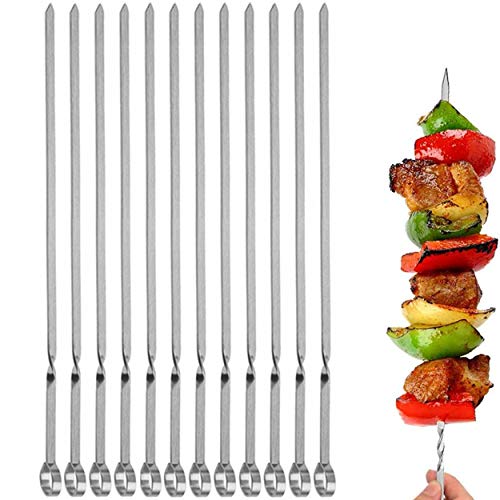
🍖【PREMIUM STAINLESS STEEL, PERFECT WORKMANSHIP】Metal kabob skewers sticks are made of premium stainless steel,food grade, rust-proof, heat-resistant, and corrosion-resistant. These heavy duty grill skewers are corrosion resistant and can last long. The edges of the barbecue skewers are well polished, and the metal skewers are safe to use. Metal shish kabab skewer is of solid one-piece design. The bbq kebab sticks skewers are thick enough to allow you to add weight without bending or twisting.

HIGH QUALITY: Made with high quality stainless steel 304 unlike other skewers made with inferior Stainless Steel 430 that rusts easily; Our food skewers pass in-house quality inspection as well as a third party quality inspection to ensure you get only the best; The sturdy design ensures you will use the barbecue skewers for years to come
Shrimp, Pork, and Fish Kabob Quick‑Cook Timing & Thermometer Tips
Ever wondered how to nail perfectly juicy shrimp, pork, and fish kabobs without overcooking? Start with ideal marinade application: coat each piece, let them sit 15‑30 minutes, then reserve some sauce for basting. Preheat the grill to 375‑400°F. For shrimp, sear exposed, 2‑3 minutes per side, checking internal temperature immediately after flipping—aim for 130‑135°F for juiciness, 145°F for safety. Pork needs a 12‑15 minute run, flip once, keep the lid closed after the first sear, and monitor temperature continuously; 145°F is the safe endpoint. Fish cooks in about 10 minutes, rotating 2‑3 times; pull when it reaches 145°F and flakes easily. Consider using a grill basket for fish kabobs to ensure even heat distribution and prevent delicate pieces from falling through grates. Insert the probe into the thickest spot, avoid the skewer, and use a fast, accurate thermometer for precise temperature monitoring throughout. Use large 20/25 shrimp per pound for meatier and easier to work with.
Vegetable Kabob Rotation Schedule for Char and Tenderness
When you set the grill to a steady 375 °F medium heat, start the vegetable kabobs and plan to turn them every 2‑3 minutes, with a decisive flip at the halfway point (about 4‑5 minutes) so each piece gets even char and stays tender. Begin with a quick 1‑minute sear over direct heat, then slide the skewers to indirect zones. Check at the 7‑minute mark, then apply rotation frequency adjustments every 2‑3 minutes, keeping an eye on zucchini, peppers, and onions. This rhythm lets you focus on optimizing char development while preserving crunch. A final flip at 8‑10 minutes locks in grill marks; a poke test confirms potatoes are cooked through and tomatoes are bright, slightly blistered. For delicate vegetables that benefit from a similar cooking method, consider steaming in foil packets to prevent them from slipping through the grates while achieving tender yet charred results.
Common Timing Mistakes & How to Fix Over‑ or Under‑Cooked Kabobs
Your perfectly timed veggie rotation now sets the stage for the meats, but timing slips happen fast when you mix proteins or forget to turn. You’ll over‑cook shrimp and under‑cook beef if you skewer them together; keep each protein on its own stick for precise timing. Use proper marinade selection to add flavor without thickening the coating, which can shield heat and delay searing. Cut every piece to uniform cut sizing—1‑1.5 inch cubes—so heat penetrates evenly. Turn kabobs every 2‑3 minutes on a medium‑high grill (375‑400 °F) to avoid hot spots and char. Check internal temps with an instant‑read thermometer: 165 °F for chicken, 145 °F for beef, pork, and shrimp. Remove a few degrees early, let the meat rest, and you’ll end up with juicy, perfectly cooked kabobs every time. Soak wooden skewers for at least 30 minutes before grilling. For vegetables like potatoes, consider using foil-wrapping techniques to retain moisture and ensure even cooking alongside your protein kabobs.