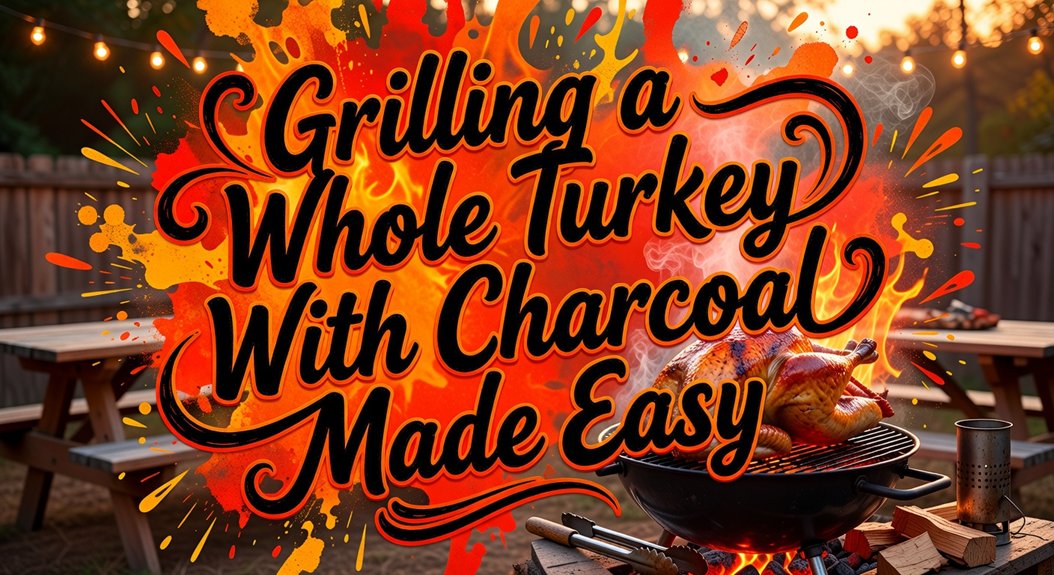
Pick a 22‑inch kettle, load a chimney with 45 briquettes, light a few fresh ones, and dump them onto the unlit pile to create a two‑zone fire. Place a water‑filled foil pan opposite the hot side, set the turkey on the cooler side, and keep the lid on while you stabilize at 350 °F with half‑closed vents. Brush the bird with butter, mustard, then salt, pepper, and herbs; add soaked apple‑pecan chips for smoke. Cook 11‑13 minutes per pound, checking for 165 °F in the breast and 180 °F in the thigh, then let it rest. Keep going for more tips and troubleshooting.
Pick a Charcoal Grill for Whole‑Turkey Cooking
Choosing the right charcoal grill is essential for a whole‑turkey cook. You’ll want a 22‑inch Weber kettle or comparable kettle that fits a 16‑pound turkey with a one‑inch lid clearance; larger birds may not close. Guarantee the top grate spans the coal area and that handles sit over the coals for easy access. For fuel consumption comparison, a 20‑pound bag of charcoal lasts a full roast, with 25–30 briquettes per side initially and 4–5 added each hour. Grill maintenance tips include cleaning the rack, bottom tray, and drip pan before each use, and checking vent operation to control oxygen flow. To ensure even cooking temperature throughout the cooking process, preheat the grill with opened vents for optimal heat distribution. A two‑zone setup—coals on the sides, empty center—delivers steady 350°F heat for even cooking. Freeing up oven space allows you to prepare additional side dishes simultaneously.

The Weber Jumbo Joe Premium Charcoal Grill has a durable-plated, steel cooking grate, crafted from premium steel for enhanced durability; Cooking grate offers a resilient surface that stands up to the demands of frequent grilling
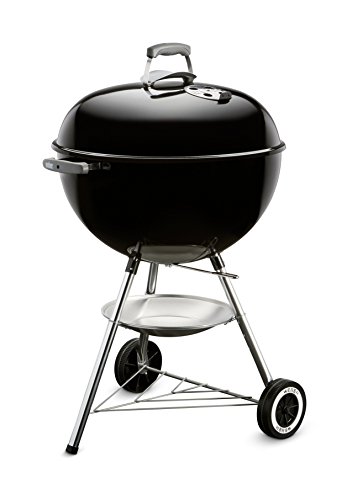
This Weber kettle grill has space to hold up to 13 burgers made with a Weber burger press; The durable-plated steel cooking grate, crafted from premium steel, offers a resilient surface that stands up to the demands of frequent grilling
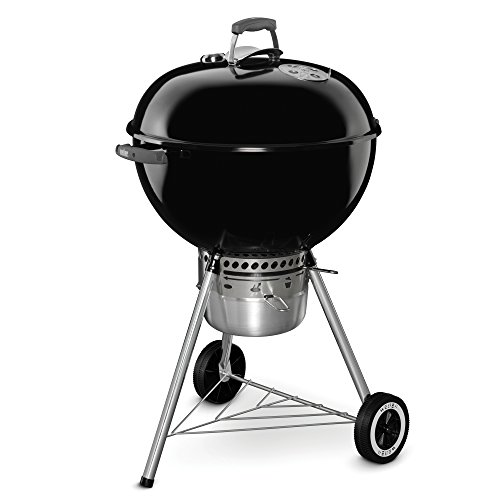
This premium Weber kettle grill has space to hold up to 13 burgers made with a Weber burger press; The durable-plated steel cooking grate, crafted from premium steel, offers a resilient surface that stands up to the demands of frequent grilling
Prepare the Turkey and Season It for Maximum Flavor
Even before the grill heats up, you’ll want to clean and season the turkey so every bite is juicy and flavorful. Remove the giblets and neck, pat the bird dry, and check the cavity for stray bits. Brush the skin with melted butter or ½ cup olive oil, then coat every surface, even under the wings. Sprinkle kosher salt—about a tablespoon for a 16‑lb bird—over the breast, thighs, and inside the cavity; add coarse black pepper and a generous dust of your favorite rub. For cavity aromatics selection, tuck quartered lemons, smashed garlic cloves, and fresh rosemary or thyme inside; add onion slices or apple if you like. Let the turkey rest for at least 30 minutes before grilling to lock in moisture. Make sure the turkey is under 16 lb to ensure even cooking on the grill.
Set up an Indirect‑Heat Zone With a Chimney Starter and Drip Pan
Once the turkey is seasoned, you’ll create a two‑zone fire by first loading a chimney starter with about 45 unlit briquettes, setting them aside on one side of the grill, then filling the chimney with 12‑15 fresh briquettes, lighting them, and dumping the hot coals over the unlit pile when they turn mostly white. This charcoal chimney preheating gives you a rapid, even heat base. Arrange the lit coals on the left, leaving the right side empty for indirect cooking. Place a foil drip pan opposite the hot zone, halfway filled with water, to catch fat and prevent flare‑ups. Guarantee the grate charcoal arrangement aligns holes over the coal side, and keep the lid on for five minutes to stabilize temperature before the turkey goes on the grill. Proper airflow management throughout the cook ensures consistent temperature control for even cooking. Indirect heat provides a gentle cooking environment that prevents the turkey skin from burning while allowing the interior to cook evenly.

Designed to quickly produce hot coals for cooking
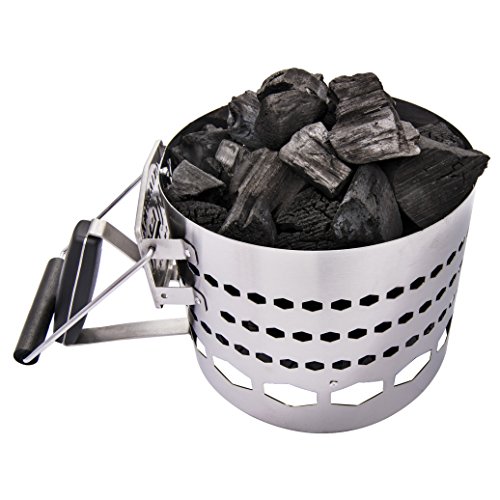
Ready in half the time compared to standard charcoal chimney starter

LARGE CAPACITY CHARCOAL CHIMNEY: Holds up to 6.6 pounds of charcoal, briquettes, or meat-smoking hardwoods such as hickory or applewood for outdoor charcoal grills, fire pits, and camping
Keep Your Grill at a Steady 350 °F (Add Coals via the Hinged Grate)
If you keep the lid closed and fine‑tune the vents, the grill will hover around 350 °F while you add fresh coals through the hinged grate. Use the bottom intake vent half‑closed and the top exhaust partially open; this creates steady heat maintenance without choking the fire. Light a batch of coals in a chimney, then slide them through the hinged grate access, placing them on the existing hot bed. The Minion Method—stacking unlit briquettes around the lit ones—keeps the temperature flat for hours. For optimal results, maintain a two-zone fire setup with one side hotter for searing and the other cooler for indirect cooking if needed. Monitor with a remote probe at grate level, adjusting vents only when the reading drifts. This approach locks in a consistent 350 °F oven‑like environment for your turkey. Briquettes provide uniform heat distribution.

Large Display: Features a 2 3/8 inches large face for clear visibility; Stem length of 2 7/8 inches enhances accessibility; Enables easy classification of food temperatures in various cooking environments
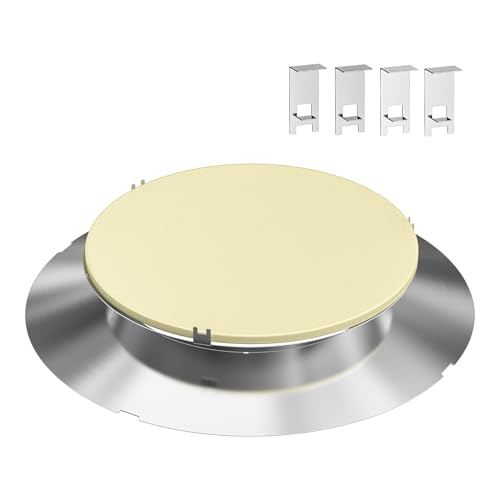
Compatibility: Compatible with Weber 22" Kettle Charcoal Grills, which is the good companion for your outdoor cooking needs.
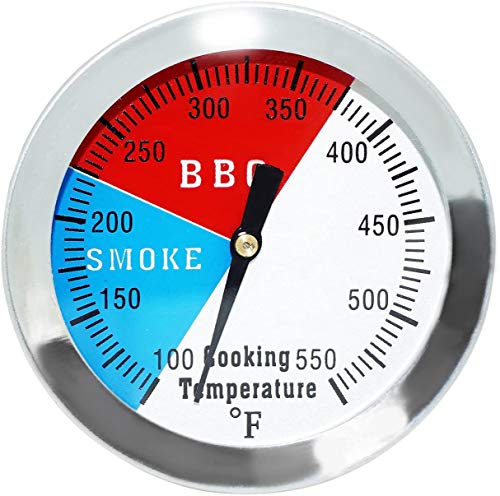
2" BBQ grill smoker pit thermometer stainless steel thermostat pit temp gauge
Add Wood Chips for a Charcoal Grill Turkey Smoke Boost
Add a handful of soaked hardwood chips directly onto the warm coals and you’ll get an instant plume of smoke that lifts the turkey’s flavor without spiking the heat. Choose wood chip combinations that suit your taste—50 % apple and 50 % pecan for balanced sweetness, or a cherry‑hickory blend for bold intensity. Place the chips over the coals for immediate smoke, then scatter a few around the charcoal pile in indirect zones to keep the ember steady. Add fresh chips every thirty minutes; replace them as they burn down to avoid flare‑ups. Monitor ventilation closely—adjust the lid and vents to maintain a gentle flow, preventing excess oxygen from turning smoke into flame. This balance guarantees steady smoke, consistent temperature, and a perfectly infused turkey. Understanding fruitwood flavor profiles will help you select the best wood combinations for your desired taste outcome. Use a large disposable foil pan to hold the turkey and vegetables while grilling.
Calculate Time & Safely Check Internal Temperatures
After the smoke has built, you’ll want to keep the turkey on the grill for roughly 11‑13 minutes per pound, aiming for a total of 2‑3 hours for an 8‑12‑lb bird. First, set the grill to 350‑400°F for steady cooking, then monitor grill temperature every 30 minutes, adjusting vents and adding 4‑5 fresh briquettes as needed. Insert a digital thermometer into the thickest breast and thigh, avoiding bone, and evaluate cooking progress twice an hour. The breast should reach at least 165°F (161°F minimum standard) and the thigh 175‑180°F. Remember that carry‑over will raise the meat 5‑10°F after removal, so pull the bird a few degrees shy of the target. Consider brining the turkey beforehand to help retain moisture throughout the grilling process. This routine keeps the turkey safe and juicy. Place a disposable drip pan on the bottom tray in the center of the grill, between the coals, and under the turkey.
Rest the Turkey & Add Optional Spatchcock Tips
Because the turkey’s juices settle and the temperature carries over, you should let the bird rest for 20–30 minutes—20 minutes for a 12‑15 lb bird, 30 minutes for anything larger—while loosely shielding it with foil (or leaving it exposed for the first 20 minutes then foil‑covering). This adheres to ideal resting durations and lets carry‑over cooking bring the thigh to 165 °F without overcooking. Use the recommended resting coverage methods: loosely cover the breast, keep the skin crisp, and avoid a tight tent that would steam the crust. Monitoring the internal temperature with a probe thermometer ensures accuracy throughout the resting period. If you plan to spatchcock next time, remember removing the backbone and flattening the bird cuts cook time and yields even, smoky skin. A quick 20‑minute rest before carving distributes juices, giving you a moist, flavorful turkey. For best flavor, the turkey should be brined for at least 16 hours before cooking.
Troubleshoot Common Charcoal Grill Turkey Issues
Resting lets the juices settle, but once you start the grill you’ll face the usual charcoal challenges. Keep the fire in three zones: bank 25‑30 hot briquettes on each side of the drip pan and add 4‑7 hourly to sustain consistent temperature maintenance. Open vents half‑way on lid and bottom for steady airflow, and flip the turkey at the two‑hour mark to avoid uneven cooking. If the fire drops, toss 2‑3 briquettes onto each side every 30 minutes; when the coals turn grey‑ash after 20‑30 minutes, they’re ready. Avoid direct heat by pushing ashed coals to the outer ring and using the drip pan as an indirect barrier. Trust your thermometer, limit lid openings, and practice efficient charcoal management to preserve juices and finish perfectly. Make sure to apply mustard all over the turkey before seasoning to keep the meat moist and help the rub adhere. Using a probe thermometer to track the internal temperature ensures your turkey reaches the proper doneness without overcooking.
FAQ: Quick Answers to Your Whole‑Turkey Grilling Questions
If you’re wondering how to keep your turkey juicy, hit the right temperature, and avoid charcoal mishaps, here are the quick answers you need. An 8‑12 lb unstuffed bird fits a 22‑inch grill; keep a 1‑inch gap from the lid. Maintain 350‑375°F using half‑open vents; add 4‑5 briquettes each hour, or 8‑12 every 30‑45 min for steady heat. Cook 11‑13 min per pound, roughly 2‑3 hours, and check a thermometer: 165°F in the breast, 180°F in the thigh. For browning techniques, sear the skin first, then finish low‑and‑slow. Apply sauces and glazes during the last 30 minutes to avoid burning. Let the bird rest 15 minutes before carving. Use Kingsford™ Original Charcoal Briquets for consistent heat throughout the grill, as briquettes provide superior burn time and temperature control compared to other charcoal options.