Gather heat heat‑resistant gloves, grill mitts, and a set of brushes (soft‑bristle, brass, and stainless‑steel) plus a putty knife and scraper. Pre‑heat the grill to 450‑500 °F for 10‑15 minutes to loosen grease, then turn it off and let it cool slightly. Scrub the grates with a baking‑soda‑water paste, adding Dawn detergent and vinegar, and use a stainless‑steel pad for stubborn carbon. Remove burners, unclog ports with a paperclip, brush them clean, and check gas flow before re‑installing. Clean flavorizer bars and heat tents with a wire brush and the same paste, then rinse, dry, and lightly oil the grates to prevent rust. Follow the final safety checklist, and you’ll uncover even more detailed steps.
Gather Tools & Safety Gear Before You Begin
Before you even turn on the grill, assemble every brush, scraper, and safety item you’ll need; having the right tools on hand prevents interruptions and protects you from burns. Start by pulling a bristle brush for loose food, a nylon brush for delicate surfaces, and a brass‑bristle or stainless‑steel brush for heavy‑duty grime. Add a steam‑cleaning brush if you want to eliminate bristles entirely. Gather a grid lifter, grid gripper, and wooden scraper to remove and protect the grate without scratching. Keep a putty knife, stainless‑steel scraper, and drip‑pan scraper for tight corners and grease pockets. Slip on heat‑resistant gloves, grill mitts, and closed‑toe shoes; use long‑handled tools to keep hands away from heat. Regular grill maintenance helps prevent rust and food buildup that can damage your cooking surface over time. Finally, review cleaning schedule and maintain appropriate PPE before you begin. The Charbroil SAFER nylon brush is a reliable option for delicate surfaces.

EFFORTLESS CLEANING - Our Grill Brush for Outdoor Grill Quickly removes burnt on residue and quickly gets your grill clean. A great gift idea. Supports cleaning on hot surfaces up to a maximum of 250° F.

【The Safest Bristle Free Grill Cleaner】:No wire bristles at all, no melting like nylon grill brushes; With this safe grill brush and scraper, your food will stay 100% Bristle Free. No more worry about swallowing some metal pieces, Let's free to gobble up some favorite barbecue! Save your effort and time, let’s just have fun! (PATENTED design)

[Premium Grill Tool Set]: Upgrade your outdoor cooking with this complete BBQ kit. This 5-piece bbq set of grill tools and barbecue tools includes a sturdy spatula, fork, tongs, basting brush, and cleaning brush—everything you need to grill like a pro.
Grill Cleaning: Pre‑Heat for Easier Grease Removal
After gathering your brushes, scrapers, and protective gear, fire up the grill to a high temperature for about 10‑15 minutes. Set the burner to a preheat temperature of 450‑500 °F and maintain it for the full preheat duration. The intense heat converts accumulated food residue into ash, loosening grease and softening carbon deposits on the grates and in hidden crevices. As the surface warms, thermal action breaks down stubborn buildup, creating a natural non‑stick layer that prevents sticking during cooking. Simultaneously, the airflow clears debris, equalizing heat distribution and reducing flare‑up risk. Once the preheat period ends, turn off the gas, let the grill cool slightly, then proceed to brush away the ash and loosened grease with minimal effort. Regular maintenance also prevents uneven heating that can lead to flare‑ups. For optimal results, use grill brushes with soft bristles rather than wire alternatives to avoid damaging your cooking surface.
Scrub Grates With a Baking‑Soda Paste
You’ll want to mix a paste using equal parts baking soda and water, then boost its grease‑cutting power with a quarter‑cup each of Dawn dish detergent and white vinegar. Apply the mixture to cool grates with a spray bottle application, ensuring an even coat. Let it dwell 15–20 minutes; for stubborn carbon, extend to 2–3 hours. Using a stainless‑steel Scotch‑Brite pad, scrub in vigorous circles, maintaining a frequent scrub schedule until residue lifts. For tight corners, press crumpled aluminum foil around the grate edges. Rinse thoroughly with clean water to eliminate all paste, then dry with a microfiber towel. If the grates are cast iron, towel‑dry and heat‑dry before applying a thin oil layer to prevent rust. This process restores surface integrity and prepares the grill for the next use. Regular cleaning of drip pans will help prevent grease fires during your cookouts. Burn off gunk by running the grill on high heat with the lid open for 10–15 minutes before cleaning.

Mrs. Meyer's Baking Soda Cream Cleaner removes soap scum and grease build-up to make your kitchen sparkle

A HOUSEHOLD CLASSIC: This 2.7 lb resealable bag of ARM & HAMMER Baking Soda unlocks 100+ uses across your home—from kitchens and laundry rooms to crafting tables and beyond

POWERFUL MULTI PURPOSE CLEANER: Tackle grease, grime, stains, and buildup with The Pink Stuff Cleaning Paste. Designed for high performance cleaning across kitchens, bathrooms, and household surfaces
Deep‑Clean Burners, Check Gas Flow, and Re‑Install
Now that the grates are spotless, turn your attention to the burners. Turn off all burners, disconnect the propane tank, and let the grill cool completely. Remove cotter pins with needle‑nose pliers, then extract the burners after taking off grates and flame tamers. Unclog each port using a paperclip or straight metal pin, and brush the exterior with a stainless‑steel bristle brush. Clean the orifice and air shutter with a bottle brush, then use compressed air to purge ash. Inspect orifice settings and guarantee they match the manual to optimize air fuel ratio. After confirming uniform ports, reverse the removal steps, reinstall cotter pins, dust insertion screens, and test each burner for steady blue flames and even gas flow. Ensure the gas tube opening is clear before reassembly. To protect your grill’s finish and extend its lifespan, consider covering the grill when not in use to prevent corrosion and maintain its appearance.
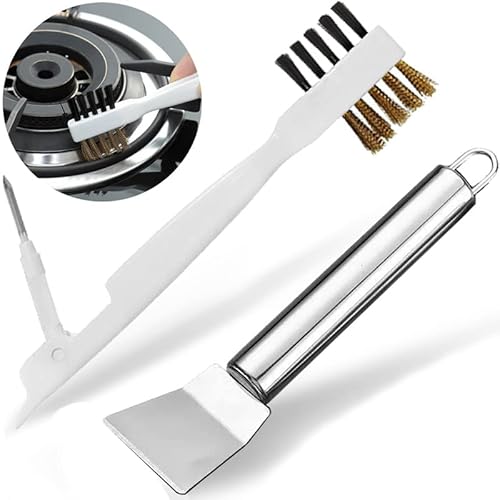
Golden brass wire bristles & Nylon stiff brush : Good scrubbing strength, can wipe away rust, oil stains and food burn marks on the stove. Stubborn stains can be cleaned.Nylon stiff brush made of high-quality nylon stiff bristles, not easy to flattening out and bending, long-lasting for daily use.Perfect for pots, pans, kitchen, sink, tile, and household cleaning. Help you remove grease and food particles.

2-piece kit includes venturi brush and maintenance brush

8-5/8, stainless steel, wire scratch brush with curved wood handle, strong & durable with solidly imbedded stainless steel bristles
Clean Flavorizer Bars & Heat Tents for Even Heat
When the grill cools, inspect the flavorizer bars and heat tents for rust, warping, or carbon buildup; any imperfection can disrupt heat distribution and cause uneven cooking. First, remove the bars and tents from their grooves. Use a sturdy stainless‑steel brush or a wire‑wheel attachment on an impact driver to scrape off carbon, then wipe with a damp cloth. If rust or warping is present, replace worn flavorizer bars and any damaged heat tents. After cleaning, apply a baking‑soda‑vinegar paste to stubborn spots, scrub with a toothbrush, and rinse with a Simple Green‑Dawn solution. Dry thoroughly, then reinstall, ensuring each piece sits flush in its slot to maintain proper bar positioning for even heat across the cooking surface. Regular cleaning also prevents flare‑ups that can damage the grill. To maintain optimal performance, empty the ashes regularly to ensure proper airflow and consistent heat distribution throughout your cooking sessions.
Soak, Scrub, and Empty the Grease Tray
A few minutes of pre‑heating the grill will soften the grease that’s stuck to the tray, making the subsequent soak far more effective. Turn off the grill, remove the tray, and place it near a faucet. Spray a thin layer of dish soap or cooking oil onto the surface, then fill a basin with hot water and equal parts white vinegar. Submerge the tray for five minutes, allowing the mixture to loosen residue. Scrape bulk grease with a spatula, then scrub with a stainless‑steel brush or brass bristle pad. For stubborn spots, spread a baking soda application—mix baking soda, water, and a dash of dish soap—over the entire tray and let it sit 15‑20 minutes. Rinse thoroughly, dry, and reinstall. If you prefer a commercial solution, select a chemical degreaser option such as Zep Grill Cleaner, follow the product’s 40‑minute dwell time, then rinse completely to avoid food‑grade contamination. Wear gloves, use a plastic bag to contain waste, and store the tray dry for future use. Keeping your grease tray clean is essential for preventing flare-ups and maintaining safe grilling conditions. Place a liner in the trash can to simplify cleanup.
Degrease the Grill’s Interior & Exterior Surfaces
After soaking and scrubbing the grease tray, turn your attention to the grill’s interior and exterior surfaces. First, disassemble exterior components such as side panels and the lid; set them aside for separate cleaning. Inspect internal components—burner tubes, flavorizer bars, and the interior basin—for buildup. Sprinkle baking soda across the interior, then spray a vinegar‑water mixture to generate foam. Let it sit five minutes, then scrape loosened grease with a plastic putty knife into the drip tray. For heavy residue, repeat. Clean burner tubes with a stiff‑bristle brush, wiping burners in hot soapy water. Scrub the interior basin with a brush and heavy‑duty cleaner, directing runoff into a bucket. Finally, wipe the exterior with a microfiber cloth and hot soapy water, following the steel grain, then apply a stainless‑steel polish for shine. Regular cleaning also helps prevent rust formation on metal parts. Remember to always disconnect the propane tank before beginning any cleaning work to ensure your safety.
Rinse, Dry, and Oil Grates to Prevent Rust
Rinse the grates thoroughly with warm water right after scraping to flush out loosened grease and grime, then follow with a mild‑soap solution for an annual deep clean that eliminates buildup without damaging the metal. After scrubbing, hose off any soap residue and immediately dry the grates with a lint‑free towel; any remaining moisture compromises moisture retention minimization and invites rust. While the metal is still warm, apply a thin, even coat of high‑smoke‑point oil—such as grapeseed or palm—using a brush or paper towel, covering both sides and the raised rails. This oil layer seals the surface, preserves seasoning process integrity, and creates a barrier that prevents oxidation until the next cookout. Repeat the rinse‑dry‑oil cycle after each use to maintain ideal protection. Season the grates before the first cook to ensure non‑stick performance and longevity.
Final Safety Checklist Before Your Next Cookout
Before you fire up the grill, run through a concise safety checklist that covers gas line integrity, placement, personal gear, and operational protocols. Inspect the gas tubes for blockages with a pipe cleaner, then examine hoses for cracks, brittleness, or sharp bends; replace any damaged connectors. Position the grill 10‑15 feet from structures, on a level surface, and keep a 3‑foot clear zone for children and pets. Wear a heavy apron, flame‑retardant mitts, and avoid loose sleeves or apron strings. Open the lid before lighting, never leave the grill unattended, and keep a spray bottle of water nearby for flare‑ups. After cooking, perform completing post‑down checks: confirm the grill is fully cool, turn off the gas, close the canister, empty grease trays, and verify that lava rocks are clean and properly seated. For charcoal grills, the safest method involves cutting off the oxygen supply by closing the lid and vents completely to allow coals to cool naturally. Remember to keep a fire extinguisher within reach in case of emergencies.