Pick a 15‑18 lb whole‑packer, trim the fat cap to a¼ in and remove excess point fat, then slice off the gray edge and round the corners to expose the grain. Mix kosher salt, black pepper, garlic/onion powder, smoked paprika, and a binder, then pat the rub into the meat. Preheat your pellet grill to 225 °F, set a probe in the cooking zone, and keep the lid closed with a water pan underneath. Smoke unwrapped until the internal temp stalls at 165 °F, then wrap in butcher paper, raise the grill to 225‑275 °F, and finish at 200‑208 °F before resting and slicing. Continue for learn how to make burnt ends and troubleshoot common issues.
Choosing & Trimming the Ideal Brisket for Pellet Grilling
When you pick a brisket for pellet grilling, start with a whole packer (15‑18 lb) because its combined flat and point muscles give the ideal balance of juiciness and fat. Trim the fat cap to an appropriate fat cap thickness of about a quarter inch; this lets smoke penetrate while still rendering flavorful bark. Remove hard, excess fat from the point muscle, but retain a modest layer on the flat to preserve moisture. Execute proper muscle separation by cutting away grayish edge meat and rounding harsh corners, exposing the flat and point clearly. Flip the brisket to identify grain direction in each muscle, then trim the underside fat. This systematic approach guarantees even smoke absorption and prepares the brisket for a perfect pellet‑grilled finish. Using a digital meat thermometer helps monitor internal temperature precisely throughout the smoking process. For optimal accuracy, select a thermometer with a fast response time to ensure you’re reading true internal temperatures without prolonged probe insertion.

SIGNATURE BLEND WOOD FIRED FLAVOR: The flavors of hickory, maple, and cherry hardwoods combine for in our Traeger Signature Blend Hardwood Pellets for flavor that can take on just about anything you cook; From classic BBQ meats, to fish and veggies, this versatile blend gives you full-bodied flavor you'll go back to time and time again

HICKORY WOOD FIRED FLAVOR: Traeger Hickory Hardwood Pellets are great for naturally enhancing beef, chicken, pork, and veggies with full-bodied, bold flavor. So it should come as no surprise that Hickory’s assertive flavor is one of the most popular choices for classic BBQ cooking.
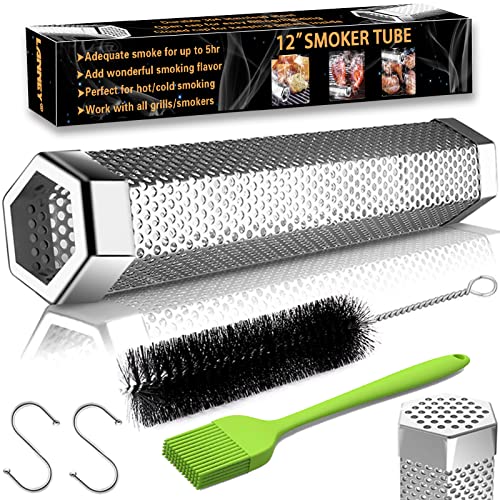
【BILLOWING SMOKE AND BIG CAPACITY】 The pellet smoker tube has massive density diffusion holes on its body. So the smoker tube can let air come in, diffusing smoke efficiently and evenly to your food. The perforated design and hexagon shape of tube smoker allow the pellets stay lit the fully burn to provide constant smoke. With a length of 12 inches large capacity, the wood pellets smoker tube is capable of holding enough pellets and will produce abundant quantity of smoke up to 5hrs
Preparing the Rub and Optional Injection for Pellet‑Grilled Brisket
After trimming the brisket to a uniform thickness and revealing the grain, you’ll want to coat it with a well‑balanced rub and, if you like, a light injection. Selecting quality ingredients is essential: use kosher salt, coarse black pepper, garlic and onion powders, and smoked paprika as the base, then decide on optional cumin, chili powder, cayenne, brown sugar, or coriander for depth. Mix the dry blend for about five minutes, then whisk a thin binder—mustard or oil—into the meat, patting it in to promote bark formation. For larger productions, batch mixing considerations dictate tight‑fitting containers and proportional scaling (≈1 Tbsp rub per pound). If you choose an injection, blend beef broth, a splash of Worcestershire, and a pinch of sugar, then inject evenly before refrigerating exposed overnight. Smoking at 225 °F ensures a slow, even cook that renders the fat and develops flavor.
Setting Up Your Pellet Grill for Indirect Heat at 225°F
If you want reliable, oven‑like consistency on a pellet grill, start by setting the temperature dial to 225 °F and let the unit preheat for 10‑15 minutes while you fill the hopper with dry hickory or oak pellets. After ignition, place an independent probe thermometer in the empty cooking zone; ignore the built‑in gauge. Verify the probe reads a steady 225 °F before loading the brisket. Use a water pan beneath the grate to dampen any temperature fluctuations and maintain ambient humidity. Keep the hopper full to preserve pellet quality and avoid interruptions. Check the probe every 30–60 minutes, adjusting the dial only if the reading drifts. Keep the lid closed, and let the indirect convection heat cook the meat evenly. Direct grilling creates a high‑heat zone for quick searing, which is not needed for this low‑and‑slow method. Monitoring the internal temperature throughout the cook is critical rather than relying strictly on timing, as outdoor conditions and smoker consistency can influence actual cooking duration.
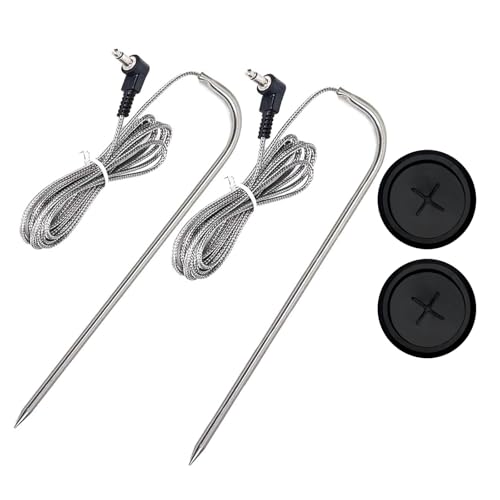
REPLACEMENT PIT BOSS MEAT PROBE : Temperature probe replacement compatible with PIT BOSS pellet grills and pellet smokers with digital control probe capability. NOTE: meat probes are NOT FIT for MASTERBUILT, CAMP CHEF, CHAR GRILL etc all series smokers

Wide Compatibility: This grill ambient probe works with Traeger Pellet Grills (except PTG) and Z-Grill. Replace old RTD probes seamlessly to maintain grill efficiency.

COMPATIBILITY: Meat probe is only compatible with Pit Boss wood pellet grills and smokers. NOTE: The probe NOT FIT FOR Treager, Camp Chef, Masterbuilt, Char-Grill, Therm Pro. Please ensure your grill and confirm that the model is compatible
Smoking the Brisket Unwrapped Until the 165°F Stall
Since the meat’s internal temperature plateaus around 160‑165 °F, keep the brisket unwrapped and let the fan‑forced convection of your pellet grill work its magic. Place the probe in the thickest point, watch the needle linger near 160 °F, and resist the urge to raise the grill temperature. Your goal is to monitor stall duration while avoiding stall temperature drops; the steady 225 °F airflow will evaporate surface moisture, forming a deep bark. Expect the plateau to last two to six hours, depending on size and ambient humidity. Keep the lid closed, maintain consistent pellet feed, and let the natural evaporative cooling subside. For added moisture retention during the stall, consider spritzing with apple cider vinegar to keep the surface from drying out excessively. Once the internal reading climbs past 165 °F, the stall has ended and the brisket is ready for the next phase. The wrap acts like a blanket that retains heat, so removing it causes a rapid temperature drop.

Fine mist ACV spritz and basting spray for smoking and grilling. Light coat for bark on brisket, ribs, and pulled pork—not a heavy soak

What is Spritz King? Our culinary basting sprays make it easier for you to achieve a crunchy, deep, robust dark bark with a moist interior when grilling, smoking, or air frying. Simply apply our innovative BBQ spritz throughout the cooking process to yield tastier, more flavorful meats, veggies, and seafood.

INFUSE BOLD HICKORY SMOKE FLAVOR WITH LESS PREP: Spritz-It! BBQ marinade spray makes it easy to enrich the taste of grilled beef, chicken, pork, ribs, and potatoes with rich, aromatic hickory smoke flavor in seconds. Ideal for air fryer and oven cooking too. Simply use this grilling spray before or after for an even, delicious layer of flavor that elevates every single bite of your meal.
Wrapping the Brisket & Raising Temperature to Finish
Around 165 °F internal, wrap the brisket—preferably in two layers of unwaxed butcher paper to keep the bark intact while allowing steam to escape—and immediately raise your pellet grill to 225 °F, then, if time is tight, nudge it up to 250‑275 °F to accelerate the finish. Lay the wrapped meat fat‑side up, flat side toward the heat source, and position it on the upper shelf to avoid direct flame. The butcher paper gives bark maintenance while still letting moisture escape, a subtle edge over foil protection that can soften the crust. Keep the grill temperature stable, monitor the probe, and aim for a final internal of 200‑208 °F. When the meat yields with little resistance, you’ve reached perfect tenderness. Resting the brisket for at least 30 minutes after removing it from the grill will help retain juices and ensure the best results. Maintain a stable temperature to ensure consistent smoke penetration.
Rest, Unwrap, and Slice Your Pellet‑Grilled Brisket for Best Results
After the brisket reaches its final internal temperature, let it rest, wrapped, for at least 30 minutes and up to an hour before you unwrap it. Keep the resting temperature above the danger zone by leaving it in a foil‑wrapped pan with a water‑tallow bath or a pre‑heated 160 °F cooler. This foil wrapping duration lets juices redistribute, while residual heat finishes collagen breakdown. For optimal results, aim for a resting period of 1 to 4 hours to allow the connective tissues to break down fully. When the timer expires, open the cooler latch, remove the foil, and check tenderness with a probe; it should slide like butter at about 205 °F internal. Slice against the grain on a sharp knife, letting each slice retain the moisture preserved during the rest. This method guarantees a tender, juicy brisket every time.
Make Burnt Ends From the Point After Resting the Brisket
Even though the brisket is already rested, the point can be transformed into melt‑in‑your‑mouth burnt ends by cubing it, coating it in a balanced BBQ glaze, and returning it to the pellet grill for a short, high‑heat reveal. Begin with ideal point preparation: separate the point from the flat, discard pure‑fat cubes, and cut the meat into uniform 1‑1.5‑inch pieces. Drain any excess juices into a pan, then whisk together 1 cup BBQ sauce, 2‑4 tbsp butter, 1‑2.5 tbsp honey or brown sugar, 1 tsp Worcestershire, and 3 oz Dr Pepper; add broth or chipotle if desired. Toss the cubes thoroughly, covering the pan with foil for a brief steam. Preheat the pellet grill to 250‑275 °F, place the pan uncovered after the first 15 minutes, and smoke 1‑2 hours, stirring every 15 minutes, until the sauce caramelizes and the internal temperature reaches 203‑210 °F. Because the point can experience a stall phase during smoking, monitoring internal temperature is more reliable than relying on time alone. Remove, let rest ten minutes, then serve immediately. The brisket point is the key to achieving the classic burnt‑ends texture.
Troubleshooting Common Issues & Fine‑Tuning Your Next Smoke
Why do your temps swing wildly even when you set the grill to 250 °F? Low‑quality pellets dump excess ash, cloaking the sensor and choking the ignition rod. The augur then overfeeds, sending the fire into a 200 °F dip or a 325 °F surge. Identifying quality pellet standards is your first fix—choose a premium brand like Smokin Pecan Shell that burns cleanly and leaves minimal residue. Different wood types and flavors affect how your grill performs and the final taste of your brisket. Managing airflow and temperature control follows: clean the fire pot after each run, brush out ash, and inspect the vent sliders. Keep the vent partially closed to steady the draft, but open it briefly when the grill feels sluggish. By combining premium pellets with disciplined ash removal and precise vent tweaks, you’ll lock the grill into a stable 250 °F plateau and achieve consistent, juicy brisket results. Using quality pellets reduces ash buildup and stabilizes temperature.