Cut your meat into uniform 1.5‑inch cubes and arrange veggies on a tray for quick threading. Marinate for 2‑4 hours in a glass bowl, massaging oil, acid, and aromatics into the meat, then reserve half the liquid for basting. Skewer with flat metal sticks, wiping tips clean to avoid residue. Bake at 425°F for 15‑20 minutes, then broil on the upper rack for 2 minutes, flipping once; or pan‑fry in a hot cast‑iron skillet, turning every 2‑3 minutes. Finish with a glaze and garnish, and you’ll uncover even more tricks ahead.
Kabob Cooking Guide – Quick Overview of the Whole Process
A well‑planned kabob starts with uniform pieces, so cut the sirloin and veggies into half‑inch cubes, soak wooden skewers for 30 minutes, and season everything with salt, pepper, and olive oil before you thread the meat and vegetables in alternating patterns. Follow skewer arrangement techniques that alternate meat and vegetables—raw‑steak‑onion‑mushroom‑yellow‑steak‑red—to guarantee even cooking and visual appeal. Apply vegetable preparation tips: keep onion, bell pepper, and mushroom sizes consistent, halve mushrooms, and set aside cherry tomatoes for separate cooking. Avoid overcrowding; work in batches if needed. Brush each assembled kabob with extra oil, then sear in a greased cast‑iron skillet 2‑3 minutes per side, covering after the first flip to finish vegetables. Let the meat rest for several minutes after cooking so juices redistribute throughout the meat. Rest five minutes before serving. The marinade’s balsamic‑soy blend adds a sweet‑savory depth that enhances the meat’s flavor.
How to Marinate Kabobs for Maximum Flavor
Two to four hours is the sweet spot for most beef kabobs, letting the blend of oil, acid, and aromatics penetrate without breaking down the texture. Start by cutting meat into uniform cubes; this guarantees even absorption. Use a glass or ceramic bowl, or a resealable bag, and combine olive oil, minced garlic, thyme, and a splash of balsamic vinegar or lemon juice. Massage the mixture into each piece, then refrigerate. Tips for marinating timeframes**: oil‑based blends need only 30 – 60 minutes, citrus‑heavy mixes work in 15‑20 minutes, and Turkish‑style yogurts can sit 6‑24 hours. Considerations for acidic ingredients: keep citric acids under four hours to avoid mushy texture, and balance strong acids with honey or mustard. Flip the bag or stir the bowl every 30 minutes for consistent coating. For best results, aim for a medium-rare internal temperature after cooking to maintain tenderness and avoid overcooking your kabobs. Reserve half the marinade** for basting later. For optimal flavor, use Seven Sons filet mignon tips as they are tender and absorb marinades well.
Thread Ingredients Onto Skewers Efficiently
After the marinating step, keep the meat and vegetables ready for assembly. Cut meat into 1.5‑inch cubes and shake off excess marinade. Arrange ingredients on a tray by type; grouping like items speeds threading. Use dual skewers for stability: pierce the first skewer through one side of each piece, then insert the second skewer opposite the first, creating staggered ingredient placement that locks everything in place. Hold each piece firmly with one hand while guiding the skewer through delicate vegetables to avoid breakage. Leave a small gap between meat and veg for airflow. After each skewer is loaded, wipe the tips with a damp cloth—this skewer cleaning technique prevents residue buildup and secures smooth insertion for the next batch. Even heat circulation helps retain juices and ensures uniform cooking. Selecting flat skewers over round ones can prevent ingredients from rotating during cooking and help maintain your carefully arranged pattern.

【PREMIUM QUALITY,STRONG ENOUGH】JY COOKMENT kabob skewers are made of food contact safe stainless steel material, rust proof and heat resistant. Which can make keep you and your family in good health. The BBQ kabob sticks with 0.32inch width and 0.18mm thickness allowing you add more weight on each skewer without getting bent or twisted.

【PREMIUM STAINLESS STEEL, EXCELLENT WORKMANSHIP】The kabob skewers are made of premium stainless steel which is food grade, rust proof and heat resistant. The heavy duty grill skewers are corrosion resistant and can last long. All edges around the metal skewers are well polished, making the barbecue skewers safe to use. Metal skewer sticks is of solid one-piece design. The bbq kabob sticks is thick enough, allowing you put more weight on each skewer without getting bent or twisted
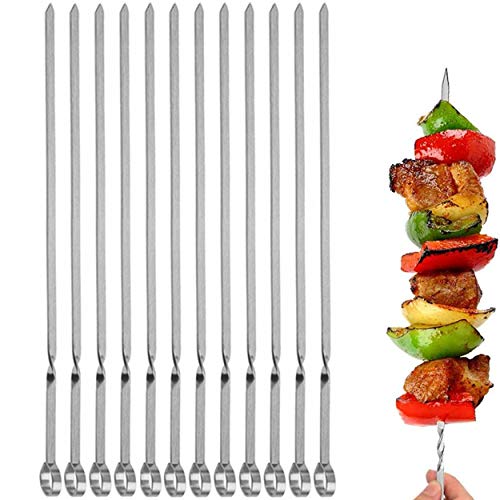
🍖【PREMIUM STAINLESS STEEL, PERFECT WORKMANSHIP】Metal kabob skewers sticks are made of premium stainless steel,food grade, rust-proof, heat-resistant, and corrosion-resistant. These heavy duty grill skewers are corrosion resistant and can last long. The edges of the barbecue skewers are well polished, and the metal skewers are safe to use. Metal shish kabab skewer is of solid one-piece design. The bbq kebab sticks skewers are thick enough to allow you to add weight without bending or twisting.
Oven Temperatures & Times for All Kabobs
Choosing the right oven temperature and timing guarantees every kabob cooks evenly and stays juicy. Set the oven to 450°F for chicken kabobs, bake 15‑16 minutes, flip halfway, then broil two minutes (one per side). Verify an internal temperature of 165°F before serving. For a milder approach, preheat to 425°F, space kabobs at least one inch apart, and bake 15‑20 minutes (20‑25 minutes for larger pieces). Check the 165°F internal temperature checkpoint. If you prefer low‑heat, use 350°F, bake 35‑40 minutes on a single parchment layer, rotate halfway, and finish with a two‑minute broil. A balanced 375°F setting calls for 30‑35 minutes roasting, followed by a two‑minute broil and the same 165°F internal temperature check. Use metal skewers for even heat distribution. Let the kabobs rest a few minutes after cooking to seal in juices before serving. The recipe calls for 8 skewers with 5 chicken pieces each.

HIGH QUALITY: Made with high quality stainless steel 304 unlike other skewers made with inferior Stainless Steel 430 that rusts easily; Our food skewers pass in-house quality inspection as well as a third party quality inspection to ensure you get only the best; The sturdy design ensures you will use the barbecue skewers for years to come
🍖【PREMIUM STAINLESS STEEL, PERFECT WORKMANSHIP】Metal kabob skewers sticks are made of premium stainless steel,food grade, rust-proof, heat-resistant, and corrosion-resistant. These heavy duty grill skewers are corrosion resistant and can last long. The edges of the barbecue skewers are well polished, and the metal skewers are safe to use. Metal shish kabab skewer is of solid one-piece design. The bbq kebab sticks skewers are thick enough to allow you to add weight without bending or twisting.
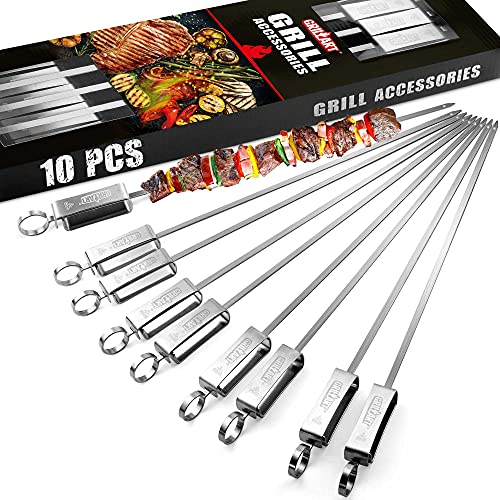
【Neatly & easily, push food off like a pro - with an easy-to-use slider】Never ever fight the kebab sticks with a fork again! With our metal skewers for grilling featured a slider, you cannot push food off more neatly and easily! Squeeze and slide, effortlessly save you from the pushing headaches and mess-looking pain, everything will look smooth and clean. Wanna show folks who is the real genius about grilling? You never go wrong with this skewer set!
Broiling Kabobs: Rack Position, Timing, and Cleanup Tips
If you set the oven’s broiler to the uppermost rack, the intense top heat will sear the kabobs quickly, giving them that grill‑like char while keeping the interior juicy. Place a slotted broil pan on the rack; the pan selection guarantees fat drips away, preventing flare‑ups. Open the oven door about 4 inches after start, following door positioning guidelines, to allow airflow and even browning. Watch the kabobs closely; broiling cooks in seconds, so flip once when the first side shows a deep brown crust. If they brown too fast, lower the rack one level. For best results, aim for temperatures that allow enough heat to brown and tenderize food without harsh charring, similar to medium heat grilling. After cooking, let the pan cool, then wipe the lower tray and racks. This method yields consistent results with minimal mess. The middle rack provides the most even cooking for dishes that need consistent heat throughout.
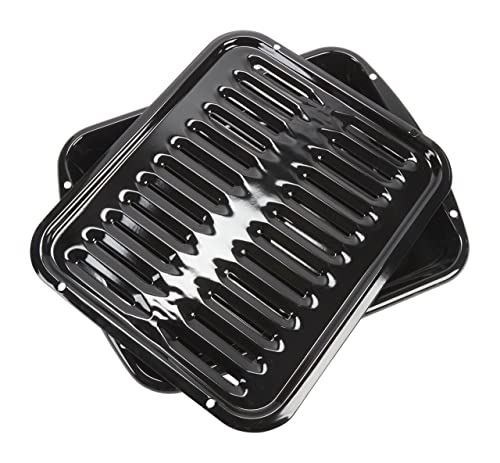
GENUINE OEM QUALITY: Whirlpool Genuine OEM broiler pan is designed for compatible ranges and ovens to help support proper fit, dependable performance, and the quality standards your appliance was built for

DURABLE: Broiler baking pan set is made from durable steel that is heavy-weight while being warp resistant; long-lasting nonstick protects against scratches and staining

Broiler Pan for High-Heat Cooking & Even Browning Designed for broiling meats, fish, and vegetables, this pan ensures even heat distribution while draining excess grease. Replace if warped, rusted, or heavily stained for best performance and food safety.
Pan‑Frying Kabobs on the Stovetop: Oil, Heat, and Rotation Guide
The broiler’s intense top heat gives a quick sear, but the stovetop lets you control each side of the kabob with oil, heat, and rotation. First, preheat a cast‑iron or non‑stick grill pan on medium‑high heat; the surface should shimmer, indicating ideal preheat timing. Drizzle a thin, even layer of sunflower or canola oil—just enough to coat the pan without pooling—to achieve sufficient oil quantities. Place skewers without crowding, then flip every 2–3 minutes, moving them from edges to center to balance the hotter core. After all sides are charred, lower the flame, cover, and finish cooking. Adjust timing for beef (≈2 min per side) or chicken (≈5 min per side) to confirm doneness. Cutting the vegetables into uniform 1/2‑inch pieces ensures they cook evenly alongside the meat. This even sizing helps prevent undercooked or overcooked portions. For optimal results, coat your vegetables and meat with oil and seasoning before placing them on the pan to enhance flavor and tenderness.
Stir‑Fry or Grill? Choosing the Best Cooking Method for Your Ingredients
Ever wonder whether a quick stir‑fry or a seared grill pan will give your kabobs the best texture and flavor? Choose based on ingredient size and cut. Thin strips or uniform cubes excel in a stir‑fry because high, rapid heat keeps them crisp and prevents overcooking. Use a wok, preheat to medium‑high, and keep the oil moving; this gives you tight heat management and instant temperature control. For larger pieces or tenderloin tips, a grill pan creates grill marks and a smoky crust. Pre‑heat the pan, add a thin oil layer, and close the lid to trap residual heat—this enhances temperature control and halves cooking time compared to open‑flame grilling. The cast iron griddle used in grill pans mimics the traditional cooking surface that has been refined through centuries of culinary practice. Match the method to the cut, and you’ll get consistent doneness and flavor. Shawarma is cooked on a vertical rotisserie, allowing even cooking and self‑basting from rendered fat.
Troubleshooting Common Kabob Problems (Dry, Undercooked, Sticking)
When kabobs turn out dry, undercooked, or stuck, the cure lies in three simple habits: soak wooden skewers for at least 30 minutes, keep a thin oil film on both the food and the cooking surface, and manage heat so steam circulates without burning. First, soak skewers, then brush each piece with olive oil and marinate for at least four hours; this preserves moisture and promotes even doneness. Second, preheat your pan or oven, add a splash of water under a covered pan, and flip halfway to trap steam and avoid undercooking. Third, line the broiler pan with foil, oil the skillet generously, and drizzle extra oil as needed to prevent sticking. Uniform bite-sized pieces ensure even cooking, and using a meat thermometer to verify the internal temperature reaches safe levels will guarantee fully cooked results. Follow these steps and your kabobs will stay juicy, fully cooked, and release easily.
Finishing Touches: Sauces, Garnishes, and Serving Ideas
Now that your kabobs stay juicy and release easily, finish them with sauces, garnishes, and thoughtful presentations that elevate flavor and visual appeal. Pair chimichurri with toasted sesame seeds for a herb‑spicy crunch, or drizzle teriyaki over pomegranate seeds to balance sweet glaze with tart jewels. Use tzatziki alongside sliced red onions for cooling contrast, and sprinkle feta and za’atar for Mediterranean depth. Arrange each skewer on a couscous bed, then add microgreens and lemon wedges for brightness. For Unique plating and presentation, line flatbread wraps with a smear of peanut sauce, top with cilantro, and roll tightly. Serve a charcuterie‑style platter, grouping kabobs with romesco, gochujang glaze, and assorted dips for a shareable feast. Consider pairing your kabobs with complementary side dishes like grilled vegetables, rice pilaf, or fresh salads to create a well-rounded meal.
Frequently Asked Questions About Kabob Preparation and Safety?
Start by addressing the most common concerns: how long to marinate, which skewers to use, the safest cooking methods, and how to avoid typical mistakes. Marinate chicken at least 4 hours or overnight; a 20‑minute basting mix works for oil‑lemon blends. Soak wooden skewers 30 minutes, or pick metal ones to skip soaking. Cut meat and vegetables uniformly (1‑2 inches) and alternate them, keeping tomatoes on separate sticks. For an extra moisture boost, consider placing an ice cube in the center of thicker meat pieces to retain juiciness during cooking. Follow target temperature guidelines: chicken must hit 165 °F (72 °C), beef 140‑145 °F for medium. Use a thermometer on each side, then remove promptly. Apply food safety best practices by avoiding overcrowded pans, broiling 4‑6 inches below heat, and never exceeding 400 °F to prevent tough, burnt pieces. Broiler pan should be lined with aluminum foil for easy cleanup.