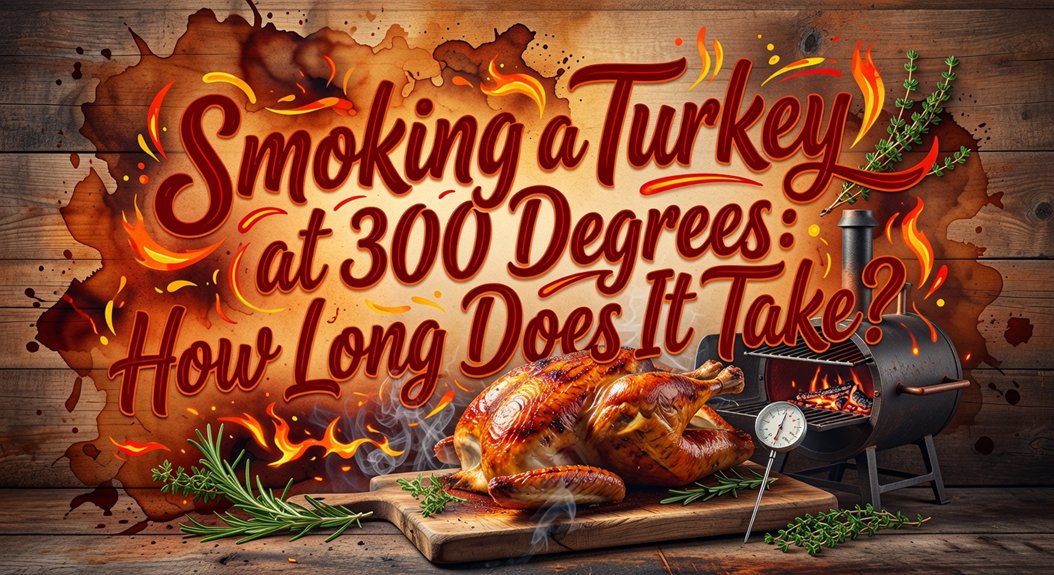
At 300 °F your turkey will need roughly 15 minutes per pound, so a 12‑lb bird finishes in about three hours, give or take a few minutes for the skin to crisp and the internal temperature to reach 165 °F in the breast and 175 °F in the thigh. Start with a 90‑minute low‑temp phase to lift the bird out of the danger zone and set up a stable smoker temperature with a sealed draft and thin blue plume. Keep a probe handy, check the meat every 30 minutes, and let it rest under foil for 20‑30 minutes before carving—more tips await if you keep going.
Prepare the Turkey for a Fast 300 °F Smoke
First, give the turkey a quick rinse of the brine, then pat it dry with paper towels until every surface is bone‑dry; this removes excess moisture, lets the butter rub cling, and sets the stage for a crisp, golden skin when you fire the smoker to 300 °F. Your brining technique has already infused the meat, so now you focus on a flawless finish. After the rinse, use paper towels to scrub the cavity and exterior, extracting any lingering liquid. Then, set the bird exposed on a rack in the refrigerator for 12–24 hours—this refrigerator drying step pulls moisture from under the skin, ensuring the rub adheres and the skin will crackle. Like smoking a brisket, precise temperature control ensures the bird cooks evenly and develops optimal texture. When you’re ready, the turkey will be primed for a rapid, smoky roast. A dry rub also helps retain moisture during cooking.
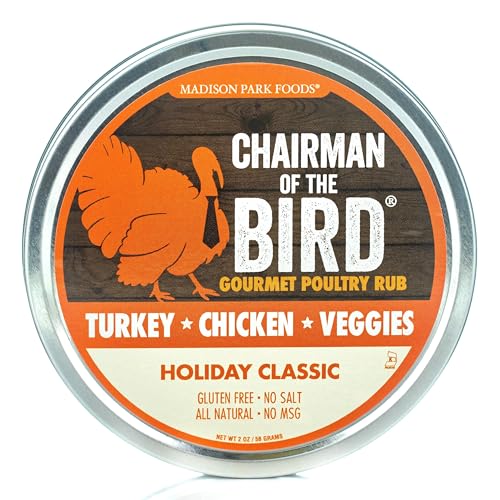
Original Salt-Free Chairman Blend – Gourmet Savory and Citrus Turkey Rub Seasoning – Sells Out Every Thanksgiving – Simple Recipe, Trusted by Home Cooks, Chefs & First Timers – Delicious No-Stress Turkey – All Natural, No Garlic or MSG, Made in USA

Features a blend of natural flavors and seasonings, including garlic and rosemary

ALL-IN-ONE TURKEY RUB FOR ROASTING, GRILLING, SMOKING & FRYING. A premium turkey dry rub ideal for whole turkeys, breasts, or legs. Apply before cooking to lock in moisture and create a flavorful crust. Great in kitchen ovens or on backyard grills.
300‑°F Turkey Cooking Time: Quick Reference
A quick‑reference guide shows that at 300 °F a turkey cooks in roughly 15 minutes per pound, meaning a 17‑pound bird will finish in just under four hours. You’ll notice the consistency of cook hinges on a steady smoker temperature; any wobble can stretch that timeline. Keep an eye on the internal heat—165 °F for breast, 175 °F for thigh—using a probe thermometer, and remember that external weather can whisper its effects, especially if wind or cold pushes your smoker’s heat down. Adjust by adding a water pan or tightening the lid, and begin basting around two‑thirds through. Once you hit target temps, let the bird rest under foil for 20‑30 minutes to let carry‑over cooking finish the job. Dry brine helps the meat retain moisture and enhances flavor. For best results, consider smoking breast side down to allow juices to keep the breast moist throughout the cooking process.
Set Up Your Smoker for a Stable 300 °F Temperature
You’ll want to coax your smoker into a calm, steady 300 °F before the turkey ever sees the heat, and the secret lies in marrying proper fan placement with a well‑tuned temperature controller. First, connect the fan to the intake via the adapter, then close the bottom vents to seal the draft. Mount the adapter on the appropriate vent, ensuring the controller can modulate oxygen flow with its probe. Verify smoking chamber insulation; any gaps will steal heat and cause wobble. Adjust vent configurations by tinkering with intake dampers—open just enough for a thin blue plume, then fine‑tune until the controller holds ±1 °F. Keep the exhaust open for steady draft, and run a quick sensor cleaning to guarantee accurate readings before you greet the turkey. Before your first cook, season your smoker grates with high smoke point oil to create a protective, non-stick surface that aids in cooking and prevents rust. If the temperature sensor is stuck at 300 °F, replace the safety rollout limit switch to restore proper heating.

HARDWOOD BOOST: Electric smoker lets you easily add wood chips or pellets for bolder flavor cues
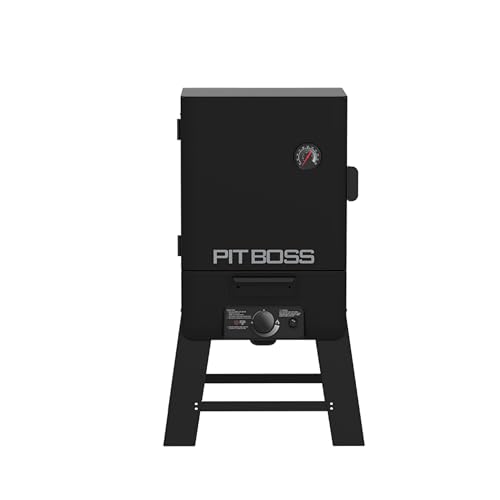
ROOM FOR ONE MORE: This electric smoker has 880 sq in of total cooking surface and six adjustable racks

【Wide temperature range.】The range for KT8230 is -22~572℉/-30~300℃,This is a relay temperature controller, There is no voltage output directly, you need to connect additional power supply for the load, then it can be set by differential (1~80℃/1~120℉) to turn on/off the load, it is like a switch.
Why Start With a 90‑Minute Low‑Temp Phase?
Because the turkey must zip through the 40 °F‑140 °F danger zone in under four hours, a 90‑minute low‑temp stage at 300 °F gives you just enough gentle heat to lift the bird out of the unsafe range without lingering. You’re honoring food safety requirements while coaxing the meat toward a tender, juicy state. The modest heat eases the skin into a delicate glaze, preventing rubbery or leathery texture and setting the stage for a crisp, golden finish when you crank the smoker up. Smoke swirls into the pores, imparting a whisper of flavor before the high‑temp surge renders the skin. This brief, mellow interlude balances pathogen reduction, even heat, and skin texture enhancement in one graceful motion. For optimal juiciness, aim for a pull temperature of 157 °F before resting.

Large Display: Features a 2 3/8 inches large face for clear visibility; Stem length of 2 7/8 inches enhances accessibility; Enables easy classification of food temperatures in various cooking environments

These BBQ Grill Smoker Thermometer perfectly fits for Oklahoma Joe's smokers and most smokers or grills with 13/16 inch opening or hole.

【Dual Safe Probes for Multi-Use】Vuwwey meat thermometer probe is great for meat, liquids, oil frying, baking, candy making, kitchen & outdoors. The wired probe is ideal for monitoring air fryers, ovens, grills, BBQ, smokers. It's your hands-free assistant: set the alarm, stick it on, and step away from the heat
Calculate Cooking Time by Weight at 300 °F
At 300 °F the turkey’s cooking time scales neatly with its weight, letting you estimate the finish line with a simple per‑pound rule. You’ll find the recommended cooking time hovers around 18‑22 minutes per pound for an unstuffed bird, a perfect spot that balances flavor and tenderness. For most home smokers, the ideal turkey weight range lies between 12 and 20 pounds; a 14‑pound bird will finish in roughly 4‑4½ hours, while a 10‑pound bird wraps up in about 3‑3¼ hours. Remember, convection air circulates evenly, so you can trust the per‑pound math without constantly checking. Just set your timer, let the smoke swirl, and let the weight‑based calculation guide you to a perfectly timed feast. After smoking, allow the turkey to rest for 10-15 minutes before carving to retain its juices. Spatchcocking can reduce the cooking time by about 30‑40 percent.
Monitor Internal Temp for Perfect Doneness
Your weight‑based timer gets you close, but the real finish line is the thermometer’s whisper. Slide an instant‑read probe into the thickest part of the breast, steering clear of bone, and repeat for the innermost thigh and wing joint. Master thermometer placement techniques by inserting near the bone then retracting slightly for a true reading. Check every half hour; when the breast hits 160 °F and the thigh climbs toward 180 °F, you’re in the sweet spot. Resist the urge to chase a pop‑up timer—trust the probe, not the clock. This vigilance sidesteps overcooking issues, keeping the meat juicy, the skin crisp, and the juices clear before you carve. For even more accurate readings, use the Fireboard Spark, an instant‑read thermometer with fast measurement speeds and 0.7°F accuracy. Let the meat rest 15 to 20 minutes before carving to retain juices and ensure optimal texture and flavor.
Rest, Crisp the Skin, and Carve Your 300 °F Turkey
A perfect 300 °F turkey deserves a brief, patient pause before you tackle the next steps. Let it rest on a sturdy board for thirty minutes, allowing carry‑over heat to finish the cooking and the juices to settle for maximum moisture retention. While it rests, the skin will firm up, and a quick temperature bump to 350 °F at the end will coax a golden, crisp crust without burning. After the rest, check that thighs have hit 170 °F, then carve. Separate thighs and wings, then slice the breast against the grain for tender, even slicing. The crisp skin will contrast delightfully with the juicy meat, delivering a feast that’s both beautiful and delicious. Smoke at 225 °F for the first two hours to develop deep flavor before raising the temperature.
Troubleshoot Common Issues When Smoking at 300 °F
When you fire up the smoker at 300 °F, the turkey’s shape quickly turns the kitchen into a battlefield of heat gradients, leaving the thin breast tail overcooked while the dense thigh lags behind. To troubleshoot, first Maximize heat penetration by inserting probes in the breast’s thickest point and the thigh’s core; watch both zones and adjust vents to flatten the gradient. Next, manage moisture retention with butter basting or a light brine injection, especially for the low‑fat breast that dries in seconds once it hits 157°F. Keep a 30‑minute rest period so carryover cooking lifts the breast to a safe 165°F without over‑drying. Finally, use a wireless probe system to monitor multiple spots continuously, preventing the single‑point illusion that leads to uneven browning and soggy skin. Brining denatures proteins to lock in moisture during cooking. Using a spatchcocked or butterflied turkey reduces overall cook time compared to a whole bird due to increased surface area and more even heat exposure.