Start by removing the silver‑skin membrane and trimming any fat thicker than ¼ inch, then coat the ribs with a thin layer of mustard or Worcestershire and season with equal parts kosher salt and coarse pepper, adding garlic and onion powder if you like. Smoke at a steady 250 °F (±5 °F) using hickory or post oak, adding wood chunks for the first three hours to build a firm bark. Wrap in foil with a butter‑garlic‑onion‑Worcestershire mix, continue until the internal temperature hits 207 °F, then rest 10‑15 minutes before slicing. Continue for more details on timing, spritzing, and troubleshooting.
Prepare Beef Ribs for a 250°F Smoke
Before you fire up the smoker, trim the ribs: pull off the silver‑skin membrane with a paper towel for grip, then cut away any hard fat caps thicker than ¼ inch while leaving thin fat layers intact for moisture. Use proper trimming techniques to remove excess fat and separate oversized slabs that won’t fit your chamber. Pat the surface dry so the binder adheres. Lightly coat the meat with yellow mustard or Worcestershire sauce, then apply the ideal rub ingredients: a 50/50 blend of kosher salt and coarse black pepper, plus optional garlic and onion powders,one tablespoon each per rack). Press the rub into every crevice, ensuring even coverage. Using a binder like mustard helps the seasoning adhere and creates better bark development on your ribs. Let the ribs rest 30–60 minutes at room temperature before loading into the preheated 250 °F smoker. Plate ribs are the ideal cut for smoking due to a larger piece of meat on the bones.
Choose the Right Wood and Smoker Settings for Beef Ribs
After trimming and seasoning, select a wood that complements beef’s robust flavor while maintaining a steady 250 °F chamber. Hickory or post oak provide a strong, steady burn and generate clean wood smoke flavor profiles without overwhelming the meat. For a milder nuance, blend pecan and cherry at a 2:1 ratio; pecan adds nutty sweetness while cherry contributes a subtle fruit hue. If you prefer boldness, mix a small amount of mesquite with oak to keep the proper smoke to meat ratio balanced and avoid bitterness. Load the smoker with a uniform layer of pellets, preheat to 250 °F, and verify that the temperature stays within ±5 °F. Monitor smoke density; adjust airflow to sustain a thin, steady veil rather than thick plumes. Understanding each wood’s burn characteristics helps you maintain consistent temperature and smoke output throughout your cook. This setup guarantees consistent flavor development throughout the cook. Use fruit woods for a milder, slightly fruity flavor that works well with beef.

HICKORY WOOD FIRED FLAVOR: Traeger Hickory Hardwood Pellets are great for naturally enhancing beef, chicken, pork, and veggies with full-bodied, bold flavor. So it should come as no surprise that Hickory’s assertive flavor is one of the most popular choices for classic BBQ cooking.

KINGSFORD CRAFTSMOKE PREMIUM WOOD PELLETS: Introducing Craftsmoke, the premium line of natural hardwood pellets, crafted in small batches for the chef in all of us; pack may vary

Hickory BBQ Flavor: Take your grilling to another level by using this pack of 2 hickory BBQ pellets which provides a robust, smoky, and tasty finish to any red meats, poultry, or vegetable dishes
Schedule the 3‑Hour Crust, 2‑Hour Wrap, and Final Baste for Beef Ribs
If you start the 3‑hour crust at 250 °F, the ribs will develop a firm smoke‑infused bark while the internal temperature climbs to 180‑190 °F, indicating the first stage of collagen breakdown. Place the ribs directly on the grates, use pecan or cherry wood, and monitor smoking temperatures every 30 minutes to improve smoke penetration. After three hours, remove the ribs, brush a butter‑garlic‑onion‑Worcestershire mixture onto the meat, and wrap tightly in double‑layer foil. Return the foil to the smoker; the internal temperature should rise to 195‑200 °F over the next two hours. When the wrap phase ends, reveal, apply a final baste of the same mixture, and let the ribs rest 10‑15 minutes before slicing to allow juices to redistribute. The membrane is left on the ribs to prevent them from falling apart during cooking.


MATERIALS: Made from 100% natural seasoned hardwood with no unwanted byproducts, our wood chunks burn cleanly and evenly.

Pecan BBQ Smoking Wood Chunks. Ignites quickly and combusts completely to create a delicate smokey flavor. The essential fuel for your best BBQ yet - perfect for Memorial Day kick-offs, Father’s Day gifting, 4th of July feasts, and every backyard celebration through the height of grilling season.
Why You Want Your Ribs at 207°F (and How to Keep Them There)
Because collagen only fully hydrolyzes around 203 °F, holding beef ribs at 207 °F locks in the maximum tenderness while preventing the moisture loss that begins just above 205 °F. You target 207 °F to capture the narrow 195‑205 °F window where collagen conversion peaks and intramuscular fat renders fully. At this point, the probe slides with weightless resistance, confirming the meat’s gelatinous state. To keep the ribs there, set the smoker to 250 °F, monitor the internal probe, and trigger an alarm at 205 °F. Once the alarm sounds, maintain the target by briefly raising the heat, then stabilize the internal temperature at 207 °F. This approach maintains ideal moisture level and optimizes collagen conversion without over‑cooking. Collagen begins softening around 160°F but doesn’t fully hydrolyze until 203°F. Like smoking brisket with indirect heat, maintaining consistent temperature throughout the cook ensures even collagen breakdown and optimal texture.
How Thickness, Heat, and Rib Type Affect Cook Time
You’ll find that rib thickness, smoker temperature, and rib type each play a distinct role in determining cook time. Thicker ribs increase density, so a 1‑inch slab reaches 203 °F in ~5 h at 250 °F, while a 2‑inch slab needs ~10 h. Back ribs, having less meat, finish in as little as 3 h, whereas short ribs demand 6‑8 h at 225‑250 °F. Heat shifts the timeline: raising the smoker to 275‑300 °F can cut beef rib time to 1.5‑2.5 h, but lower 225 °F extends short‑rib cooking to 8 h for reduced shrinkage. Ideal cooking temperatures (203‑205 °F) serve as meat doneness indicators, ensuring gelatinization regardless of thickness or type. Wrapping ribs during the cook, similar to the butcher paper technique used in brisket smoking, helps maintain moisture and develop flavor. Adjust for external conditions—wind, ambient temperature—to fine‑tune the schedule. The legendary Muellers pitmaster famously used a 225 °F low‑and‑slow method to achieve perfect tenderness.

Smoker Rib Rack with Even Cooking Design – Engineered to evenly distribute heat and smoke on both sides of the ribs, this rack ensures each piece of meat is perfectly cooked. The sauce is sealed in, enhancing flavor with every bite.
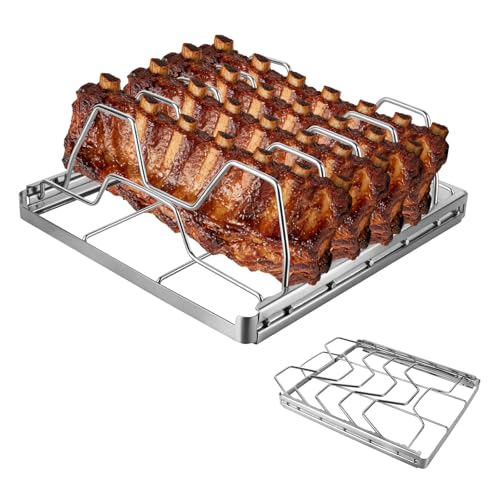
Foldable Roasting Rack: Our rib rack features a foldable design that supports quick setup. Just pull up the support brackets and it will be ready for use in seconds. Folding is just as fast and easy simply press down on each bracket to collapse it. When folded, this roast rack measures just 10.75 x 8.58 x 0.98 inches. Its compact size makes it easy to carry so you can bring outdoor grilling anywhere anytime. Thanks to its slim folded profile, the grill rack easily fits into drawers cabinets or your car trunk, saving valuable storage space

PREMIUM MATERIALS - Cook or grill for years to come and never worry about rust or corrosion with an ultra-durable rib rack made out of stainless steel.
Spritz, Wrap, and Sauce on a Minute‑by‑Minute Timeline
A typical 250 °F smoke runs on a minute‑by‑minute schedule: start with an undisturbed two‑hour period for the bark to set, then spritz once with cider vinegar at the two‑hour mark if the surface feels dry. After the first spritz, begin a 30‑minute spritz cycle until the internal temperature reaches 170 °F, then wrap the ribs in heavy‑duty foil. The wrap accelerates rendering; keep the smoker at 250 °F and monitor until the internal hits 199‑205 °F. Unwrap, apply your favorite BBQ sauce, and let it set for ten minutes to form a glaze. Before smoking, remove the membrane and apply a dry rub to enhance flavor and tenderness. Continue spritzing every 45‑60 minutes after the wrap phase to maintain moisture while preserving crust, checking for tenderness at 200 °F+. Cooking at 250°F typically requires about 4 hours for back ribs and 6 hours for short ribs.
Troubleshoot Dry Ribs, Over‑cooking, and Flavor Issues
After the spritz‑wrap‑sauce routine, the most common complaints are ribs that feel dry, are over‑cooked, or lack depth of flavor. To fix dryness, tighten moisture management: start spritzing after the first hour, repeat every 30 minutes, and wrap in foil once the meat hits 160°F to trap steam. For over‑cooking, enforce strict temperature monitoring; keep the smoker within ±5°F of 250°F, adjust vents promptly, and avoid lid openings that cause heat loss. Use a probe placed in the thickest meat, never on bone, to track internal temperature and pull at 203‑210°F. Flavor loss often stems from inconsistent smoke; add wood chunks regularly for the first three hours and maintain a steady smoke flow. Resting the ribs for 20-30 minutes after smoking helps retain juiciness and ensures optimal tenderness. These steps guarantee tender, properly cooked ribs with robust flavor. Beef back ribs have a treasure of intercostal meat that adds extra juiciness when properly managed.