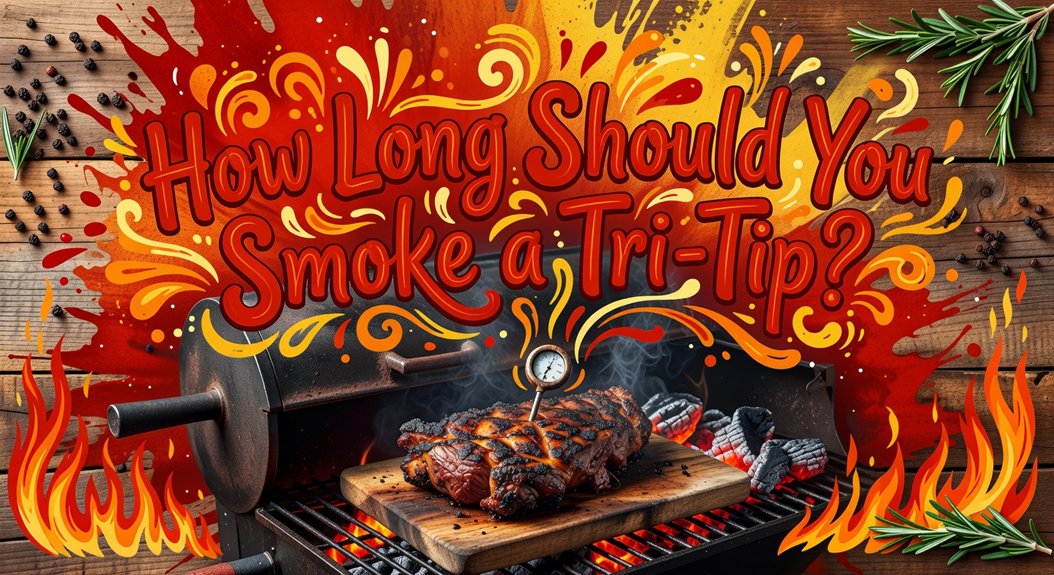
Set your smoker to a steady 225 °F and plan on roughly 30 minutes per pound. A 3‑lb tri‑tip will need about 1½ hours, while a 5‑lb piece takes about 2½ hours; adjust for thickness and keep the temperature consistent. Pull the meat at 125 °F for medium‑rare, then let it rest 15 minutes while it climbs to 130‑135 °F. A quick 450 °F sear for 2‑3 minutes per side finishes it with a perfect crust, and the next sections show how to fine‑tune timing, temperature, and wrapping choices.
What’s the Best Smoker Temperature for Tri‑Tip?
What’s the ideal smoker temperature for tri‑tip? You’ll find 225 °F to be the sweet spot for low‑and‑slow cooking, delivering a deep smoke ring and tender texture. Preheat the smoker to 225 °F for 15‑30 minutes with the lid closed, then settle into indirect heat settings that keep the chamber steady. Consistent temperature preservation is essential; avoid dropping below 225 °F or climbing past 250 °F, as fluctuations can ruin the bark and cause uneven doneness. Use wood pellets or chips to sustain the smoke, and monitor the internal heat, aiming for 120‑125 °F before a final sear. This range balances flavor development with connective‑tissue breakdown, giving you a perfectly smoked tri‑tip. After smoking, allow the meat to rest for about 10 minutes to redistribute juices before slicing thinly against the grain for optimal tenderness and flavor. Trim excess fat before applying the rub to ensure even smoke penetration.

SIGNATURE BLEND WOOD FIRED FLAVOR: The flavors of hickory, maple, and cherry hardwoods combine for in our Traeger Signature Blend Hardwood Pellets for flavor that can take on just about anything you cook; From classic BBQ meats, to fish and veggies, this versatile blend gives you full-bodied flavor you'll go back to time and time again

A blend of cherry and oak hardwood to infuse food with a mild smoky flavor

HICKORY WOOD FIRED FLAVOR: Traeger Hickory Hardwood Pellets are great for naturally enhancing beef, chicken, pork, and veggies with full-bodied, bold flavor. So it should come as no surprise that Hickory’s assertive flavor is one of the most popular choices for classic BBQ cooking.
How Long to Smoke a 3‑5 lb Tri‑Tip at 225 °F
How long should you smoke a 3‑5 lb tri‑tip at 225 °F? You’ll need roughly 30 minutes per pound, so a 3‑lb piece takes about 90 minutes and a 5‑lb piece about 150 minutes. Adjust for thickness and smoker stability; a thicker cut may add ten to fifteen minutes. While time guides you, monitor internal temperature to protect flavor profiles and meat quality considerations. Aim to pull the roast 5‑10 °F before your target doneness, then factor in a 5‑6‑minute sear and a 15‑minute rest. The total process, from smoker entry to serving, spans roughly 2 hours 20 minutes for a standard tri‑tip, ensuring a juicy, evenly cooked result that showcases the meat’s natural flavor. Just as with other premium cuts, resting the meat after cooking maintains juiciness and allows the internal temperature to stabilize for optimal results. Tri tip is most popular in Western America, with possible origin ties to California.


Elevate your steak & tri tip: Perfectly balanced for santa maria-style bbq, this seasoning brings out the rich, smoky flavors of your favorite cuts.
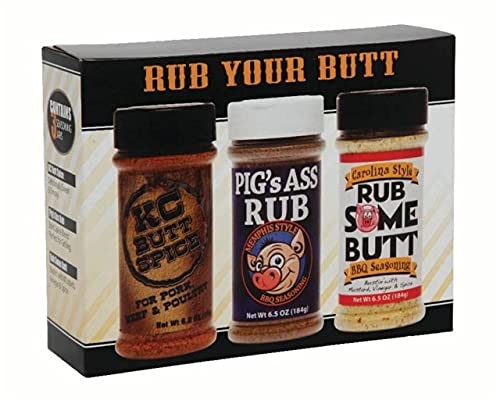
KC Butt Spice, Pig, s Ass Rub Memphis Style
Internal Temperature Milestones During the Smoke Phase
When the tri‑tip hits the smoker, its internal temperature follows a predictable curve that lets you gauge progress and calibrate strategy. At 180 °F you’ll see a slow climb, roughly one hour per pound, so a 2.5‑lb piece reaches about 135 °F after 2.5 hours—your first target temperature for smoke‑flavor depth. Raising the heat to 225 °F accelerates the rise; the meat hits 160 °F in about two hours, then stalls around 160‑165 °F while the bark forms. A brief wrap can drop the reading to 158 °F, after which the temperature rebounds, adding roughly two more hours to hit 196 °F, the final target before a finish. Use proper equipment—an accurate probe, a reliable smoker, and a Thermapen ONE—to monitor each milestone and stay within the 25 °F alarm offset. This analytical approach guarantees you hit each temperature checkpoint without overcooking. After removing your tri-tip from the smoker, allow at least one hour rest to let the juices redistribute throughout the meat. Smoking at 250°F yields a uniform pinkness throughout the meat.
When to Pull the Tri‑Tip for Medium‑Rare Perfection
After those temperature milestones, you’ll know exactly when to pull the tri‑tip for a perfect medium‑rare. Your pull window temperature sits between 125 °F and 130 °F internal, but aim for the lower end—125 °F—so the 5‑10 °F carry‑over during rest lands you at the classic 130‑135 °F medium‑rare zone. Use a pull point prediction based on smoker heat and weight: at 225 °F, a 3‑4 lb piece reaches 125 °F after roughly 1.5‑2 hours, while a 1.7 lb tip hits it in 30‑45 minutes. Insert the probe into the thickest section, watch the needle, and pull as soon as it dips into the target range. This precise timing prevents overshoot and guarantees the juicy, pink center you crave. Resting the steak after cooking allows the internal temperature to rise while the juices redistribute throughout the meat, ensuring maximum tenderness and flavor. Santa Maria style grilling often uses hickory or mesquite pellets for the most smoke flavor.
Searing Methods, Final Temperatures, and How to Keep the Tri‑Tip Juicy
Even before the tri‑tip hits the searing surface, its moisture and texture hinge on the smoker’s steady 220‑225 °F environment, the brief internal‑temperature plateau of 110‑125 °F, and the subsequent high‑heat finish that creates a Maillard crust while preserving a pink, juicy core. During smoke, maintain 225 °F, use a water pan, and choose oak or pecan to promote smoke ring formation and moisturizing tri tip. When the internal read hits 115 °F, preheat a cast‑iron skillet with butter or a grill to 450 °F. Sear 2‑3 minutes per side, or 4‑5 minutes on a grill, aiming for a final 130‑135 °F. Wrap briefly in foil if needed, then rest. RFX MEAT provides real‑time temperature alerts so you can pull the meat at the perfect plateau.

Durable Cast Iron Construction: Made from cast iron for long-lasting use and even heat distribution.

Quality Cast Iron Frying Pan: The Lodge Seasoned Cast Iron Skillet is loved for its great heat retention, incredible durability, and ability to make almost any recipe you dream up

Versatile Cooking Skillet: The Lodge Cast Iron Skillet is a multipurpose, everyday cooking pan that excels at searing, sautéing, baking, frying, and campfire meals
Why and How Long Should You Rest Your Tri‑Tip?
The sear locks in the crust, but the real magic happens during the rest, where the meat’s internal temperature continues to rise and the juices migrate back into the fibers. You should aim for a suitable resting duration of at least 15 minutes, because that minimum guarantees basic juiciness maintenance and tenderness. A 20‑25‑minute rest lets the temperature climb 10‑12 °F, moving a tri‑tip from 120 °F to a perfect medium‑rare 130‑135 °F. If you foil‑cover the roast, extend the rest to 30 minutes‑one hour for deeper moisture redistribution. Use a thermometer to pull the meat 7‑10 °F below target, then let carry‑over cooking finish the job. This disciplined pause prevents dryness, confirms even flavor, and yields a melt‑in‑your‑mouth slice. The low‑and‑slow method at 180F also contributes to a deeper flavor profile, similar to how internal temperature affects the final texture and tenderness of smoked meats.
Adjusting Tri‑Tip Cook Time for 250 °F vs 225 °F
Set your smoker to 250 °F and you’ll shave roughly 30‑45 minutes off the 225 °F timeline, because the higher temperature drives heat into the meat faster while still allowing enough smoke absorption for flavor. At 250 °F, monitor the internal reading and pull the tri‑tip at about 125 °F for medium‑rare; carry‑over will lift it into the 130‑135 °F window during a 15‑20‑minute rest. In the smoker temperature range of 225‑250 °F, the 225 °F plan requires 30 minutes per pound, yielding a 2‑hour total for a 2.5‑lb piece, whereas 250 °F cuts that to roughly 1.5‑hours. Adjust resting time to compensate for the faster rise: a 10‑minute rest adds 7‑10 °F, while a 20‑minute rest adds 10‑12 °F, ensuring your tri‑tip reaches the target doneness without overcooking. Use indirect heat to prevent flare-ups and ensure even cooking across all surfaces of the meat. Leave space between each piece of meat to prevent them from cooking like a larger roast.
Using Foil or Butcher Paper With Tri‑Tip: How It Affects Smoking Time
After lowering the smoker to 250 °F, you’ll notice the next decision point: whether to wrap the tri‑tip in foil or butcher paper. Foil conducts heat efficiently, shaves about two hours off the cook—roughly five hours total—by trapping steam and pushing through the stall. It also seals in juices, giving a tender, moist bite, but the barrier blocks smoke so the bark softens and the flavor profile flattens. Butcher paper, by contrast, lets smoke penetrate, preserving a crisp crust and delivering stronger, smoky notes. The paper’s breathability slows temperature rise, extending the cook to about seven hours, yet it still absorbs excess fat, preventing overcooking. These cooking technique variations create notable taste differences: foil yields juicier meat with milder smoke, while paper produces a firmer bark and richer, smoky flavor. The tight seal of foil locks in moisture, which is especially beneficial for leaner cuts. Monitoring the internal temperature with a thermometer throughout the wrapping phase ensures you achieve the desired tenderness without overcooking the meat.
Fix Common Timing Problems (Over‑/Under‑Cooking, Dryness)
When you notice the internal thermometer creeping past 125 °F, pull the tri‑tip immediately to halt overcooking; this quick action, combined with a 15‑minute rest and a brief high‑heat sear, locks in juiciness while letting carry‑over heat finish the job. To curb baseline temperature fluctuations, set your smoker’s controller to a tight 220‑250 °F band and use a digital probe that alerts at each 2‑degree rise. Adjust for tri tip thickness variations by placing the probe in the thickest section; a 2‑inch cut may need an extra 10‑15 minutes, while a 1‑inch slice reaches target faster. If you see early signs of dryness, add a water pan to raise ambient humidity and keep the exterior moist. After smoking, allow the tri‑tip to rest for at least 15 minutes so that connective tissues break down fully, ensuring maximum tenderness. Monitor continuously, and you’ll avoid both over‑ and under‑cooking while preserving flavor and tenderness. Use a low‑and‑slow smoking technique to achieve a brisket‑like texture in the tri‑tip.
Quick Reference Chart: Smoke Time, Internal Temp, and Sear Guidelines
Keeping the internal temperature in check lets you move straight into a concise reference that aligns smoke time, pull temperature, and sear method. For a 2‑3 lb tri‑tip, set the smoker at 225‑240 °F and aim for a 2‑hour smoke to reach 120 °F before searing; this preserves smoke flavor quality while minimizing smoke contamination avoidance. If you prefer a gentler 220 °F cook, extend to 3 hours to hit the same 120 °F pull point. After pulling, sear at 375‑425 °F for 2‑3 minutes per side, then rest 10‑30 minutes, allowing carry‑over heat to lift the interior to 130‑135 °F for medium‑rare. Adjust smoke time proportionally—30‑40 minutes per pound—if your piece deviates from the 2‑3 lb range. For optimal accuracy when monitoring these critical temperature points, consider using an instant-read thermometer which provides quick feedback without prolonged meat insertion. This chart keeps you precise, analytical, and confidently on target. Using a precise thermometer is essential to ensure the meat reaches the desired internal temperature without overcooking.