Pre‑heat your grill on high for 10‑15 minutes to expand the metal and loosen rust, then spray a 1:1 white‑vinegar‑to‑water solution and let it sit a few minutes (or soak overnight). Scrub the softened rust with steel‑wool pads, a 180‑grit sandpaper, or a flat‑top scraper, applying steady pressure and a thin oil film to keep the surface cool. Rinse thoroughly, dry completely, and season with high‑smoke‑point oil; the next sections reveal deeper troubleshooting and maintenance tips.
Why Rust on Your Flat‑Top Grill Matters
One of the first things you’ll notice is that rust makes the grill look unsightly, with flaky, discolored patches that signal neglect and create permanent pockmarks. This loss of aesthetic appeal is more than cosmetic; the corroded surface introduces health hazards. Rust flakes detach and mix with food, delivering iron particles and oxidized metal that can be ingested. Pitted areas trap bacteria, increasing contamination risk. In addition, the metallic taste from rust‑tainted grill alters flavor, compromising culinary quality. As oxidation deepens, the metal’s structural integrity weakens, accelerating pitting and reducing heat distribution uniformity. For light rust and carbonization, you can use chemical-free cleaning methods to restore your grill’s surface. Ignoring these signs shortens the griddle’s lifespan and elevates both visual degradation and potential health liabilities. Proper seasoning can create a protective barrier that mitigates rust formation.
Gather Tools for Flat‑Top Grill Rust Removal
Because rust won’t disappear on its own, you’ll need a specific set of tools before you begin. Use the Blackstone Griddle Top Restoration Kit, which supplies an 8‑ounce rust‑removing liquid and two abrasive applicator pads; add a heavy‑duty stainless‑steel scrubber or steel wool for manual agitation; keep a flat‑top grill scraper—such as the Chef Master Extra Length Heavy Duty Griddle Scraper—ready for larger patches; have fine‑grit (180‑grit) sandpaper or a pumice brick on hand for stubborn edges; and finish with a degreaser like Dawn dish soap or Power Wash, plus microfiber towels for wiping. Select low smoke point oils for post‑cleaning seasoning to avoid excess vapor when the grill reaches electrical heat sources. Guarantee all tools are dry, non‑reactive, and stored separately to prevent cross‑contamination. For additional rust prevention, consider using a grill cover to protect your flat-top grill when not in use. Follow the manufacturer’s safety guidelines, wearing gloves and eye protection while handling abrasive pads and chemicals. This systematic inventory eliminates guesswork and prepares you for efficient rust removal. 3M 46CC Scotch‑Brite pads are ideal for polishing the surface after rust removal.
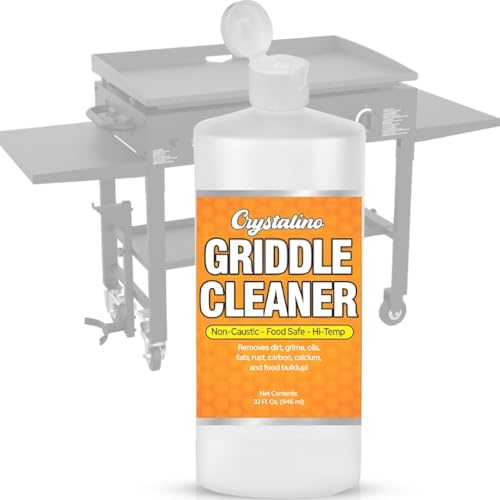
Crystalino Clean: This High-Temp Griddle Cleaner is the ideal Flat Grill Cleaner, Griddle Cleaner for Flat Top, and Blackstone Cleaner for Griddle. Leaves grills clean & ready for more grilling! Even works as Blackstone grill cleaner for rust

Extend The Life Of Your Griddle: By using AWEASROY's griddle cleaning kit before and after cooking, it prevents your griddle from flaking and getting damaged. Top this with proper re-seasoning for a long lasting use
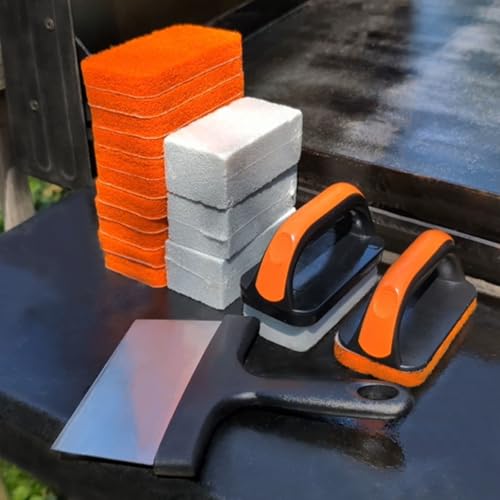
【19-in-1 Griddle Cleaning Kit for Blackstone】Mavipromax griddle cleaning kit is a great griddle accessory for flat top maintenance. Includs 1 grill scraper, 4 griddle rust remover stones, 12 scouring pads, 2 ergonomic handles. It’s an ideal cleaning buddy for anyone interested in grilling, capable of covering all griddle restoration and daily deep cleaning needs
Pre‑Heat the Grill to Loosen Stubborn Rust
When you pre‑heat the flat‑top grill on high for 10‑15 minutes, the metal expands just enough to crack and loosen stubborn rust particles, making subsequent scrubbing far more efficient. Initiate quick heat activation by turning the burner to its maximum setting, keeping the lid open for ventilation. Observe the grill surface as metal thermal expansion creates micro‑gaps between the base metal and rust layers, allowing trapped moisture to vaporize into steam and further separate the corrosion. Maintain the temperature for the full interval; the heat reduces the mechanical force needed for brushing. After heating, let the grill cool briefly before handling, then proceed to the scrubbing stage with a sturdy brush while the grate remains warm. For cast iron grates, applying cooking oil with high smoke point after rust removal helps prevent future corrosion. Food debris can accelerate rust formation, so removing it before heating helps achieve a cleaner surface.
Apply Vinegar‑Based Treatments (and Alternatives) for Quick Rust Dissolution
If you want rust to dissolve quickly, start by spraying a 1:1 white‑vinegar‑to‑water mixture directly onto the griddle and let it sit for a few minutes. The acetic acid attacks iron oxide, and the vinegar based effectiveness hinges on the chemical reaction dynamics that convert rust into soluble salts. For heavier spots, re‑spray and allow another three‑minute dwell, then wipe the sludge away. You can also soak the surface overnight in the same solution, using a plastic bin or paper towels to keep the liquid in contact. Alternatives include a 1:1 blend of vinegar and Coca‑Cola, leveraging phosphoric acid to accelerate breakdown, or a paste of baking soda and vinegar that fizzes for localized treatment. For tough rust damage, consider non-toxic commercial rust removers designed for cooking surfaces as an alternative approach. Rinse thoroughly, dry, and proceed to seasoning. Proper storage is essential to prevent future rust, so keep the griddle dry and oiled when not in use.

EVAPO-RUST RUST REMOVER: Evapo-Rust effortlessly removes rust from automotive parts, hardware, tools, cookware, and antiques without any scrubbing or sanding.

WHITE-OX RUST REMR GAL

One 16-fluid-ounce bottle of Distilled White Vinegar
Scrub Flat‑Top Grill Rust Efficiently With Pads, Wool, or Sandpaper
A sturdy steel wool pad or 180‑grit sandpaper will remove the softened rust quickly once the grill has been heated and cooled. After cooling, you’ll scrape the surface with a metal scraper until it feels smooth. Then you’ll select a scrubbing tool: a green scouring pad, a steel‑wool pad, or 180‑grit wet‑or‑dry sandpaper. Apply a thin layer of cooking oil to the pad, then work it across the surface using steady pressure, focusing on edges and curves where heat didn’t reach. Use the sandpaper with water to keep the grain cool and to prevent gouging. Continue until the rust disappears and the oil wipes clean, thereby protect grill surface and regulate oil application for even coverage. Heat‑resistant gloves should be worn while handling the hot griddle to avoid burns.

[ You Will Receied ] 1pcs steel wool scrubber and 4pcs steel cleaning pads for replacement, which are easy to scrubbing stains and grease on kitchen appliances, as well as rust on various pot bottoms, making them shiny like new. In addition, you can use it combination with stainless steel cleaner to achieve better cleaning and improve cleaning efficiency

[ You Will Receied ] 6pcs steel wool cleaning pads for replacement, which are easy to scrubbing stains and grease on kitchen appliances, as well as rust on various pot bottoms, making them shiny like new. In addition, you can use it combination with stainless steel cleaner to achieve better cleaning and improve cleaning efficiency

THREE DISH SCRUBBERS: This pack of Scotch-Brite Stainless Steel Scrubbers includes 3 scrubbers
Rinse, Dry, and Inspect the Surface for Hidden Rust Spots
Even after scrubbing, you must rinse, dry, and inspect the flat‑top to guarantee every rust particle is gone. Begin by adding water to the hot surface on low heat; the steam loosens rust and grime. Apply a soapy rag to stubborn spots, then wipe with warm water until the post rinse appearance shows no discoloration. Remove all soap with a damp paper towel, repeating until corrosion diminishes. Immediately dry using consistent drying techniques: blot the surface with paper towels, then follow with a clean cloth, scraping debris into a grease bucket and wiping repeatedly until no moisture remains. Finally, inspect every corner, edge, and low‑heat area for hidden rust. Use a fine‑grit sandpaper on any lingering spots, confirming a spotless, dry surface before proceeding. Proper maintenance prevents rust buildup that can weaken your grill’s structure and lead to costly repairs. The rusting process is thermodynamically favored as iron seeks a more stable state when exposed to water and oxygen.
Season Your Flat‑Top Grill After Rust Removal With High‑Smoke‑Point Oil
Now that the griddle is dry and inspected, you’ll apply a thin coat of high‑smoke‑point oil while the surface is still warm. Heat the griddle on high for five minutes, then drizzle a measured amount of avocado, peanut, or grapeseed oil—avoid low‑smoke canola. Using a lint‑free cloth, spread the oil evenly across the cooking surface, sides, and edges, ensuring no pooling. Allow the oil to smoke and polymerize for roughly thirty minutes; smoke cessation signals completion. Reduce heat to medium, repeat the thin‑layer process three to five times, letting each coat cool just enough to stay warm. These oil application techniques build a durable polymerized film, enhancing seasoned surface durability and resistance to future rust. Before beginning the seasoning process, ensure your griddle surface is free from grease and buildup by using a professional griddle degreaser for any remaining residue. Seasoning creates a protective bond that prevents air and water access.
Troubleshoot Persistent Rust & Uneven Seasoning on a Flat‑Top Grill
If rust keeps reappearing and the seasoning looks blotchy, you’re dealing with uneven protection and lingering corrosion. First, isolate the affected zones: edges, corners, and any grayish patches indicate deeper oxidation. Heat the griddle to high for 20 minutes, then apply 180‑grit wet‑or‑dry sandpaper with water to abrade the rust. For stubborn spots, spray a 1:1 vinegar‑water solution, let it sit five minutes, and scour with steel wool or a green scouring pad. After removal, dry the surface thoroughly and coat it with a thin layer of high‑smoke‑point oil, heating until it polymerizes. To preserve the oil’s protective layer, apply the oil along the grain of the metal surface to prevent discoloration and ensure even coverage. Implement proper storage practices—keep the grill in a dry, ventilated space and cover it with a breathable lid. Schedule regular maintenance: wipe after each use, re‑oil weekly, and inspect for early rust signs before they spread. Use a metal scraper to remove large debris before applying vinegar and salt.
Maintain a Rust‑Free Flat‑Top Grill With Regular Cleaning & Re‑Seasoning
When rust reappears, the quickest fix is to keep the griddle dry and continuously rebuild its protective layer. You scrape the hot surface with a metal scraper or durable spatula, then wipe with a cloth soaked in 3‑4 Tbsp cooking oil. Avoid water; moisture drives corrosion. After the grill cools, apply a thin oil coat, then repeat the scraping‑oil cycle each use. Schedule a full re‑season every few weeks: heat the griddle, apply 3‑4 coats of canola or vegetable oil, and let each layer smoke until it burns off, totaling 45‑60 minutes. Building a durable, non-stick layer requires heating the oil until it bonds completely to the surface. Store the grill under a quality cover, shielding it from seasonal weather patterns. Choose proper tool selection—metal scraper, oil‑soaked cloth, and heat‑resistant gloves—to guarantee consistent, rust‑free performance. Iron, water, and oxygen naturally cause rust on exposed metal surfaces.