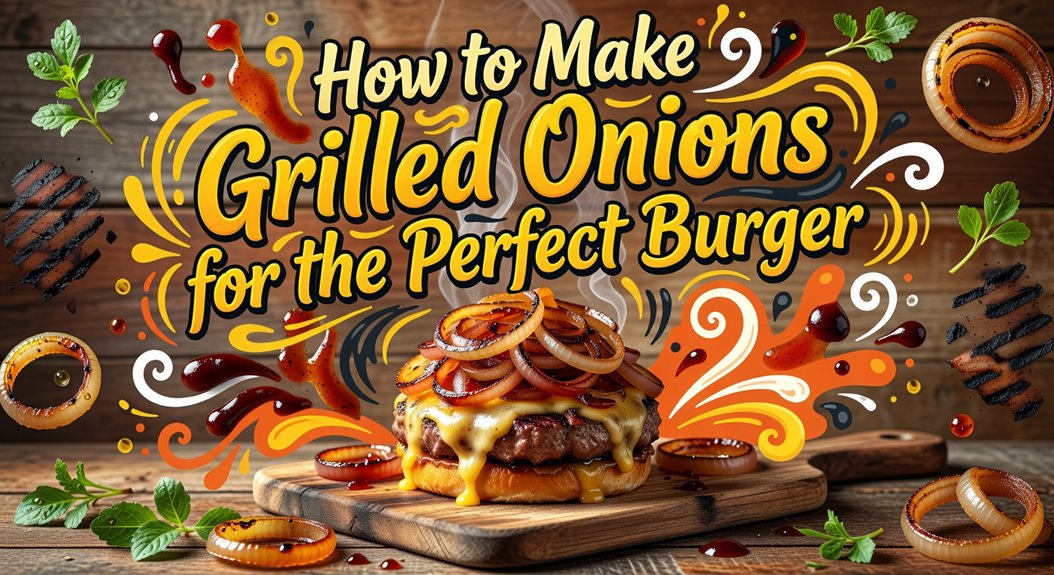
Pick a sweet onion, thin‑slice it, and toss the rings in melted butter, olive oil, and a pinch of salt. Heat a cast‑iron griddle on the grill to 450‑500 °F, spread the onions in a single layer, and cook 5 minutes, stir, then 2 minutes more, and another 2 minutes while you sear the burgers. The low‑and‑slow stovetop caramelization before grilling adds sweet depth, and the final grill gives a smoky char. Keep the onions even, watch the heat, and you’ll get a perfect burger topping—plus more tips ahead.
Choose the Right Onion Type and Slice for Onion‑Topped Burgers
What onion should you pick for your burger? You’ll want a white onion if you need a mild, versatile base that balances the patty without overpowering it. For classic, juicy burgers, choose a yellow onion; its sharp raw bite mellows when grilled, adding sweet‑pungent depth. If you crave a bold, spicy kick, slice red onions thinly and serve them raw to maintain a crisp texture and vivid color. Sweet onions, especially Vidalia, give a light flavor and natural sugars that caramelize quickly, perfect for a subtle jam. Slice uniformly—rings for grilling, very thin cuts for raw zest—to guarantee even cooking and to pair onion with burgers ingredients effectively, achieving the desired texture for every bite. Yellow onions are historically favored for Oklahoma onion burgers. To enhance the flavor of grilled onions, brush them with a mixture such as olive oil, balsamic vinegar, and herbs before cooking.
Caramelize Onions on the Stovetop Before the Grill for Onion‑Topped Burgers
When you caramelize onions on the stovetop before grilling, you create a deep, sweet foundation that elevates any burger topping. Slice two large onions into thin wedges, toss them in melted butter and a splash of olive oil, then add a pinch of salt. Heat the skillet over medium‑low, stirring occasionally for the first 10‑15 minutes until the onions soften. Keep the heat low, stir every minute, and add a tablespoon of water if they begin to stick. After 20 minutes, sprinkle a little brown sugar and a dash of balsamic, then continue cooking until the mixture turns jammy and golden—about 30 minutes total. This slow, low‑heat method enhances caramelized flavor while balance sweetness, ensuring the onions stay sweet but not cloying. For best results, cook your caramelized onions in a single layer to promote even browning and charring. Using olive oil helps achieve a richer browning.
Set Grill Heat, Pan, and Timing for Onion‑Topped Burgers
How do you synchronize grill heat, foil‑pan placement, and timing so the onions stay sweet while the burgers hit perfect doneness? Begin grill preparation by preheating the grill to 450‑500 °F for burgers and setting a cast‑iron griddle on high heat for 10‑15 minutes with the lid closed. Build a 14×18‑inch heavy‑duty foil pan, fold its edges, and set it on a cooler side of the grill. Add sliced onions, drizzle oil, and stir. After 5 minutes, stir again and cook another 2 minutes, then a final 2 minutes while the burgers sear. Grill the patties 3‑5 minutes per side, flip at 4 minutes, and monitor temperature until 155 °F, allowing carryover to 160 °F. This onion pre cooking schedule guarantees caramelized sweetness without overcooking. For optimal results, select lump charcoal or briquettes based on your desired burn time and heat output characteristics. Use a meat thermometer to ensure the internal temperature reaches the safe 160 °F.

【2-in-1 Reversible Grill & Griddle】: Unlock a world of recipes with a single reversible griddle pan. One ribbed side creates perfect sear marks on steaks, chops, fish, chicken, and veggies; flip to the smooth side for pancakes, eggs, bacon, burgers, tortillas, and more. Ideal for indoor stovetop or outdoor BBQ

Double Burner Configuration: The Lodge Double Play Reversible Cast Iron Grill/Griddle covers two burners, offering a generous breakfast grill plate for family breakfasts or meal prep with ease

【SAFE-TO-USE COOKWARE】Crafted with pure iron and oil, just as traditional seasoned cast iron should be — our cookware is free of harmful PFOA and PTFE. We’re dedicated to creating products that keep you and your loved ones safe: every stage of our manufacturing process prioritizes the well-being of our employees and our customers.
Smash and Sear Burgers Directly on the Onions for Onion‑Topped Burgers
Lay the thin‑sliced, salted onions directly on the hot griddle, then drop a meat ball onto each pile and smash it flat with a spatula or press; press the patty thin enough to maximize contact. Cook the first side 3‑4 minutes until edges crisp, then flip. As the beef sears, the onions caramelize, releasing onion‑infused burger juices that soak into the meat, creating onion‑influenced burger flavors. Season both sides with salt, pepper, and a pinch of garlic powder while the juices mingle. Keep the onion piles spaced 3‑4 inches apart for even heat distribution. Finish with a quick sear on the second side, ensuring the patty stays juicy and the onion crust remains crisp. This method locks flavor and texture in every bite. Allowing the burgers to rest briefly after cooking helps redistribute the juices throughout the patty. The original technique was developed during the Depression to stretch meat and add flavor, using the onions to extend beef.
Layer Cheese, Pickles, and Onion Mix for the Perfect Onion‑Topped Burger
After the onions have caramelized under the patty, add the cheese so it melts while the meat finishes cooking. Place a sharp cheddar slice immediately after flipping, or crumble stilton and cover the skillet for a melting dome. While the cheese softens, perform quick pickle preparation: combine white‑wine vinegar, kosher salt, and sugar, then soak thinly sliced red onions for 45 minutes. Assemble using onion layering techniques: first, a creamy avocado pickle base, then the tangy quick‑pickled red onions, followed by the melted cheese. Finish with a mixed onion blend—roasted hatch chilies and sautéed onions—for a Southwest kick. Press the top bun to lock the layers, delivering texture, acidity, and melt‑in‑your‑mouth flavor. The Western Burger adds a smoky barbecue note that complements the caramelized onions. For best results on your grill, ensure your grates are properly oiled with high-temperature cooking oils before grilling to prevent sticking and enhance flavor.
Swap the Bun for a Thick Onion Slice When You’re Cutting Carbs on Onion‑Topped Burgers
Swapping the traditional bun for a thick onion slice slashes carbs while preserving the burger’s signature flavor. A typical onion burger bun packs 24–35 g net carbs and 150–200 calories. Replacing it with a grilled onion slice drops carbs to negligible levels, delivering a clean carb reduction. The onion’s natural sweetness and crunch provide flavor enhancement that mimics the bun’s savory profile without added sugar or fat. Grill the slice until caramelized, then stack your patty, cheese, and toppings. You’ll keep protein intact—most buns contribute only 2–3 g protein—while cutting fat and calories dramatically. This swap aligns with low‑carb strategies, delivering a satisfying bite that feels familiar yet lighter. A 2‑oz serving of grilled onion contains only 3 g fat, further reducing overall fat intake.
Troubleshoot Common Onion‑Grilling Problems for Onion‑Topped Burgers
Ever wondered why your grilled onion slices end up charred, sticky, or falling apart? You’re probably overheating the grill—temperatures above 450 °F char thin slices before they soften, especially overripe onions high in sugar. Preheat to 400‑450 °F, oil the grates and the onions, and turn only once after a 2‑minute sear to achieve desired sear without burning. Avoiding steam condensation means patting onions dry and keeping them at room temperature; cold or frozen pieces stick and contract. Don’t crowd the grill, and use uniform ¼‑inch slices to prevent hot spots and uneven cooking. Flip gently with tongs, resist pressing, and let the onions rest a minute before serving to keep them intact and flavorful. For best results, cover your grilled onions with foil or a lid while resting to retain moisture and preserve their tender texture. Proper handling of raw meat prevents cross‑contamination and ensures safety.