
You load a sealed hopper with uniform wood pellets, then an auger drops them into a pre‑ignited firepot where a fan pushes oxygen, sparking a steady, aromatic flame. A PID‑controlled digital system reads a thermocouple, adjusts the auger and fan, and keeps the temperature exact, letting you smoke, sear, or bake with rich hardwood flavor. The result is a clean, efficient burn that feels like a modern, precise grill—continue for deeper insight into its components and benefits.
What Is a Pellet Grill? Core Components
When you fire up a pellet grill, the hopper quietly stores ten to thirty pounds of fragrant wood pellets—compressed sawdust infused with flavors like hickory or applewood—ready to feed the fire pot. You feel the weight of each pellet as the auger’s spiral rod rotates, its motor humming at a speed you set to match temperature goals. The fire pot ignites with a soft crack, releasing a steady plume of smoke that drifts over the stainless steel grates. Your controller monitors internal heat, while the fan circulates warmth evenly. You keep pellet quality considerations in mind, choosing low‑ash, uniform pellets, and you follow pellet storage requirements—dry, sealed containers away from moisture—to preserve flavor and prevent clumping. The grill’s digital controller automatically adjusts the auger speed to maintain the set temperature. Pellet grills offer superior temperature control compared to traditional charcoal or gas smokers, allowing you to set your desired heat and let the automated system maintain it precisely throughout your cook.
How a Pellet Grill Works: Hopper to Heat Plate
The hopper’s brass‑capped lid clicks shut, sealing a reservoir of wood pellets that will soon become the grill’s heartbeat. You feel the weight of the hopper fuel capacity as the auger motor spins at 2 RPM, nudging pellets through a steel tube into the burn pot. A 200 W igniter sparks, its hot rod glowing while the digital display flashes dots. The induction fan sighs, feeding oxygen to a controlled flame that flickers behind the flame guard. A PID‑tuned controller reads the RTD probe, adjusting the auger and fan to keep the grill insulation features warm yet steady, from 100 °F up to 450 °F. Grease drips into the tray, while the mounting gasket seals the hopper, preventing leaks and ensuring a clean, reliable fire. To achieve optimal results, start on low or smoke mode for proper ignition before adjusting temperature for your recipe. The vertical controller allows precise temperature adjustments for consistent cooking.
Why Wood Pellets Are Essential for a Pellet Grill – Flavor, Efficiency, Eco‑Benefits
If you crave the deep, natural smoky taste that only wood can give, wood pellets become the heart and soul of your pellet grill. Their uniform size and density feed the auger at a steady rate, so the fire stays hot and clean, delivering a consistent heat of 225 °F while using just 1‑1.5 lb per hour. You’ll notice the subtle yet rich taste from hardwood—hickory, mesquite, apple—each adding its own pellet flavor varieties and building smoke profile complexity without artificial binders. Different wood types like oak and cherry offer distinct flavor profiles that can enhance your grilling results based on your cooking preferences. Because the pellets combust fully, they produce minimal ash and low CO₂, making the grill eco‑friendly and safe. The renewable sawdust base means you get a cleaner burn, less waste, and a sustainable alternative to propane or charcoal. Consistent smoke is achieved because pellets are free from additives, allowing them to burn hot and efficiently.
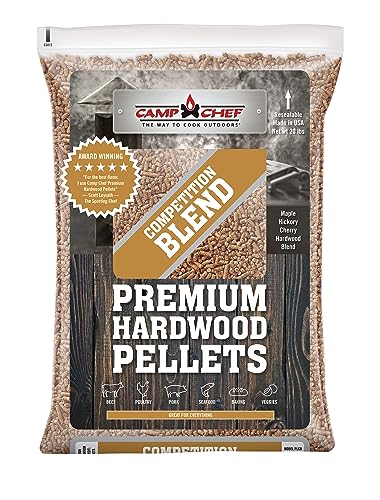
Maple, Hickory, and Cherry Blend: Competition blend is the Jack of All Trades. It's great with poultry, pork, baking, veggies, beef, and seafood. HARDWOODS: Camp Chef Hardwood bbq pellets are not a byproduct. They are 100% pure virgin hardwoods.

KINGSFORD CRAFTSMOKE PREMIUM WOOD PELLETS: Introducing Craftsmoke, the premium line of natural hardwood pellets, crafted in small batches for the chef in all of us; pack may vary

KINGSFORD CRAFTSMOKE PREMIUM WOOD PELLETS: Introducing Craftsmoke, the premium line of natural hardwood pellets, crafted in small batches for the chef in all of us; pack may vary
How Digital Temperature Control Works (PID, Thermocouples & Apps)
Wood pellets give your grill a steady, clean burn, but keeping that fire at the exact temperature you want takes more than just good fuel—it relies on a digital control system that constantly reads, calculates, and adjusts. A PID controller samples the RTD sensor every four seconds, then applies proportional, integral, and derivative math to fine‑tune auger feed and fan speed, smoothing out wind gusts and pellet BTU spikes. You’ll feel the grill settle within ±5 °F, thanks to auto‑tuning that predicts external shifts. Thermocouple calibration lets you zero‑out sensor drift, while multi probe connectivity lets up to six wired probes and a wireless ambient sensor feed real‑time data to the LCD or your phone app. An igniter rod lights the compressed pellets in the firebox to create the initial flame for combustion. The app’s Bluetooth or Wi‑Fi link lets you set ramps, watch meat temperatures, and receive pellet alerts, turning precise cooking into a tactile, data‑driven experience. The PID controller senses and adapts to external influences like heat and wind, ensuring stable temperature control.
Cooking Methods a Pellet Grill Can Handle: Smoking, Searing, Baking & More
Ever wondered how a single pellet grill can become a smoker, searer, baker, and roaster all at once? You’ll set the grill to smoke mode, letting thick, aromatic plumes curl around fish fillets on the upper rack while the chimney narrows for deeper flavor. After 30‑60 minutes you raise the temp to 225‑250 °F, letting ribs melt for six hours. Flip to direct flame and unleash the infrared sear capability—preheat a cast‑iron skillet or GrillGrates to 450 °F, oil it, and watch caramelized crusts form in minutes. For breads and pies, employ multi‑zone baking: keep the convection zone steady at 350 °F while the indirect zone handles a slow‑cooked chicken, preventing drying and delivering even, golden results. Pork butt can be cooked at 225 °F for 1.5‑2 hours per pound until it reaches a tender 195 °F internal temperature. At 250 °F, brisket requires approximately 30 to 40 minutes per pound and should be smoked until it reaches an internal temperature of 190‑200 °F.
Pellet Grill Temperature Ranges: Low‑and‑Slow vs. High‑Heat
A pellet grill’s temperature spectrum splits cleanly into two worlds: the low‑and‑slow band (160‑275 °F) that coax‑ slow, smoky infusions, and the high‑heat zone (300‑600 °F) that sears and crisps in minutes. When you set the controller to 180‑225 °F, the pellets smolder, releasing a thick veil of hickory or apple smoke that clings to ribs and brisket, perfect for recipe integration that demands deep flavor. Raising the dial to 400‑500 °F ignites a rapid burn, the fan hurls hot air, and you hear the sizzle of steaks searing, while smoke thins to a whisper. Digital precision holds each range steady for hours, and probes feed real‑time data, letting you toggle between tender, smoke‑enhanced low‑and‑slow and crisp, high‑heat finishes without guesswork. Wood pellets are fed automatically from a hopper via an electric auger, ensuring consistent fuel delivery throughout the cooking process. Models like the Z Grills 700D3 maintain consistent temperatures even in cold weather, making them reliable across diverse climate conditions.
Pellet Grill vs. Charcoal, Gas & Oven – Key Differences
When you fire up a pellet grill, the digital controller hums while an auger feeds wood pellets into a glowing burn pot, delivering steady, precise heat that feels like a quiet, controlled furnace. You’ll notice the Versatility of cooking surfaces: the same unit can smoke, grill, bake, and roast, thanks to Smart control monitoring that keeps temperature within a one‑degree band. Charcoal grills roar to high heat fast, giving you searing power and bold smoke, but they demand manual ash management and constant temperature guessing. Gas and ovens offer quick heat and clean operation, yet they lack the subtle wood‑smoke infusion and the automated fuel feed of a pellet system. The precision temperature control of pellet grills makes them ideal for low-and-slow cooking methods like smoking brisket overnight at consistent heat. Ultimately, a pellet grill balances efficiency, consistency, and multi‑mode cooking while keeping your hands free for flavor experimentation. Higher upfront cost is offset by long‑term fuel efficiency.
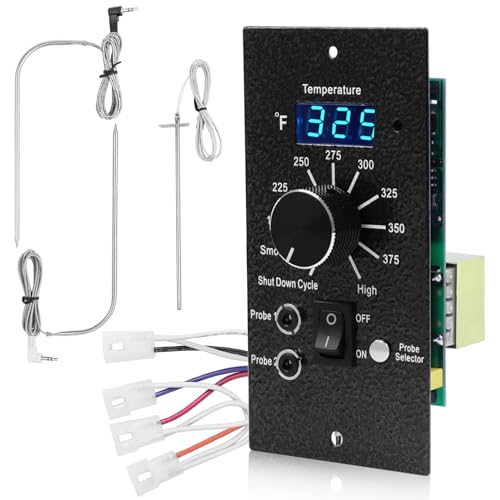
【COMPATIBILITY】: This Traeger Digital Controller kit replacement part compatible with most Traeger Wood Pellet Grills (except PTG), ideal replacement for Traeger Controller BAC365.

HARDWOOD BOOST: Electric smoker lets you easily add wood chips or pellets for bolder flavor cues

【Perfect Fit】Our Advanced digital PID control board replacement parts fit for Pit Boss Pro Series II 1150 wood pellet grills, the replacement for Part Number: 80145 compatible with PB1150PS2
Maintenance Basics: Cleaning the Firepot, Ash Removal & Hopper Care
How often should you tend the firepot, ash, and hopper to keep your pellet grill humming? You’ll notice that a clean firepot, regular ash removal, and proper hopper care are the backbone of consistent heat and smoke. After every 4‑5 cooks, let the grill cool, then pull the ash cleanout knob and vacuum the residue with a dedicated ash vac. Scoop remaining ash with gloved hands, feeling the warm, gritty texture that insulates the chamber. Empty the hopper after 4‑5 bags, checking for moisture and mold; wipe it dry and guarantee the auger runs smoothly with consistent auger lubrication. Store pellets in a dry, sealed container—proper pellet storage—so they stay crisp. To prevent grease fires and maintain consistent cooking quality, avoid letting grease accumulate in the grease trap. Light cleaning takes 10‑15 minutes; deep cleaning every few months restores performance. Regular deep cleaning of the grill interior ensures optimal airflow and prevents residue buildup.
Choosing a Pellet Grill: Size, Features & Budget
Keeping the firepot clean and the hopper stocked sets the stage for the next decision: which pellet grill fits your cooking rhythm and wallet. You feel the weight of a portable unit, under 60 lb, and imagine sliding it onto a balcony rail, its 184‑500 in² surface perfect for three to seven guests. Scale up to a medium grill—600‑820 in², 10‑21 lb hopper—when you host larger gatherings, and note the 72 in²‑per‑person rule for precise sizing. Built‑in models demand a permanent niche but reward you with expansive cooking areas and steady heat. Consider how BTU output and fuel efficiency compare across models, as these factors significantly impact cooking performance and long-term operating costs. Compare brand reputation, warranty length, and Wi‑Fi control against the cost of extra racks and covers. Choose the size, features, and budget that match your kitchen flow and culinary ambitions. Small pellet grills can accommodate 6‑18 burgers, 1‑4 racks of ribs, and 10‑24 hot dogs.

WORLD’S FIRST TRANSFORMER DESIGN: Fire’n’Go portable pellet grill achieves a 56% larger cooking space with a 35% smaller size compared to a standard one. Dimensions: 17.3’’ x 21.7’’ x 9.7’’ (as compact as a 20’’ suitcase). Weight: 40.8 lbs.

256 square inches of porcelain-coated steel cooking grates
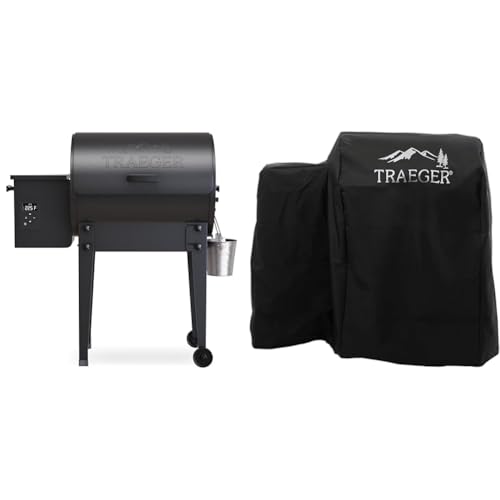
Ultimate Wood-Fired Flavor, No Gas or Charcoal – The Traeger Tailgater 20 is a portable wood pellet grill that delivers authentic wood-fired flavor. Whether you're tailgating, camping, or cooking at home you can achieve perfection.