
Preheat your gas grill to 350‑400°F and set up a two‑zone fire: one side hot (450‑500°F) for searing, the other cooler (300‑350°F) for indirect cooking. Pat the thighs dry, coat them lightly with oil, and season or marinate as you like. Start them skin‑side down on the hot zone, then move to the cooler side once they’re browned, flipping halfway. Use an instant‑read thermometer and pull them at 165‑175°F, let them rest 5‑10 minutes, and you’ll get juicy, crispy thighs—more tips await if you keep going.
Heat Your Grill to 350‑400°F and Set Zones
Before you light the burners, set the grill to a steady 350‑400°F and create a two‑zone layout—one side on medium‑high (about 450‑500°F) for direct searing, the other side off for indirect cooking at 300‑350°F—then close the lid and let the temperature stabilize. Use a grill thermometer to confirm the overall range and adjust burners for uniform heat. This setup gives you adjustable heat zones: a hot direct zone for searing and a cooler indirect zone for finishing. Aim for an ideal preheat duration of 10‑15 minutes; the lid should stay closed to retain heat and eliminate hot‑spot variations. Once the temperature steadies, you’re ready to place the thighs skin‑side down on the direct zone to achieve crispy skin. Marinating the chicken helps prevent dryness and enhances flavor.
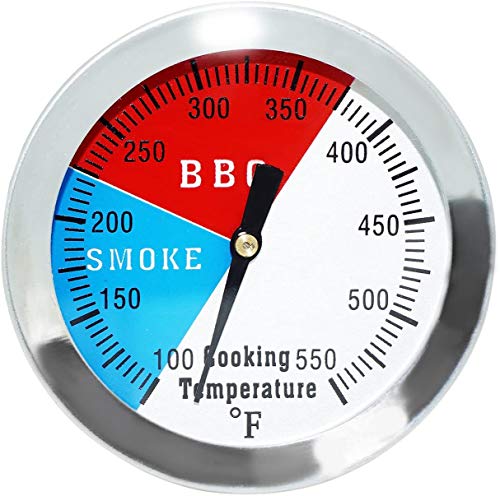
2" BBQ grill smoker pit thermometer stainless steel thermostat pit temp gauge
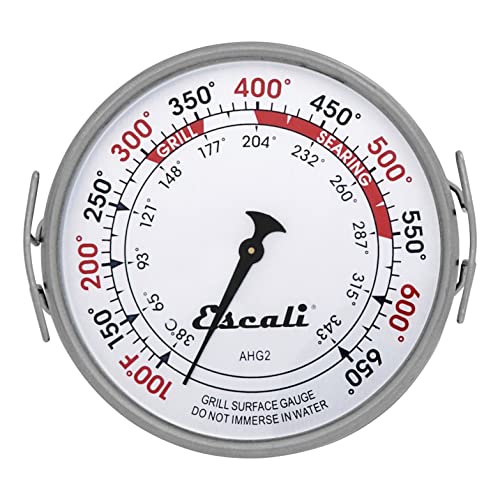
Temperature Range: 100° to 650°F / 38° to 343°C. Dial Diameter: 3.5 inches
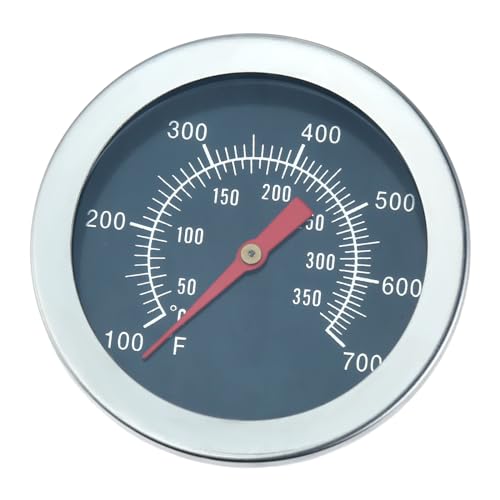
[𝐇𝐈𝐆𝐇 𝐐𝐔𝐀𝐋𝐈𝐓𝐘]: 2" Grill thermometer replacement for Charbroil 463251414, 463250212 is made of high-quality stainless steel material, featuring in ultra durability and safety, and well-tested by the manufacturer to meet the OEM standards and ensure to support a longer service life. The number in the dial is clear to read, and the needle in the dial helps you to measure the grill temperature.
Prep Grilled Chicken Thighs: Oil, Season, Marinate
Now that the grill’s zones are set, coat each thigh with a thin layer of oil—vegetable oil, olive oil, or non‑stick spray—to keep the meat from sticking and to help the seasoning adhere. Brush both sides evenly, then pat dry any excess moisture. Immediately follow with seasoning application: sprinkle garlic salt, pepper, paprika, or a custom rub, and rub it in so the oil coating absorption locks flavors onto the surface. If you prefer a wet rub, whisk olive oil with lemon juice, mustard, and spices, then toss the thighs in the bowl for at least 30 minutes. Transfer the mixture to a resealable bag, squeeze out air, and refrigerate for 30‑60 minutes. Reserve a quarter cup of the marinade for basting while grilling. Use an instant-read thermometer to verify the chicken reaches the safe internal temperature of 165°F. This technique ensures the chicken stays juicy and flavorful throughout the grilling process, especially when using the insane BBQ vinaigrette that adds a tangy, smoky depth.
Select Bone‑In or Boneless Thighs and Follow the Proper Grill Method
When you decide whether to use bone‑in or boneless thighs, consider the trade‑off between flavor and speed: bone‑in pieces need 40‑45 minutes at 400 °F to reach a safe 375 °F internal temperature, while boneless cuts finish in 25‑35 minutes. First, assess fat content; bone‑in thighs retain more rendered fat, delivering richer juiciness, whereas boneless options are leaner. Next, calculate total prep time, including marinating and preheating, to fit your schedule. If you prioritize deep flavor and moisture, place bone‑in thighs on the grill, allowing the bone to act as an insulator for even heat. For quicker, uniform cooking and lower fat, arrange boneless pieces directly over the flame, monitoring closely to avoid overcooking. Adjust timing based on thickness, and always verify the 375 °F internal target before serving. The presence of bone slows heat transfer, requiring a longer cooking duration. Using a meat thermometer ensures you reach the safe internal temperature without guessing.
Grill Bone‑In Thighs Indirectly, Flip, Then Finish Directly for Crispy Skin
Bone‑in thighs need a two‑stage grill approach: start them indirect to keep them juicy, then finish direct for a crisp skin. Set up a two‑zone gas grill, heating two burners to 500‑600 °F for direct heat searing while leaving the other burners off for indirect heat retention at 225‑250 °F. Brush the thighs with oil and salt, then place them skin‑side up over the indirect zone for 3‑4 hours, flipping every 1‑2 minutes once you move them to the direct zone. After six minutes indirect, shift them to the direct zone, sear skin‑side down for 15‑20 minutes, watching flare‑ups. Crank the grill to 400‑450 °F, glaze if desired, and finish until the internal temperature reaches 195‑200 °F. Use a meat thermometer to verify doneness before resting. Rest ten minutes before serving. A light dusting of Goya Adobo seasoning can be added before grilling to enhance flavor.
Grill Boneless Thighs Directly on Medium‑High Heat and Manage Thicker Pieces
If you preheat the gas grill to a steady 400‑450 °F and oil the grates, you can place boneless chicken thighs directly on the hot surface and achieve a crisp, golden exterior while keeping the meat juicy. Lay the thighs in a single layer, trim excess fat, and close the lid. Grill 6‑7 minutes per side, flipping with tongs once the first side turns golden. For thicker pieces, move thicker pieces to a cooler zone after the initial sear, then rotate thighs for heat as you shift them back into direct fire. Keep the lid closed to maintain temperature, and monitor for flare‑ups. After the second side, remove the thighs a few degrees below target and let them rest for 5 to 10 minutes before serving to retain juiciness. Create heat zones to ensure even cooking and avoid overcooking. Use a meat thermometer to verify the internal temperature has reached 165°F for food safety.
Check the Temp So Your Thighs Are Just Right (165‑175°F)
Check the internal temperature with an instant‑read thermometer before you pull the thighs off the grill; aim for 165 °F to meet USDA safety and let them rise to 175‑180 °F for ideal juiciness and texture. Insert the temperature probe into the thickest part of each thigh, avoiding bone, to guarantee accurate internal temperature. Trust the probe utilization over visual cues; a 165 °F reading means the meat is safe, while a rise toward 175 °F signals perfect collagen breakdown and moisture retention. If the reading lags, keep the grill on low heat and re‑check every 30 seconds. Once the thighs hit the target range, remove them promptly and let them rest briefly to lock in flavor. The internal temperature range for chicken thighs is widely accepted as 165‑195°F. Using an instant-read thermometer is essential to monitor doneness precisely and ensure consistent results across all your thighs.
Sauce and Crisp the Skin at the End
Now that the thighs have hit the perfect internal range, focus on building flavor while achieving a razor‑thin, crispy skin. First, pat the skin dry, then dust it with a thin layer of aluminum‑free baking powder and salt; the powder raises pH and draws moisture to the surface for ideal Crisping. Set the grill for indirect heat at 200 °F, cook until the internal temperature reaches 73 °C, then move the thighs to direct heat for a quick sear that renders fat under the skin. Brush the first layer of BBQ sauce, or any Sauce alternatives you prefer, after 30 minutes of indirect cooking. Apply additional thin layers every five minutes during the final 15 minutes, allowing each coat to caramelize without sogginess. Maintain consistent grill temperature and airflow by using a thermometer to monitor heat levels throughout the cooking process. Finish with a high‑heat blast to lock in the Crisping techniques, yielding a glossy, crackling surface. Properly trim the thighs before cooking helps ensure even heat distribution and prevents flare‑ups.
Rest Grilled Chicken Thighs for 5‑10 Minutes Before Serving
Let the thighs rest for 5‑10 minutes after you pull them off the grill; during this short pause the juices redistribute, the muscle fibers relax, and carry‑over heat lifts the internal temperature to the safe 165 °F (74 °C). Immediately drape loose foil over the meat to trap residual heat while allowing steam to escape; the tent should be light, not sealed. While the thighs rest, practice patience requirements by resisting the urge to cut. Place a thermometer in the thickest part, away from bone, for temperature monitoring; you’ll see the reading climb 5‑10 °F as carry‑over cooking completes. This brief interval locks in moisture, enhances tenderness, and guarantees the final product meets food‑safety standards without over‑cooking. Bone‑in thighs retain more flavor during the resting period, as the connective tissues break down to create exceptionally tender meat.
Troubleshoot Grilled Chicken Thigh Issues: Dryness, Uneven Cooking, Flare‑Ups
Ever notice your chicken thighs ending up dry, unevenly cooked, or causing flare‑ups on the grill? First, prevent dryness by marinating 30 minutes, coating with a light oil, and searing at 400‑450°F. Move to the indirect zone and pull them at 168‑170°F for boneless, or 175°F for bone‑in, then let them rest. For uneven cooking, preheat the grill uniformly, rotate pieces every few minutes, and start thicker cuts earlier. Check multiple spots with a thermometer to guarantee consistent doneness. To control flare‑ups, trim excess fat, avoid oil‑heavy marinades, and keep a water spray handy. Set up a two‑zone fire, move flames to the cooler side, and practice avoiding sticking by oiling hot grates and flipping only when the meat releases naturally. Higher internal temperature helps retain moisture and ensures tenderness. Like chicken breasts, letting chicken rest a few minutes after cooking seals in juices and improves overall flavor and texture.


